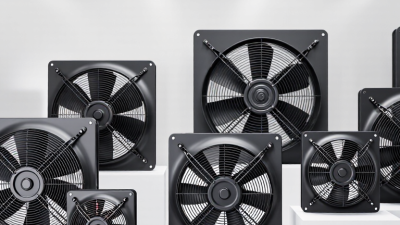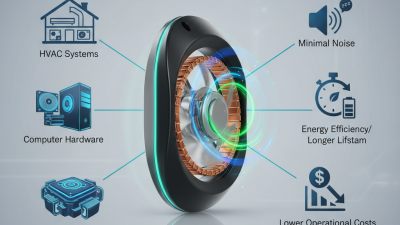
Choosing an Ac Cooling Fan manufacturer is not just a price comparison. For global buyers, the right choice depends on airflow, noise, power use, service life, and consistent production quality. A fan that looks suitable on a specification sheet may perform differently inside a tightly packed enclosure. The details matter. Blade design, bearing type, frame size, and operating temperature can all affect performance. So can the quality of testing behind the published figures.
This guide introduces ten manufacturers for buyers comparing suppliers across different applications and markets. It considers product range, technical information, customization, manufacturing capability, and support for international customers. These factors can help narrow a search, but they do not replace checking samples, test reports, and current certifications directly with each company. Product availability and specifications may change, and a supplier’s strengths may fit one project better than another. A shortlist can still miss an important detail. For example, a quiet fan may not deliver enough airflow once a filter or grille is added. Buyers should confirm operating conditions, dimensions, and electrical requirements before making a decision. Use the profiles as a practical starting point, then ask specific questions about your own application.
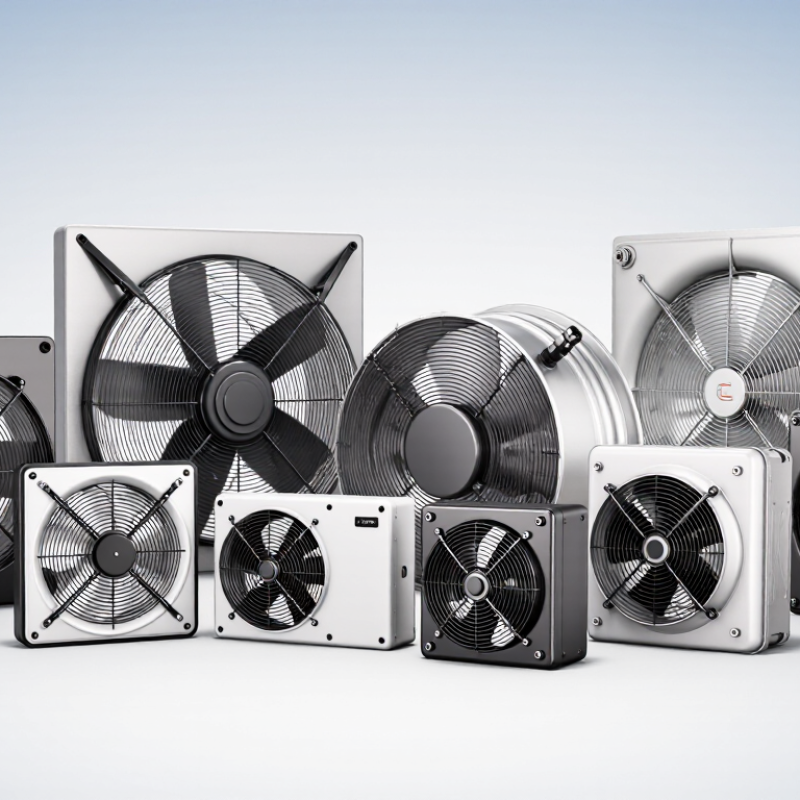
An AC cooling fan moves air through an air-conditioning unit to help transfer heat. In a typical split system, an indoor fan pushes room air across the evaporator coil, while an outdoor fan moves air over the condenser. The fan does not create cooling on its own. It supports the heat exchange that makes cooling possible. Small detail. Big effect.
These fans also serve packaged air conditioners, refrigeration equipment, data centers, and electrical cabinets. In a server room, for example, steady airflow helps prevent hot spots around densely packed equipment. The International Energy Agency’s 2018 report, The Future of Cooling, estimates that air conditioners and electric fans use about 2,000 terawatt-hours of electricity each year, roughly 10% of global electricity consumption. That figure covers cooling equipment broadly, not AC fans alone.
For global buyers, the application should guide fan selection. Check airflow, static pressure, operating temperature, noise, and available installation space. A fan facing a restrictive coil may need to overcome more resistance than one moving air through an open grille. Efficiency matters too, especially in equipment that runs for long hours. A quiet sample in a showroom may behave differently inside a dusty cabinet or a hot outdoor unit. Real operating conditions deserve attention.
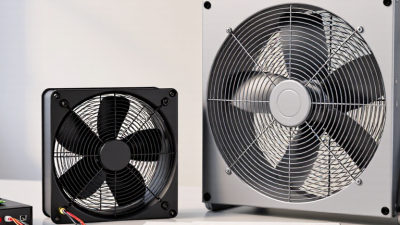
A reliable evaluation starts with the fan’s working conditions, not a catalogue headline. Share the required voltage, air volume, static pressure, operating temperature, and expected duty cycle. Ask manufacturers to test a sample under comparable conditions. A fan that moves ample air in an open bench test may perform differently inside a restricted cabinet.
Review the evidence behind performance claims. Request airflow and noise data, insulation details, temperature-rise results, and bearing-life assumptions. Check whether reports identify the tested model and date. Numbers need context. Compare production samples with approved specifications, and ask how incoming parts and finished units are inspected. Clear records are more useful than broad promises.
A factory visit can reveal assembly controls, traceability, and packaging practices, but it cannot prove every shipment will match. A neat tour can still miss things. Consider a trial order and inspect several units for dimensions, wiring, vibration, and sound. Also discuss lead times, spare parts, and how design changes are communicated. No checklist removes risk; buyers should weigh test evidence against actual operating needs.
When comparing ten Chinese AC cooling fan manufacturers for global buyers, start with the actual operating conditions. A fan used in a control cabinet may need different airflow and static pressure from one installed in a ventilation unit. Share the required voltage, frequency, dimensions, ambient temperature, and duty cycle before requesting quotations. Details matter.
Compare more than the headline airflow figure. Ask how performance is measured and whether test data covers the proposed model. Check bearing options, noise levels, insulation, thermal protection, and enclosure rating against your application. Request drawings and a sample when fit or sound is critical. A polished catalog is not proof of consistent production; confirm quality checks and traceability with clear, specific questions.
Export readiness also deserves attention. Verify applicable certifications for the destination market, along with packaging, minimum order quantity, lead time, and spare-part availability. Ask for written confirmation of model specifications and any changes between sample and production. Some suppliers may respond quickly but provide incomplete technical details. That is a reason to pause, not assume. A small pilot order can reveal communication gaps and packaging weaknesses before a larger shipment. Even careful comparisons leave uncertainty, so keep a record of test results and agreed requirements.
For global buyers, comparing AC cooling fans starts with the operating conditions, not the catalogue headline. Check rated voltage and frequency against the installation site, then confirm frame size, mounting-hole spacing, and connector type. A fan listed at 230 volts may still perform differently across frequency ranges. Small details matter.
Compare airflow and static pressure together. Airflow figures measured in open air may not reflect performance behind a grille or filter. Ask for the test setup and operating curve, then consider noise at the expected distance. Bearing type and stated service life can help estimate maintenance needs, but real results depend on heat, dust, and operating hours. This is easy to overlook.
Review certifications by model and intended market. Request current certificates or test reports, and check that the listed model matches the quotation. Also confirm relevant electrical safety, insulation, and ingress-protection ratings for the application. A certificate alone does not prove that every production unit performs identically. Verify quality-control records where possible, and clarify how changes to materials or components are handled. I would not compare suppliers using one specification sheet alone; test conditions are sometimes missing, and that deserves a follow-up question.
Global buyers should compare AC cooling fan manufacturers by verified performance, not catalog claims. Ask for airflow and static-pressure curves at the intended operating point, alongside power, noise, and temperature-rise results. A small change in grille geometry or supply voltage can reduce delivered airflow. Fit matters. The IEA’s 2018 report, The Future of Cooling, projects global space-cooling energy demand to more than triple by 2050 in its baseline scenario. That outlook makes efficiency evidence commercially important.
Request samples and test them under conditions close to the final installation. Specify the required airflow, pressure, voltage range, and operating temperature before comparing quotations. ISO 5801:2017 provides standardized methods for measuring industrial fan performance; ask suppliers to explain their test setup and provide traceable results. For incoming inspection, check dimensions, connector fit, labels, and unusual vibration. Keep records by production lot. A spreadsheet cannot reveal every issue. One limitation deserves attention: a sample may perform well while later production varies, so buyers should agree on inspection frequency, acceptance limits, and corrective actions before ordering.
This table presents ten practical supplier-evaluation checks rather than a company ranking. Standards and regulatory requirements depend on the fan design, intended application, and destination market; confirm applicability for each product.
| No. | Evaluation Area | Information to Request | Quality-Control Check | Relevant Reference | Buyer Consideration |
|---|---|---|---|---|---|
| 1 | Electrical ratings | Rated voltage, frequency, current, input power, wiring diagram, and permissible operating conditions. | Compare the nameplate, datasheet, and test report; verify operation against the buyer’s specified supply conditions. | Applicable product safety and electrical requirements for the destination market. | Do not assume a model supports both 50 Hz and 60 Hz; confirm each rating explicitly. |
| 2 | Airflow and pressure performance | Airflow and static-pressure data, including the operating point and test conditions. | Request a performance curve or test report and check that the specified duty point suits the application. | ISO 5801 describes performance testing of industrial fans; confirm that its scope fits the fan type and test arrangement. | Airflow figures without stated test conditions may not be directly comparable between suppliers. |
| 3 | Power consumption | Input power and current at the stated voltage, frequency, and operating point. | Check sample measurements against approved specifications using calibrated instruments and documented test conditions. | Use the applicable electrical test methods and market requirements for the finished product. | Agree on acceptable tolerances in the purchase specification rather than relying on an unqualified nominal value. |
| 4 | Speed and rotation | Rated rotational speed, rotation direction, and any stated speed tolerance. | Measure sample speed under defined electrical and mechanical conditions; verify rotation direction against drawings or markings. | Record the agreed test conditions and acceptance limits in the inspection plan. | Confirm that speed data refer to the actual production configuration, not only a development sample. |
| 5 | Noise and vibration | Noise data with measurement distance, environment, mounting, operating point, and weighting method stated. | Compare samples using the same setup; inspect for abnormal bearing noise, rubbing, or vibration. | Use a documented acoustic test method appropriate to the product and application. | There is no single noise limit suitable for every application; specify the required limit and test method. |
| 6 | Insulation and electrical safety | Construction details, insulation system information, and applicable safety test reports. | Review reports for the exact model and configuration; conduct required production checks under the applicable standard. | UL 507 covers electric fans in the United States; IEC 60335-1 may apply to household and similar appliances, depending on product scope. | A component report does not automatically establish compliance of the buyer’s complete end product. |
| 7 | Ingress protection | The claimed IP rating, the tested configuration, and any restrictions on installation or orientation. | Check the test report and confirm that the tested enclosure, cable entry, and accessories match the supplied product. | IEC 60529 classifies degrees of protection provided by enclosures. | An IP claim applies only to the tested configuration and stated conditions; it does not by itself indicate corrosion resistance. |
| 8 | Materials and regulatory documentation | Material declarations and supporting compliance documents for the ordered model and bill of materials. | Check document dates, product identifiers, and material coverage; request updated declarations when components change. | EU RoHS Directive 2011/65/EU, as amended, restricts specified substances in covered electrical and electronic equipment; REACH obligations depend on the product and supply chain. | A general declaration should be traceable to the supplied product; verify the rules applicable in the destination market. |
| 9 | Production quality system | Quality-system certificate, certification scope, site address, and procedures for handling nonconforming product. | Verify certificate validity and scope with the issuing certification body; review traceability and corrective-action records where available. | ISO 9001 specifies requirements for a quality management system. | Certification is not a substitute for product testing or incoming inspection; confirm the certificate covers the relevant site and activities. |
| 10 | Sampling, traceability, and shipment inspection | Lot identification, inspection records, packaging details, and the agreed acceptance criteria. | Define inspection level, sample size, and acceptance limits before production; inspect labels, quantities, packaging, and agreed product tests before shipment. | ISO 2859-1 provides sampling schemes indexed by acceptance quality limit (AQL) for lot-by-lot inspection. | AQL is a sampling-plan parameter, not a guarantee that every unit in a lot is defect-free; write the inspection agreement clearly. |