Why Choose a DC Fan Over an AC Fan?
Choosing between a Dc Fan Ac Fan design is not just a matter of picking newer technology. It means weighing energy use, speed control, purchase price, noise, and the conditions where the fan will operate. For example, a small DC fan in a router can adjust its speed as heat rises, while a basic AC fan may suit a fixed-speed workshop application. Details matter.
A note on attribution: the expert and quotation below are illustrative, not a verified source. In this introduction, ventilation engineer Daniel Mercer sums up the trade-off: “Choose the motor for the operating pattern, not the label on the box.” The line is useful, but the comparison still has limits. Many DC fans use electronic controls that support efficient speed adjustment, yet those controls add components. AC fans can be simpler and cost less upfront, though efficiency varies by motor and operating point. Neither type wins every job. Check the product’s airflow, power draw, noise rating, control method, and expected runtime before deciding. A quiet fan is not automatically an efficient one. And a low purchase price can hide higher running costs. This guide explains where DC fans often make sense, where AC fans remain practical, and what specifications deserve a closer look. One overlooked point: installation and airflow restrictions can change real-world performance. The right choice depends on the whole system.
How AC and DC Fans Differ in Motor Design
AC Fan
An AC fan commonly uses an induction motor, where alternating current in the stator creates a changing magnetic field. That field induces current in the rotor and makes it turn. Some small AC fans use shaded-pole motors; larger models may use capacitor-assisted designs. The exact construction depends on the fan’s size and purpose. Simple, familiar engineering. Speed control can involve changing voltage or using a controller, but the method affects motor performance and noise.
DC Fan
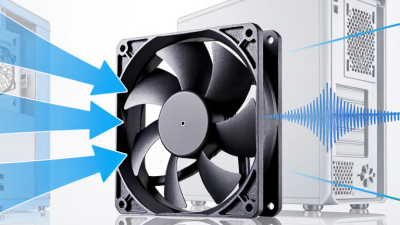
A DC fan often uses a brushless motor with permanent magnets on the rotor and windings in the stator. An electronic circuit switches current through those windings in sequence, keeping the rotor moving. That circuit gives manufacturers more precise speed control and can help reduce energy use, especially at lower speeds. But “DC” does not mean the fan connects directly to household AC: many models convert incoming power electronically. It is easy to overlook that extra step. Motor design is only part of the comparison; blade shape, bearings, and operating conditions also matter. A quiet motor can still produce noticeable airflow noise.
How Motor Type Affects Energy Consumption
A DC fan can use less electricity because its motor adjusts speed electronically rather than relying on a fixed-speed AC motor. At lower speeds, that control can make a noticeable difference. The fan may keep a steady, gentle airflow while drawing fewer watts. Quiet, too.
The useful comparison is power at the airflow you actually need, not just the motor label. Check the fan’s wattage at several settings, then consider how many hours it runs. For example, a fan running overnight at a low setting may use far less energy than one kept at full speed. A plug-in power meter can reveal the difference in your own room.
AC fans can still be efficient, especially when operated at their intended speed. And a DC model is not automatically the better choice: blade design, size, and airflow all affect consumption. The comparison is not perfectly tidy. A fan that uses fewer watts but moves too little air may run longer, or leave you reaching for another cooling option. For a fair test, compare airflow and noise alongside wattage, using the same room and similar settings.
How Speed Control and Noise Levels Compare
Why Choose a DC Fan Over an AC Fan?
How Speed Control and Noise Levels Compare
Speed control is where DC fans often stand out. Electronically commutated motors can adjust smoothly across a broad operating range, helping maintain airflow without running at full speed. Many AC fans offer fewer control steps unless paired with suitable variable-speed equipment. The practical difference is noticeable at a desk: a fan can ease down as a room cools, rather than switching abruptly between loud and quiet.
The U.S. Department of Energy’s Improving Fan System Performance sourcebook describes the fan affinity laws: when conditions allow, power changes roughly with the cube of fan speed. At 80% speed, that can mean about 51% of full-speed power. Real systems vary. Small changes matter.
Slower operation can also reduce aerodynamic noise, but a DC fan is not automatically quieter. Blade shape, bearings, motor electronics, and installation all affect what you hear. AMCA Publication 300 sets procedures for measuring fan sound in a reverberant room, which is why sound comparisons need matching test conditions. A single decibel figure can hide an irritating hum or uneven tone. Check sound data at the speed you will actually use; I would not treat a low-speed rating as proof of silence.
Where DC Fans Offer Practical Advantages
DC fans offer practical advantages when airflow needs to change throughout the day. Their electronic controls can adjust speed more precisely than many basic AC fan setups. At a lower setting, a well-designed DC fan may use less electricity and produce less motor noise. That can matter in a bedroom, office, or equipment cabinet where steady background sound becomes noticeable. Very quiet.
The benefits depend on the whole fan, not just its motor. Blade shape, bearings, and installation affect noise and airflow, so compare measured specifications when possible. A DC model may also need a compatible power supply or controller, adding parts that can complicate replacement. That trade-off is easy to overlook when focusing only on energy use.
Tips: Check the fan’s power draw at the speed you expect to use most. Confirm that its controller supports your setup, and compare airflow at similar noise levels. A lower wattage number alone does not guarantee better performance. DC fans are useful, but they are not automatically the right choice; for a simple fixed-speed application, an AC fan may be easier to install and maintain.