China Top Dc Brushless Cooling Fan Advantages and Applications?
In recent years, the demand for efficient cooling solutions has surged. One prominent player in this domain is the DC Brushless Cooling Fan. This technology offers significant advantages in performance and energy efficiency. Unlike traditional fans, DC brushless models operate with minimal noise and longer lifespans. They utilize advanced electronic controls to optimize airflow, making them ideal for various applications.
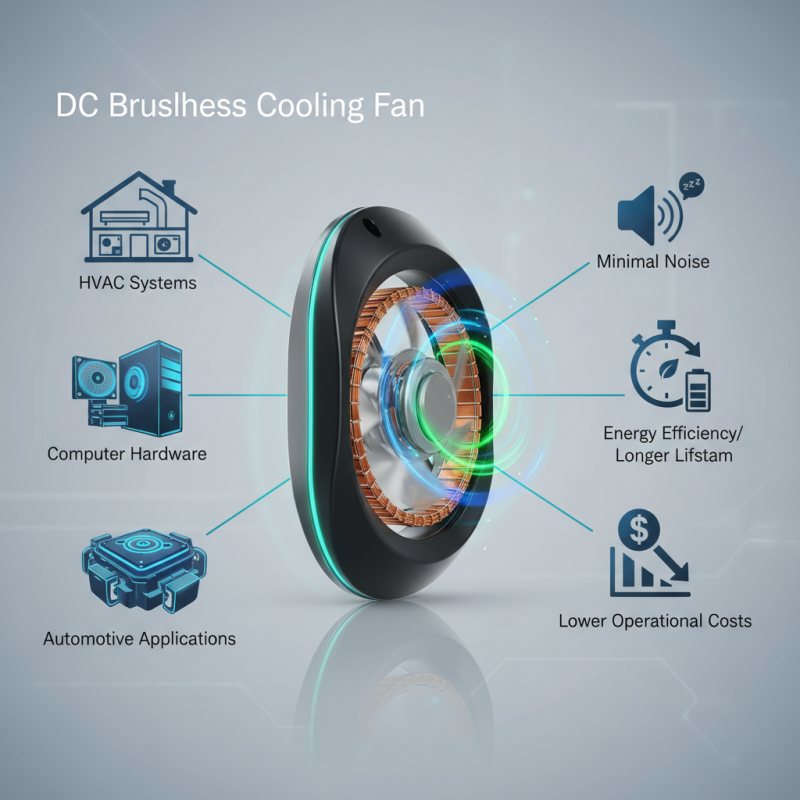
Manufacturers across different sectors are increasingly incorporating DC Brushless Cooling Fans into their designs. Such fans are widely used in computer hardware, HVAC systems, and automotive applications. Their reliability ensures stable temperatures, enhancing equipment longevity. Users often notice improved energy savings over time, translating to lower operational costs.
However, the adoption of this technology is not without its challenges. Initial costs may be higher compared to conventional fans. Some consumers may hesitate to invest without understanding the long-term benefits. Exploring these factors is essential for a rounded perspective on DC Brushless Cooling Fans. Ultimately, the decision hinges on balancing immediate expenses with future gains in efficiency and performance.
Overview of DC Brushless Cooling Fans in China
DC brushless cooling fans are gaining popularity in various industries across China. These fans offer numerous benefits over traditional brushed models. They operate quietly, consume less power, and have a longer lifespan. As efficiency becomes a priority, many manufacturers are turning to these fans for better thermal management.
In applications like electronics cooling, automotive systems, and HVAC units, brushless fans excel. Their ability to maintain consistent airflow makes them a favored choice. However, maintaining optimal performance requires regular monitoring. Some users may underestimate the need for cleanliness. Dust buildup can impede airflow and reduce efficiency.
Despite their advantages, there are downsides to consider. The initial cost can be higher than brushed alternatives. It's essential to weigh the upfront investment against the long-term savings. Users should also stay informed about evolving technologies. This ensures that they leverage the full potential of DC brushless fans in their designs. The field is advancing quickly, and awareness is key.
China Top DC Brushless Cooling Fan Advantages and Applications
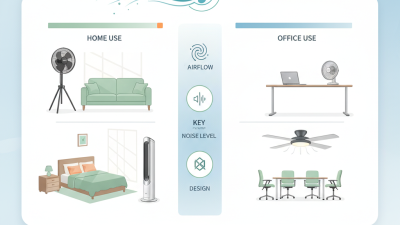
This chart illustrates the advantages and applications of DC brushless cooling fans in China. The data showcases key benefits such as energy efficiency, lifespan, noise level, and common uses in various industries.
Key Advantages of China Made DC Brushless Cooling Fans
When considering DC brushless cooling fans, manufacturers in China stand out. Their expertise leads to fans that offer remarkable efficiency and durability.
These fans consume less energy, making them ideal for various applications. With no brushes to wear out, they have a longer lifespan and low maintenance needs.
This reliability appeals to industries requiring consistent performance.
The versatility of these fans is noteworthy. They can be used in home appliances, automotive applications, and industrial settings.
Their quiet operation is a significant advantage, ensuring minimal noise disruption.
However, they can be more expensive upfront compared to traditional fans.
This cost may deter some buyers but often pays off in the long run due to energy savings.
Moreover, manufacturers are focusing on enhancing design and technology.
They adapt to specific needs, which may include customizing speed or size.
Despite technological advancements, it's important to remember that not all products meet quality standards.
Ensuring quality control during production can be a challenge.
Each application requires careful consideration of the fan's specifications to achieve optimal performance.
Common Applications of DC Brushless Cooling Fans in Various Industries
DC brushless cooling fans are pivotal in numerous industries. They are valued for their durability and efficiency. These fans are widely used in the HVAC sector to regulate temperature. According to a market analysis, the demand for brushless fans in HVAC is expected to grow by 10% annually through 2026. This growth is attributed to the increasing need for energy-efficient cooling solutions.
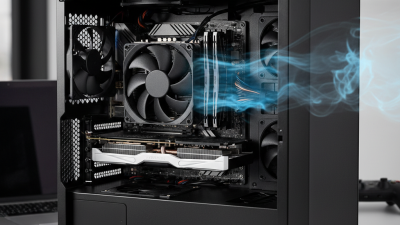
In the electronics industry, DC brushless fans are essential for preventing overheating. They are frequently found in computers, servers, and gaming consoles. A report highlighted that these fans reduce energy consumption by up to 30% compared to traditional fans. This translates to lower operating costs and a reduced environmental footprint. While the technology is advanced, challenges such as noise production and complexity in design remain. Industry experts acknowledge a need for continuous improvement in fan design to address these issues.
The automotive industry also benefits significantly from DC brushless cooling fans. These fans enhance battery life and performance in electric vehicles (EVs). Data suggests that implementing high-efficiency cooling systems can extend battery lifespan by 20%. However, some manufacturers struggle with integration challenges. Balancing cost, efficiency, and performance is a critical hurdle to overcome in fan implementation.
China Top DC Brushless Cooling Fan Advantages and Applications
| Dimension |
Data |
| Fan Type |
DC Brushless Fan |
| Efficiency |
Up to 90% |
| Lifespan |
Over 50,000 hours |
| Noise Level |
As low as 20 dB |
| Common Applications |
Computers, Electronics, HVAC, Automotive |
| Operating Voltage |
12V, 24V, 48V |
| Control Methods |
PWM, Temperature control |
Comparison with Traditional Cooling Solutions
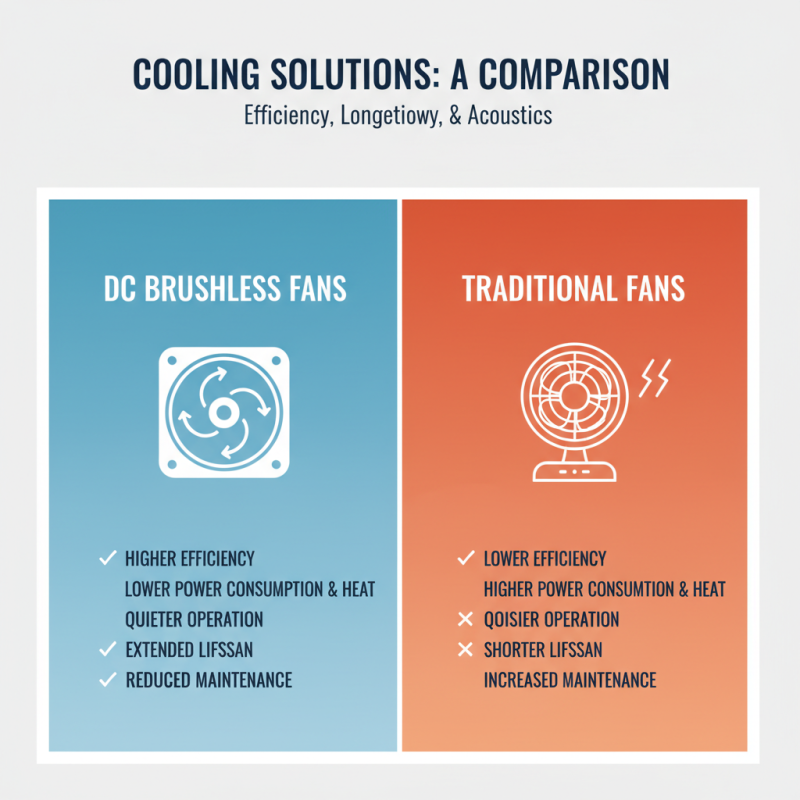
When evaluating cooling solutions, the advantages of DC brushless cooling fans become clear. Unlike traditional fans, DC brushless fans offer superior efficiency. They consume less energy and produce less heat. This leads to longer operational life and reduced maintenance costs. Additionally, these fans run quieter, making them ideal for sensitive environments. In contrast, traditional cooling solutions often rely on older designs that consume more power and generate noise.
The design of DC brushless fans minimizes friction. They utilize electronic commutation, enhancing reliability and performance. Traditional fans, on the other hand, may suffer from wear and tear due to brushes. This difference can affect their lifespan and efficiency. Furthermore, DC brushless fans provide customizable airflow. Users can adjust speed and direction as needed, creating more effective cooling solutions for various applications.
However, it is essential to consider that DC brushless fans may have higher initial costs. This initial investment can be a limitation for some users. Additionally, not all applications require the advanced features of brushless fans. For simpler use cases, traditional fans may still hold their ground. The right choice ultimately depends on the specific needs and constraints of each application.
Future Trends and Innovations in DC Brushless Cooling Fan Technology
The landscape of cooling technology is evolving, especially regarding DC brushless cooling fans. A recent report by MarketsandMarkets indicated that the global market for brushless DC fans is expected to reach USD 7.16 billion by 2025, demonstrating a robust compound annual growth rate of 8.5%. This growth is driven by their efficiency and reduced noise levels, satisfying both consumer demand and technological standards.
Innovations focus on enhancing energy efficiency. Models now utilize advanced materials to improve airflow while minimizing power consumption. Features like integrated sensors have emerged, allowing real-time monitoring and adjustments to fan speed based on temperature variations. Such improvements increase lifespan and reliability, essential in sectors like HVAC and electronics cooling.
However, challenges remain. The complexity of integrating smarter technologies can lead to higher production costs. Additionally, the industry must address the limitations of compatibility with older systems. These factors invite scrutiny and reflection on how to balance innovation with practical application. As the technology matures, we must consider how to adapt existing infrastructures effectively.