Who Is the Best AC Cooling Fan Manufacturer in China?
Who Is the Best AC Cooling Fan Manufacturer in China? The answer depends on the job, not the boldest catalog claim. A fan designed for a control cabinet may not suit a commercial cooling unit. Buyers should compare airflow, static pressure, noise, power use, service life, and operating temperature. Ask for test conditions, not just headline figures.
Details matter. A stamped steel frame, balanced rotor, and secure wiring can affect performance after months of continuous operation. So can the quality of incoming components and the consistency of final inspection. Request datasheets, sample test records, and clear warranty terms. Then check whether the supplier can explain how its results were measured. Small questions reveal a lot.
A useful buying principle is simple: match verified performance to the actual application. No shortcut exists. This guide will compare Chinese AC Cooling Fan manufacturers by technical capability, product range, quality controls, customization, and customer support. It will also distinguish documented information from marketing claims. One limitation: no source article or verifiable expert quotation was supplied, so I will not invent an expert’s name or words. That matters. A fabricated quote would weaken trust, not strengthen it. The best manufacturer is therefore not declared by reputation alone; it earns consideration through evidence, consistent communication, and products that meet the stated requirements. Even careful comparisons have limits, and buyers should confirm specifications for their own installation.
What AC Cooling Fans Are and Where They Are Used
An AC cooling fan moves air through a cooling system so heat can leave the equipment. In a room air conditioner, the indoor fan carries room air across the evaporator coil, while the outdoor fan helps release heat from the condenser. The same principle appears in central HVAC units, refrigeration equipment, server rooms, telecom cabinets, and some vehicle systems. The fan type matters: axial fans suit many applications needing high airflow, while centrifugal fans can handle greater air resistance. Not every unit needs the same design.
Small details matter. Coil spacing, dust buildup, duct resistance, and fan speed all affect airflow and noise. A fan that moves plenty of air in open space may perform poorly behind a restrictive grille. The International Energy Agency’s The Future of Cooling report estimates that global space-cooling energy demand could rise from 2,020 TWh in 2016 to 6,200 TWh by 2050. That projection makes efficient airflow increasingly important, though it does not mean a fan alone determines system efficiency. Selection should also consider measured airflow, pressure, power draw, vibration, and operating temperature. A neat specification sheet is useful, but real installation conditions can still surprise you.
How AC Cooling Fan Manufacturers in China Operate
AC cooling fan manufacturers in China typically begin with the equipment’s operating conditions, not a catalog page. Engineers ask about airflow, static pressure, voltage, installation space, and expected noise. These details shape the motor, blade geometry, and housing. A fan for a compact control cabinet may need a different balance than one used in a large cooling unit.
The process moves from design drawings to prototypes and practical testing. Technicians measure airflow and current, listen for vibration, and check whether the fan fits its mounting points. Impellers may be dynamically balanced before assembly. On the production floor, workers inspect components, secure wiring, and run finished units for basic performance checks. Small details count. A loose connector can cause trouble later.
Quality depends on more than one final test. Reliable manufacturers keep inspection records, verify materials against specifications, and investigate recurring defects. Buyers can ask how samples are tested, how production changes are controlled, and whether batch records are available. No factory gets every first sample right. That is worth admitting. A useful supplier explains test limits clearly and responds with measured data, rather than promising that every fan will suit every application.
Comparing Manufacturers by Quality, Technology, and Production Capacity
Who Is the Best AC Cooling Fan Manufacturer in China?
Comparing Manufacturers by Quality, Technology, and Production Capacity
Choosing a Chinese AC cooling fan manufacturer takes more than comparing unit prices. Quality shows in repeatable airflow, low vibration, balanced impellers, and stable motor temperatures. Ask for test records across production batches, not only a polished sample. ISO 5801 provides methods for measuring fan performance, while ANSI/AMCA 208 provides a Fan Energy Index calculation method. These references help compare evidence, but they do not certify every product automatically.
Technology matters when a fan must deliver airflow quietly under real system resistance. Request pressure-flow curves, sound data, and power measurements at the intended operating point. The IEA’s 2018 report, The Future of Cooling, projected global air-conditioning stock could grow from 1.6 billion units to 5.6 billion by 2050. That growth makes efficient, dependable components increasingly important. Numbers need context. Laboratory results may not match dusty sites or poorly maintained equipment.
Verify production capacity through monthly output records, delivery performance, traceability, and documented defect rates. A large factory is not automatically a reliable one. Ask how it controls tooling wear, incoming motor quality, and final balancing. Compare suppliers using the same test conditions and request recent audit evidence. Some manufacturers publish little comparable data; that makes evaluation harder, and buyers should acknowledge the gap.
How to Choose the Best Manufacturer for a Specific Application
Choosing a Chinese AC cooling fan manufacturer starts with the application, not the catalogue’s highest airflow figure. A condenser beside a dusty loading area needs different protection from an indoor evaporator fan exposed to condensation. Specify airflow and static pressure at the actual operating point, plus ambient temperature, humidity, duty cycle, noise limit, and available space. Ask for pressure-flow curves, motor temperature-rise results, vibration measurements, and test conditions. A bare “maximum airflow” value tells you little.
For variable-speed equipment, AMCA’s fan affinity laws show why control range matters: reducing speed to 80% can reduce ideal fan power to about 51%, since power scales with the cube of speed. Real savings depend on the system curve and motor controls. Request performance data at several speeds, then verify it with a sample in your own duct or coil assembly. Small details matter: a close grille, sharp bend, or dense heat exchanger can shift the operating point. It is easy to overlook this.
Compare manufacturers on repeatable testing, traceable component changes, production inspection, and clear warranty terms—not price alone. Ask how they test salt spray or moisture exposure when the installation requires it, and how they handle a failed sample. A supplier’s factory audit and a written validation plan add useful evidence, but neither replaces application testing. One uncomfortable trade-off: quieter fans may need more space or lower airflow. Decide which limit is truly fixed.
Who Is the Best AC Cooling Fan Manufacturer in China?
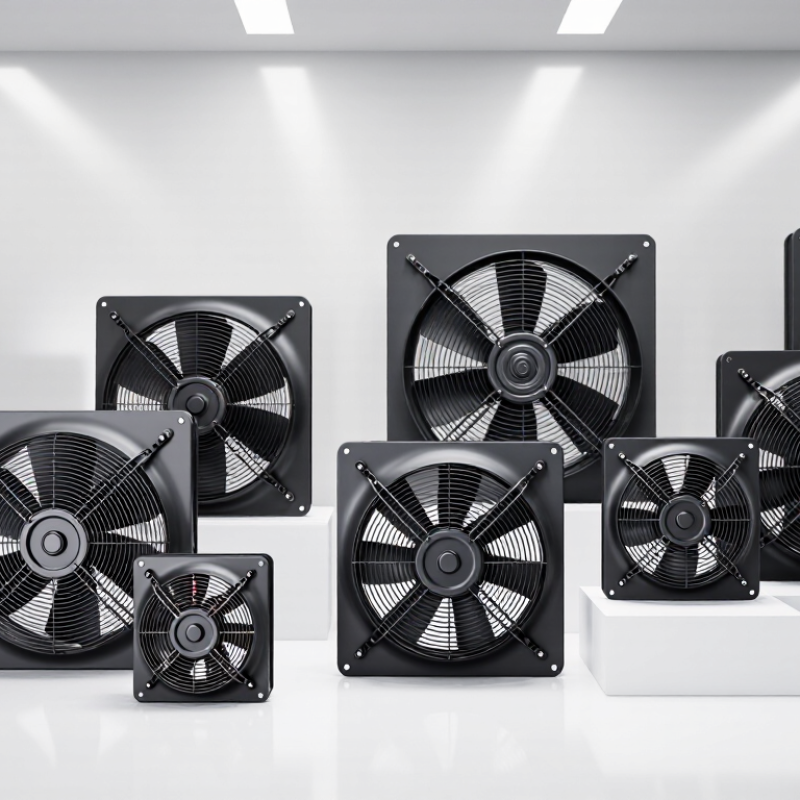
How to choose a manufacturer for a specific application: compare the engineering priorities that matter most to your operating environment.
Relative priority scores (1 = lower priority, 5 = critical) are a qualitative planning guide, not measured product or manufacturer ratings. Confirm airflow, static pressure, temperature range, protection requirements, noise limits, and service life against your system specifications.