| Fan Type |
Match the airflow pattern and pressure requirement to the application. |
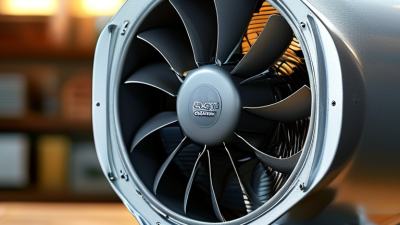
Axial fans for high airflow and low-to-moderate pressure; centrifugal fans for higher static pressure; cross-flow fans for narrow, evenly distributed air streams. |
The wrong fan type can cause insufficient cooling, excessive noise, or unnecessary energy consumption. |
Confirm required airflow, static pressure, installation orientation, and available space before purchase. |
| Airflow Capacity |
Choose a rated airflow that meets the equipment manufacturer's cooling requirement. |
Common small equipment fans: approximately 50–300 m³/h; larger cabinet or HVAC fans may exceed 1,000 m³/h. Actual output decreases with system resistance. |
Free-air airflow ratings may be much higher than the airflow delivered through filters, grilles, ducts, or heat exchangers. |
Compare the fan curve with the system resistance curve instead of relying only on the maximum airflow figure. |
| Motor Voltage and Frequency |
Select a voltage and frequency compatible with the electrical supply. |
Typical AC options include 100–120 V or 200–240 V, at 50 or 60 Hz. Some motors are designed for dual-voltage operation. |
Incorrect voltage or frequency can cause overheating, poor performance, premature failure, or an electrical hazard. |
Verify the nameplate rating, wiring diagram, rated current, and local supply before installation. |
| Power Consumption |
Compare watts at the required operating point, not only at free-air conditions. |
Small AC fans commonly range from about 10–100 W; larger industrial units can require several hundred watts or more. |
Lower input power at the same delivered airflow generally reduces operating cost and heat generation. |
Record operating current and check for abnormal increases that may indicate blocked airflow, bearing wear, or motor problems. |
| Frame Material |
Use a material suited to temperature, humidity, corrosion, and mechanical stress. |
Reinforced polymer for lightweight indoor applications; painted or coated steel for general industrial use; aluminum for reduced weight and improved corrosion resistance. |
Material selection affects structural strength, vibration resistance, corrosion life, and installation weight. |
Inspect for cracks, rust, coating damage, loose mounting points, and deformation around screw holes. |
| Impeller or Blade Material |
Choose blades that tolerate the expected temperature, moisture, dust, and rotational speed. |
Molded polymer for light-duty applications; aluminum or coated steel for higher-temperature or more demanding environments. |
Cracked, warped, or corroded blades can create imbalance, noise, reduced airflow, and motor overload. |
Clean deposits carefully and replace blades showing cracks, permanent deformation, or severe corrosion. |
| Operating Temperature |
Select a fan with a rated ambient and motor temperature range that covers the installation site. |
Many general-purpose AC fans are rated around −10°C to +60°C, but the actual range varies by motor, bearing, insulation, and enclosure design. |
Operating outside the rating can shorten insulation, bearing, lubricant, and capacitor life. |
Measure the air temperature near the motor and allow sufficient clearance for heat dissipation. |
| Ingress Protection |
Choose an enclosure protection level appropriate for dust, splashing water, and cleaning conditions. |
IP20 or similar for clean, dry indoor areas; higher ratings such as IP44 or IP54 may be suitable for protected industrial environments when specified by the manufacturer. |
Ingress protection helps limit entry of solid particles and water, but it does not make every fan suitable for outdoor or washdown use. |
Check the complete assembly rating, cable entry, mounting position, and whether the fan is exposed to direct spray or condensation. |
| Bearing Design |
Use a bearing type appropriate for operating hours, orientation, temperature, and service accessibility. |
Sleeve bearings are often economical for moderate-duty use; ball bearings generally provide better durability for continuous operation or varying mounting positions. |
Bearing wear is a common source of noise, vibration, increased current, and eventual fan failure. |
Listen for grinding or rattling, check shaft play, and follow the specified lubrication or replacement procedure. |
| Expected Service Life |
Assess life at the actual temperature, load, duty cycle, and installation orientation. |
Typical ratings may be expressed as 30,000–70,000 operating hours, but the stated value depends strongly on bearing type and test conditions. |
A life rating is not a guarantee; high temperature, contamination, vibration, and frequent cycling can reduce service life. |
Prefer documented life data at the intended ambient temperature and keep a replacement schedule for critical equipment. |
| Electrical Safety |
Require proper insulation, grounding, overcurrent protection, and accessible disconnecting means. |
Look for applicable electrical safety certification, thermal overload protection, protective earth connection, and wiring suitable for the rated temperature. |
Safe electrical design reduces the risk of shock, short circuits, winding damage, and fire. |
Disconnect power before service, inspect terminals for heat damage, and have electrical work completed by qualified personnel. |
| Guarding and Mechanical Safety |
Use guards that prevent contact with moving parts while maintaining acceptable airflow. |
Metal or durable polymer guards with secure fasteners; guard openings should comply with the applicable machinery safety requirements for the installation. |
Guards reduce the risk of finger, tool, and debris contact with rotating blades. |
Check that the guard is firmly attached, undamaged, and not rubbing against the impeller. |
| Noise and Vibration |
Consider sound pressure, tonal noise, vibration, and the distance between the fan and occupants. |
Small fans may be approximately 30–60 dB(A) under specified test conditions; larger or high-speed fans can be louder. |
Noise and vibration affect comfort, equipment reliability, and nearby structures. |
Use balanced blades, secure fasteners, vibration isolators where appropriate, and clean the impeller regularly. |
| Maintenance Access |
Choose a design that allows safe cleaning, inspection, bearing service, and replacement. |
Removable guards, accessible terminals, replaceable capacitors, and serviceable bearings can reduce downtime, depending on the model. |
Poor access increases cleaning time and encourages overdue maintenance. |
Allow clearance around the fan, keep service instructions available, and identify isolation points before installation. |
| Cleaning Requirements |
Select a fan that matches the site's dust, grease, lint, and moisture conditions. |
Clean indoor environments may need periodic inspection; dusty or greasy environments may require more frequent cleaning and filtration. |
Deposits reduce airflow, increase imbalance, restrict cooling, and raise motor temperature. |
Isolate power, remove guards when permitted, use a soft brush or vacuum, and avoid forcing liquid into the motor or bearings. |
| Installation Position |
Confirm whether the fan supports horizontal, vertical, or other mounting orientations. |
Some sleeve-bearing fans have orientation restrictions; ball-bearing designs are often more flexible, subject to the product specification. |
Incorrect orientation can affect lubrication, bearing load, drainage, and motor cooling. |
Follow the permitted mounting direction and use all specified fasteners and support points. |
| Replacement Parts and Documentation |
Prefer products with clear specifications, wiring diagrams, dimensional drawings, and available replacement components. |
Useful documentation includes airflow-pressure curves, electrical ratings, sound data, temperature limits, mounting details, and maintenance instructions. |
Good documentation improves selection accuracy, installation safety, troubleshooting, and long-term maintainability. |
Record the fan's model code, electrical rating, installation date, and inspection history for future replacement. |