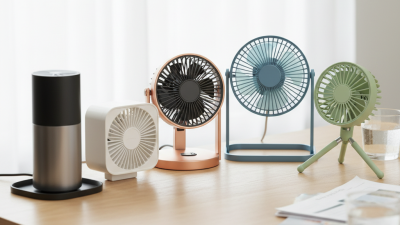
2026 How to Choose the Best Axial Fan Mini Fan for Your Needs?
In today’s fast-paced world, choosing the right Axial Fan Mini Fan can significantly impact your comfort and productivity. With numerous options available, it may be challenging to identify the best one for your needs. These fans are not just for cooling; they are essential tools for ventilation and air circulation as well.
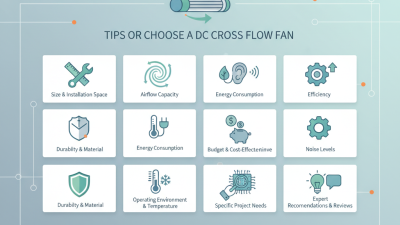
When selecting an Axial Fan Mini Fan, consider factors such as size, noise level, and airflow capacity. Some fans prioritize compact design, while others focus on power. It’s important to assess your specific requirements. Do you need it for personal use or for a larger space? Additionally, think about where you'll use it most. Each setting might demand different features.
Relying solely on brand names can be misleading. Reading user reviews and expert opinions can help narrow your choices. However, many brands market their products aggressively, making it harder to see the true value. Reflecting on your experiences with previous fans can guide your decision. An educated choice will lead to better satisfaction and performance.
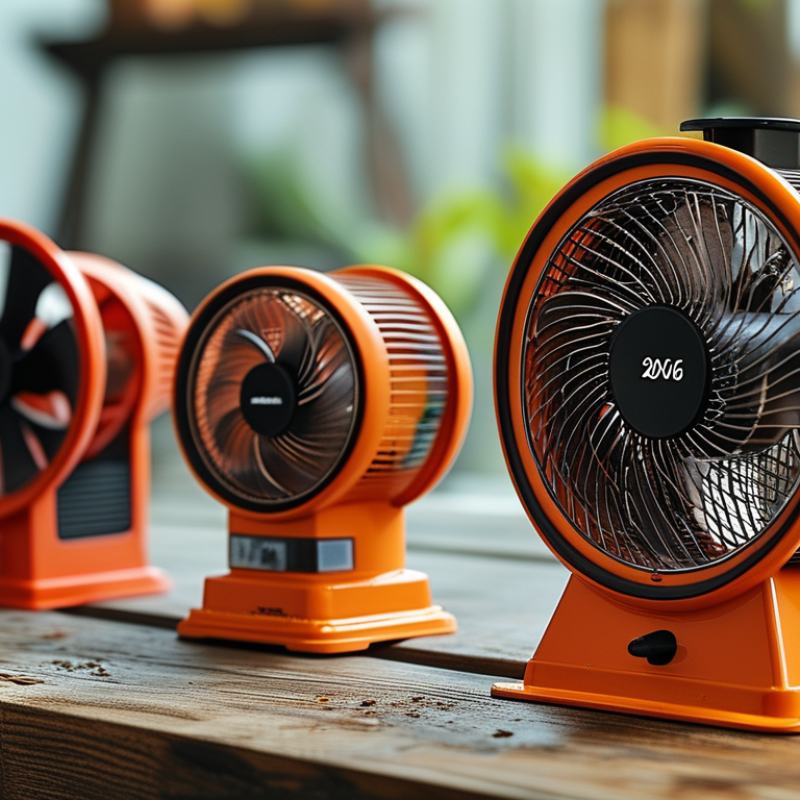
Understanding the Basics of Axial Fans and Mini Fans
Understanding axial fans and mini fans is essential for making informed choices. Axial fans have blades that rotate around an axis, creating airflow parallel to the fan's shaft. They are commonly used for ventilation in spaces where air needs to be moved efficiently. Mini fans, however, are smaller and more portable, making them suitable for personal use in various settings.
When selecting a fan, consider the airflow requirements of your space. A fan's CFM (cubic feet per minute) rating indicates how much air it can move. Higher ratings mean more air movement, which is vital for larger rooms. Likewise, consider noise levels. Some fans operate quietly, while others can be quite loud at higher speeds. Often, a noisy fan can detract from comfort, especially in quiet spaces.
Tips for choosing a fan: Start by assessing your room size. Measure the dimensions to determine the appropriate fan size. Check the energy efficiency rating too. A more efficient fan can save costs in the long run. Don't overlook portability. If you plan to move it around, lightweight designs are preferable. Evaluating these aspects helps in making the right decision for your needs.
Key Features to Consider When Choosing an Axial Mini Fan
When selecting an axial mini fan, several key features emerge as critical to your decision-making process. Efficiency is paramount. According to the U.S. Department of Energy, an efficient fan can save up to 30% on energy costs. Look for models that offer high airflow with lower power consumption. The performance specification often hinges on the fan’s RPM and blade design, which determine how effectively it moves air.
Noise levels are another important consideration. Many users prefer quieter operations, especially in homes and offices. Industry reports indicate that fans operating below 40 decibels are considered whisper-quiet. This can improve comfort levels in various settings. Consider the fan's size and weight as well; these factors influence its portability and placement in tight spaces.
Durability and build quality are essential. Cheap materials may lead to premature failure. A recent market study highlights that over 20% of mini fan users reported dissatisfaction due to poor construction. Look for fans that have been tested for longevity under various conditions. This can help ensure a reliable performance over time, even in challenging environments.
Assessing the Performance and Efficiency of Mini Axial Fans
When selecting a mini axial fan, assessing performance and efficiency is crucial.
These fans are known for their compact size and high airflow capabilities. It’s important to understand air movement and static pressure. A fan's airflow is usually measured in cubic feet per minute (CFM). Higher CFM ratings often indicate better performance. However, efficiency matters as well. A fan that consumes more wattage might not be the best choice if it doesn’t deliver a proportional increase in airflow.
Look at the fan's design. Blade shape and angle play critical roles in airflow efficiency. Fans with well-engineered blades can move more air quietly.
Noise levels, measured in decibels, are also key considerations, especially in quiet environments. Sometimes, performance comes at the cost of noise. Users may find the ideal balance between airflow and sound level.
It is essential to identify your specific needs. What is efficient for one application may not be suitable for another. Reflecting on these elements is vital for any buyer.
Comparing Different Brands and Models of Axial Mini Fans
When selecting an axial mini fan, understanding the different brands and models is essential. Each brand delivers unique features tailored to various needs. Some fans prioritize high airflow, making them excellent for cooling small spaces quickly. Others focus on low noise levels, perfect for bedrooms or office settings. Comparing specifications like motor type and blade design can help narrow your choices.
Consider the size and design of the fan as well. Some models are compact, ideal for travel or small rooms. Other designs may offer more power but could take up more space. Users often reflect on their experiences with durability over time. A fan that performs well initially may face issues with longevity. Reading reviews across various platforms can provide insight into the reliability of different models.
Additionally, keep in mind energy efficiency ratings. Some axial fans consume more power than others. This could affect your electricity bill. It’s crucial to balance performance with energy consumption. It can be a challenge to find the right model that meets all your criteria without breaking the bank. Evaluating your specific needs ensures a better purchasing decision.
Tips for Maintenance and Care of Your Axial Fan Mini Fan
Maintaining your axial fan mini fan is crucial for optimal performance. Regular cleaning can significantly enhance efficiency. According to industry reports, neglecting maintenance can reduce performance by up to 30%. Dust buildup can hinder airflow and increase energy consumption.
Check the blades frequently. They may accumulate dirt or debris, leading to imbalance. An imbalanced fan can create excessive noise and vibration. These factors often signal that a repair or replacement is necessary. Regularly inspecting the power cord and motor is also important to prevent electrical hazards.
Lubrication is another essential maintenance tip. Proper lubrication keeps the fan operating smoothly. About 20% of fans experience malfunction due to lack of lubrication. Use recommended oil types to protect your fan's internal components. Avoid over-lubricating, as this can attract dust. Keeping your fan well-maintained will not only enhance its longevity but also improve air circulation in your space.
Axial Fan Mini Fan Performance Comparison