Top Benefits of Using a Dc Cross Flow Fan for Your Home or Office?
In today’s modern world, the efficiency of home and office equipment is crucial. One often overlooked yet essential device is the DC Cross Flow Fan. Expert Richard Thompson, a leading HVAC consultant, states, “The DC Cross Flow Fan is a game changer for energy efficiency and airflow control.” This sentiment resonates with many users who seek to enhance their living or working environments.
The DC Cross Flow Fan offers various advantages. It operates quietly, making it suitable for both open spaces and intimate settings. Its compact design allows for flexible installation, maximizing airflow without consuming excessive space. Moreover, this fan significantly reduces energy consumption, which is a vital consideration for environmentally conscious consumers.
However, potential buyers must reflect on their specific needs. The effectiveness of the DC Cross Flow Fan can vary based on room size and layout. Skipping the research phase could lead to less optimal performance. Understanding your environment ensures you harness the full benefits of this innovative technology. Investing in the right fan can enhance comfort and air quality without unwanted noise or high energy bills.

Advantages of Energy Efficiency in DC Cross Flow Fans for Homes
DC cross flow fans are becoming increasingly popular in homes and offices, primarily due to their energy efficiency. According to a report by the U.S. Department of Energy, using DC motors can improve efficiency by up to 70% compared to traditional AC fans. This is significant for homeowners looking to reduce energy costs. For instance, a typical household can save up to $100 per year with these fans.
Another key advantage lies in their quiet operation. DC cross flow fans produce less noise, often below 30 decibels, making them suitable for quiet environments like bedrooms and libraries. In contrast, many traditional fans can reach noise levels of 50 decibels or higher. This quieter performance adds to overall comfort without sacrificing air movement. However, one must consider that installation costs for DC fans can be a bit higher initially.
Moreover, DC cross flow fans offer better airflow dynamics. Their design allows them to push air more evenly throughout a space. Studies indicate that this can improve indoor air quality. Even with these benefits, users should reflect on their specific needs and room designs to maximize effectiveness. Investing in these fans is worthwhile but requires careful consideration of placement and usage patterns.
Enhanced Air Circulation Benefits of DC Cross Flow Fans in Offices
DC cross flow fans are becoming increasingly popular in offices for their enhanced air circulation benefits. These fans are designed to optimize airflow, ensuring that fresh air circulates effectively throughout workspaces. According to recent studies, better air circulation can improve employee productivity by up to 20%. Moreover, maintaining a comfortable indoor environment can reduce fatigue and increase focus.
Tip: Place DC cross flow fans near workstations to maximize their impact on air circulation. This strategic placement can help prevent stagnation and ensure that every corner of the room receives adequate airflow.
Energy efficiency is another significant advantage of DC cross flow fans. Reports indicate they consume up to 70% less energy than traditional fans. This reduced energy usage translates to lower utility bills and a smaller carbon footprint. With sustainability becoming a crucial concern in today’s workplace, investing in these fans can promote an eco-friendly image.
Tip: Regular maintenance of your fans, such as cleaning the filters, can further enhance their efficiency. This simple action can help maintain optimal airflow and prolong the lifespan of your fans.
Noise Reduction: A Key Feature of DC Cross Flow Fans Compared to AC Fans
DC cross flow fans are becoming increasingly popular due to their remarkable noise reduction capabilities. Unlike traditional AC fans, DC fans utilize a different motor technology. This results in quieter operation, making them ideal for homes and offices where concentration is essential. The fan’s design allows for smooth airflow, contributing to a much more tranquil environment.
When installing a DC cross flow fan, one significant benefit is adjusting noise levels. Many users report appreciating the gentle hum that accompanies these fans. This contrasts sharply with the often disruptive noise from AC fans. Additionally, the advanced technology means that these fans generate far less vibration. Less vibration leads to a more peaceful atmosphere, especially in quiet spaces like libraries or study areas.
However, it is important to consider installation costs and maintenance. While DC cross flow fans can offer excellent noise reduction, they may require a higher initial investment. Ensuring proper installation can also be key to achieving the full benefits of their quiet performance. Users should assess their needs carefully, weighing the long-term advantages against immediate expenses.
Longer Lifespan and Maintenance Benefits of DC Cross Flow Fan Technology
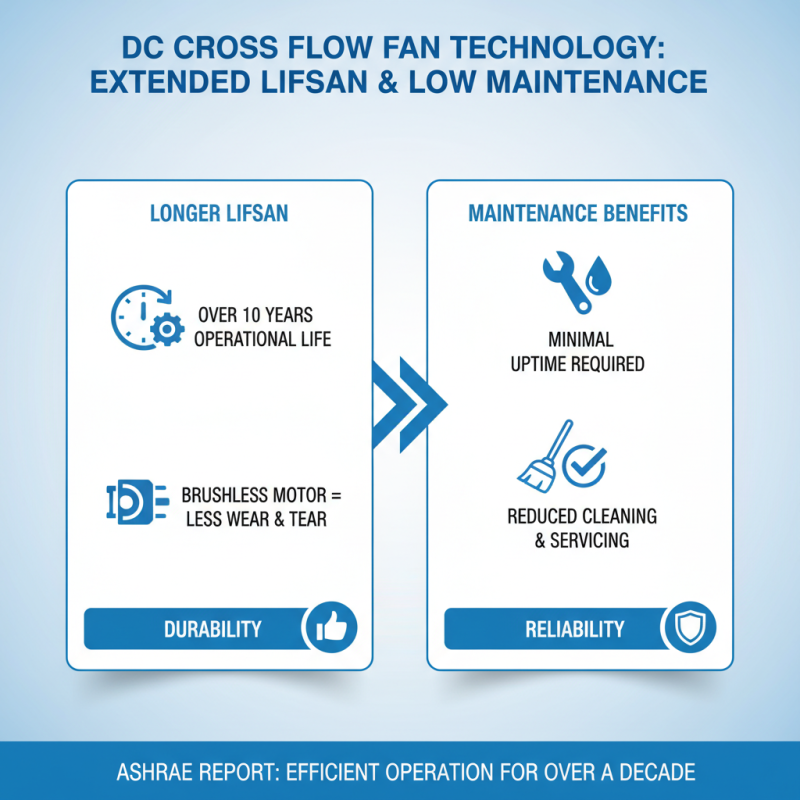
DC cross flow fans are gaining traction due to their impressive longevity and low maintenance. According to a report by the American Society of Heating, Refrigerating and Air-Conditioning Engineers (ASHRAE), these fans can operate effectively for over 10 years with minimal upkeep. Their brushless motor technology reduces wear and tear, significantly extending their lifespan.
In residential and office settings, a DC cross flow fan operates quietly while providing efficient airflow. This design promotes even cooling, minimizing hot spots. According to recent studies, proper airflow can improve indoor air quality by reducing humidity and contaminants. A cleaner environment helps prevent health issues.
Tips: Regularly check the fan's filters and blades. This maintenance prevents dust buildup, enhancing performance. Ensure the fan is mounted properly to avoid vibrations.
These fans do have some drawbacks. Initial costs may be higher than traditional fans, and specialized knowledge may be required for installation. Users sometimes overlook these needs. Balancing initial investments with energy savings over time requires careful thought, especially for budget-conscious consumers.
Eco-Friendly Cooling Solutions: Reducing Carbon Footprint with DC Fans
The growing demand for eco-friendly cooling solutions highlights the importance of DC cross flow fans. These fans operate at higher efficiency levels compared to traditional fans. According to the US Department of Energy, DC fans can reduce energy consumption by up to 70%. This means lower utility bills and a smaller carbon footprint for the average home or office.
The integration of DC fans into indoor spaces allows for significant energy savings while maintaining effective airflow. These fans often operate at quieter levels, enhancing the comfort of living and working environments. A study published in the Journal of Applied Energy found that using DC fans can significantly lower greenhouse gas emissions. Notably, many homes report a noticeable reduction in heating and cooling costs, showcasing their practical benefits.
However, not all DC fans are created equal. Many consumers may overlook the initial investment costs associated with higher-quality models. Adjusting to their operational behavior can also take time. Still, the long-term savings and environmental benefits may outweigh these challenges. It’s essential to consider the full lifecycle performance of these fans for optimal use in eco-friendly applications.
Top Benefits of Using a DC Cross Flow Fan
| Benefit |
Description |
Carbon Footprint Reduction |
Energy Efficiency |
| Quiet Operation |
DC fans operate at lower noise levels compared to AC fans. |
Reduces noise pollution in living and working spaces. |
Uses less power while maintaining performance. |
| Energy Savings |
DC fans consume significantly less energy than traditional AC fans. |
Lower energy consumption contributes to reduced greenhouse gas emissions. |
Can reduce electricity bills by up to 70%. |
| Eco-Friendly Materials |
Often made from recyclable materials, promoting sustainability. |
Supports environmental conservation efforts. |
Encourages responsible product lifecycle management. |
| Versatility |
Can be used in various applications, including HVAC systems, appliances, and more. |
Flexible usage helps reduce overall energy demand. |
Efficient performance across different settings. |
| Long Lifespan |
Typically last longer than traditional fans due to lower heat generation and wear. |
Reduced need for replacements decreases environmental impact. |
Longer-lasting products mean less energy used for production. |