Why Do You Need a Cooling Fan for Your Home or Office?
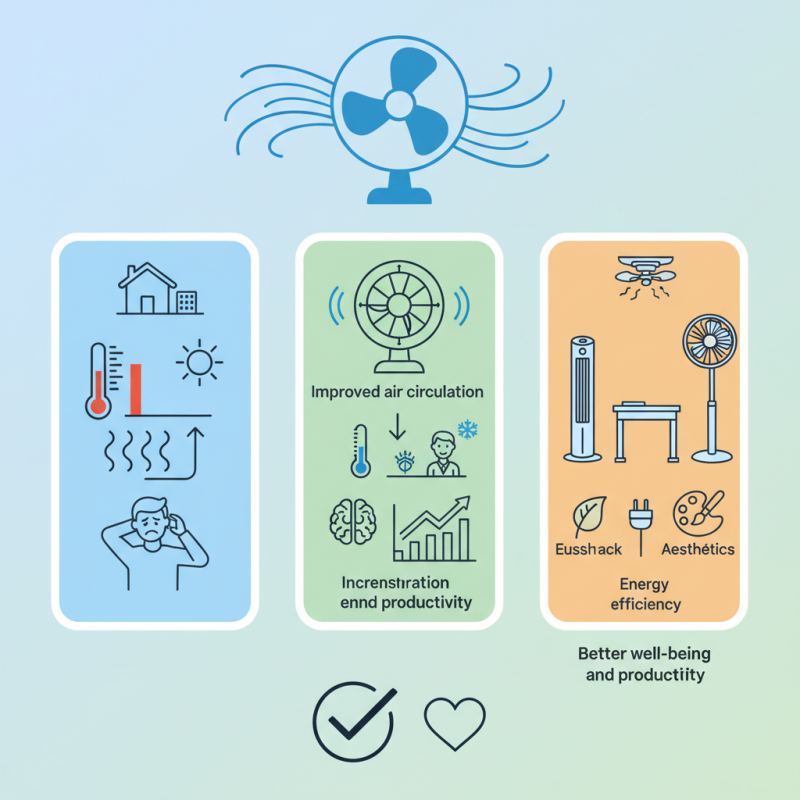
In today's fast-paced world, a Cooling Fan is more than just a convenience; it’s a necessity. Homes and offices often trap heat, leading to discomfort and reduced productivity. A reliable Cooling Fan can significantly improve air circulation and maintain a comfortable environment.
Many people underestimate its importance. Without proper airflow, rooms can feel stale and stuffy. This not only affects comfort but can also impact concentration and work efficiency. A Cooling Fan helps mitigate these issues by refreshing the air, making spaces feel cooler and more inviting.
Choosing the right Cooling Fan involves understanding various options. Some models are designed for energy efficiency, while others prioritize aesthetics. It's essential to find one that meets specific needs. Ultimately, investing in a quality Cooling Fan can enhance your space, contributing to better well-being and productivity.
Importance of Temperature Control in Home and Office Environments
Temperature control is crucial in both home and office environments. Uncontrolled temperatures can lead to discomfort and affect productivity. A cooling fan can help regulate the climate, creating a more pleasant atmosphere. High temperatures often make it difficult to concentrate, leading to frustration. Keeping rooms cool enhances focus and creativity, essential for any workspace.
When selecting cooling fans, consider the size of the area. Larger spaces may require more powerful fans, while smaller rooms can benefit from portable options. Placement is key; ensure the fan circulates air effectively. Sometimes, the perfect position is not obvious. Experiment with different locations for optimal airflow.
Monitor humidity levels too. A fan may not eliminate humidity but can help evaporate excess moisture. This balance is vital for comfort. Remember to maintain your fan regularly. Dust buildup can reduce efficiency. Regular cleaning helps ensure long-lasting performance. Simple tasks can make a significant difference in comfort levels.
Why Do You Need a Cooling Fan for Your Home or Office? - Importance of Temperature Control in Home and Office Environments
| Dimension |
Importance |
Recommendations |
| Air Circulation |
Improves comfort levels by enhancing airflow. |
Use ceiling fans or desk fans to enhance air movement. |
| Humidity Control |
Helps in reducing moisture levels, preventing mold growth. |
Invest in dehumidifying fans for damp areas. |
| Energy Efficiency |
Can minimize reliance on air conditioning, reducing energy bills. |
Utilize energy-efficient fans during milder temperatures. |
| Noise Reduction |
Masks background noise, creating a more pleasant environment. |
Choose fans with quiet operation features. |
| Health Benefits |
Promotes better sleep and reduces heat-related illnesses. |
Use fans in bedrooms during hot nights for better sleep quality. |
Benefits of Using Cooling Fans for Indoor Air Quality and Comfort
Cooling fans are essential for enhancing indoor air quality. They create airflow that helps distribute fresh air throughout the space. This circulation can reduce humidity levels, preventing mold growth. A well-ventilated room feels more comfortable and welcoming, especially during warm days.
Using fans also helps in energy savings. They can cool your space efficiently when compared to air conditioning units. Fans allow you to raise your thermostat by a few degrees without sacrificing comfort. This small adjustment can lead to significant savings on your energy bills.
**Tip:** Place fans near windows to draw in cooler air during the evening. **Tip:** Clean your fans regularly to maintain efficiency and promote better air quality. However, be cautious with positioning to avoid drafts. Proper placement can make all the difference in comfort levels.
Benefits of Using Cooling Fans for Indoor Air Quality and Comfort
Energy Efficiency and Cost Savings Associated with Cooling Fans
Cooling fans play a crucial role in enhancing energy efficiency in homes and offices. They can help reduce reliance on air conditioning systems. This reduction leads to significant cost savings over time. When temperatures rise, using a fan can make the space feel cooler without using excessive energy.
Not everyone realizes that cooling fans can be particularly effective in improving airflow. A well-placed fan can circulate air, making room temperatures more comfortable. This simple addition can lower utility bills by keeping air conditioners from working too hard. However, it’s essential to use fans wisely. Running them when unnecessary wastes energy.
The initial costs of purchasing a fan may seem trivial compared to potential savings. Yet, choosing the right fan for your space requires thought. Some may find they need multiple fans, creating a more significant upfront investment. It’s a balance between comfort, efficiency, and cost that deserves careful consideration. Each choice should reflect your unique environment and needs.
Comparison of Cooling Fans vs. Air Conditioners in Residential Spaces
When considering cooling solutions for your home or office, cooling fans and air conditioners each have their merits. Cooling fans are generally more energy-efficient and cost-effective. They provide a steady flow of air that can make warm environments feel cooler. You can place them in various areas, unlike bulky air conditioners. Fans work by enhancing evaporation from your skin, helping you feel cooler without drastic temperature changes.
In contrast, air conditioners effectively lower the room temperature. They remove humidity and provide a more controlled climate. This can be essential in areas with intense heat or humidity. However, they consume more energy and often require regular maintenance. This can lead to higher utility bills. Furthermore, the installation process can be complex and may not fit all spaces.
Choosing between a cooling fan and an air conditioner boils down to specific needs and circumstances. It’s essential to evaluate the climate, room size, and energy costs. Sometimes, combining both options may offer the best comfort. Reflecting on your unique situation can lead to better decisions regarding indoor cooling.
Understanding the Role of Humidity in Cooling Fan Performance and Effectiveness
Humidity plays a crucial role in the performance of cooling fans. When humidity levels rise, the air feels warmer. This makes cooling fans less effective. They circulate air, but when humidity is high, that air remains warm and sticky. Many people underestimate the impact of moisture in the air.
A fan pushes air around, creating a warm and sticky wind-chill effect. Yet, when humidity is present, that effect diminishes. The moisture in the air can prevent sweat from evaporating, which makes cooling fans feel less refreshing. It’s essential to understand this dynamics. Your fan may seem ineffective in humid conditions.
In high humidity, proper temperature management becomes vital. You might need to consider dehumidifiers along with your fans. This combination can create a more comfortable environment. Reflecting on this can lead to better choices for personal comfort. A cooling fan is not just about moving air; it's about optimizing the air you breathe.