How to Choose the Best AC Cooling Fan for Your Needs?
Choosing the best AC cooling fan is crucial for comfort, especially during hot months. An AC cooling fan enhances the air circulation in your space. With numerous options available, making a decision can feel overwhelming. This guide will offer insights into selecting the right AC cooling fan tailored to your specific needs.
Consider factors like room size, fan type, and noise level. The ideal AC cooling fan should match your environment. A powerful option can make a significant difference on sweltering days. It's essential to understand the functions of different fans. Some may focus solely on cooling, while others add features like air purification.
Not every fan fits everyone's needs. Reflecting on personal preferences can help. Is noise a concern? Or do you need a more portable model? Exploring these questions can lead to a more satisfying choice. With the right AC cooling fan, you can create a more comfortable and enjoyable living space.
Understanding Different Types of AC Cooling Fans and Their Applications
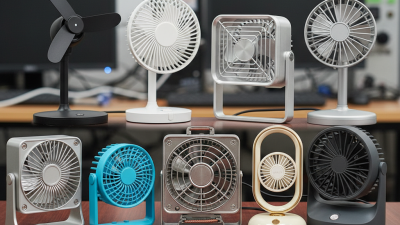
When it comes to choosing the right AC cooling fan, understanding the different types available is crucial. There are generally three main types:
axial, centrifugal, and bladeless fans.
Axial fans push air parallel to the fan's axis and are perfect for cooling large spaces. They are commonly found in residential or commercial settings.
Centrifugal fans, on the other hand, use a rotating disk to draw in air and push it outwards, making them ideal for ventilation systems.
They're often used in industrial applications due to their high efficiency.
Bladeless fans present a modern design and operate by drawing air through a base and expelling it through a ring. These fans are quieter and easier to clean.
However, they are usually less powerful than traditional fans, making them suitable for small rooms.
When selecting a fan, consider the space where it will be used and the specific cooling needs.
Ensure that the airflow capacity matches the area’s requirements.
Choosing the best fan isn't always a straightforward task. Each type has its strengths and limitations.
Some fans consume more energy, while others may not provide sufficient cooling.
It’s essential to weigh these factors carefully. A fan that works well in one environment may not perform as effectively in another,
so evaluating your specific circumstances is vital.
Key Specifications to Consider When Choosing an AC Cooling Fan
Choosing the right AC cooling fan involves understanding important specifications. First, consider the fan size. A larger fan generally moves more air, which may provide better cooling. However, it also takes up more space. For rooms with limited space, a smaller fan might be preferable.
Another key specification is the noise level. Some fans operate quietly, while others can be quite loud. If you'll use the fan while sleeping or working, noise may be a critical factor. Read reviews to gauge real-world noise levels.
**Tip:** Check the fan's energy efficiency rating. An efficient fan can save you money over time.
Airflow capacity is also crucial. Measure the room's square footage to find the airflow requirement. Balancing airflow and noise is vital. High airflow can mean more noise, so find a fan that meets your needs.
**Tip:** Look for adjustable speed settings. They give you control over airflow and sound, tailoring the experience to your preference.
Comparison of Key Specifications for AC Cooling Fans
This bar chart illustrates key specifications to consider when choosing an AC cooling fan, including airflow (CFM), noise level (dB), energy efficiency (W/CFM), and price ($). These factors are essential for selecting a fan that meets your cooling needs while balancing performance and cost.
Evaluating Energy Efficiency Ratings: How They Impact Performance
When selecting an AC cooling fan, energy efficiency ratings significantly impact performance. These ratings indicate how much energy the fan uses relative to its cooling output. A higher rating often means you're getting better cooling for less energy consumed. This can translate into lower utility bills and a smaller carbon footprint. Consumers should look for Energy Star ratings or similar certifications to identify efficient models.
However, it’s essential to remember that high energy efficiency does not always equal the best choice for every situation. Different environments may require different cooling capacities. For instance, a small room doesn’t need the same fan power as a large, open space. Sometimes, a more powerful fan is necessary to achieve desired comfort levels. Avoid assuming that higher energy efficiency will automatically meet your cooling needs.
Also, consider noise levels and design when choosing a fan. An overly loud fan can disrupt your peace. Personal comfort should not be sacrificed for efficiency alone. It’s worth testing a fan in-store if possible, ensuring it meets both your performance expectations and personal preferences. Reflect on your specific needs to find the ideal balance between efficiency and usability.
Assessing Noise Levels: Importance of Decibel Ratings in Cooling Fans
When selecting an AC cooling fan, noise levels play a crucial role. Many consumers overlook decibel ratings, which measure sound intensity. Research shows that fans operating above 60 decibels can be disruptive in quiet environments. A study by the Acoustical Society of America indicates that prolonged exposure to noise levels above 70 decibels may lead to increased stress and reduced productivity.
Choosing a quieter fan can improve comfort. Look for models with decibel ratings below 50 for optimal performance. Fans rated around 30 decibels are comparable to a whisper. It's essential to balance airflow and noise level. More powerful fans typically produce more noise. Consumers need to consider their specific environments, whether it’s a bedroom, office, or workshop.
Tips: Always check the noise level before purchasing a fan. Reading user reviews can provide real-life insights. Consider a fan with adjustable speeds, allowing you to reduce noise during peaceful times. Reflect on your daily activities; a louder fan might work in busy spaces but may be unsuitable for relaxation.
Installation and Maintenance Tips for Optimal AC Cooling Fan Performance
When choosing an AC cooling fan, installation and maintenance are crucial for optimal performance. Proper setup ensures efficiency and longevity. Ensure you have the right tools before beginning. Mounting the fan securely prevents vibrations. Check the alignment to avoid noise issues.
Regular maintenance keeps your fan running smoothly. Dust build-up can hinder performance. Clean the blades and motor regularly. A soft brush or cloth works well for removal. Inspecting electrical connections is also key. Loose wires can cause malfunctions or safety hazards.
Consider your environment when maintaining the fan. Humidity and dust levels may dictate cleaning frequency. If the fan is used often, check it monthly. For less frequent use, inspect it quarterly. Keeping notes on maintenance tasks is helpful. This way, you can track what needs attention.