2026 Top Ac Cross Flow Fan Innovations and Trends Explained?
As industries evolve, the role of AC Cross Flow Fans becomes increasingly pivotal. Industry expert Dr. Emily Carter emphasizes, "Innovation in fan technology will shape energy efficiency and performance." This highlights the critical trends redefining the AC Cross Flow Fan landscape in 2026.
Current advancements focus on improved energy efficiency and reduced noise levels. Manufacturers are integrating smart technology for better control mechanisms. A noticeable trend is the shift toward sustainable materials in fan production. These changes reflect growing environmental consciousness among consumers and industries.
Despite the promising innovations, challenges remain. The balance between cost and quality continues to be a concern. Some manufacturers may struggle to adopt these new technologies. The future holds immense potential, but careful consideration is necessary to navigate these complexities in the AC Cross Flow Fan market.

Key Technological Innovations in AC Cross Flow Fans for 2026
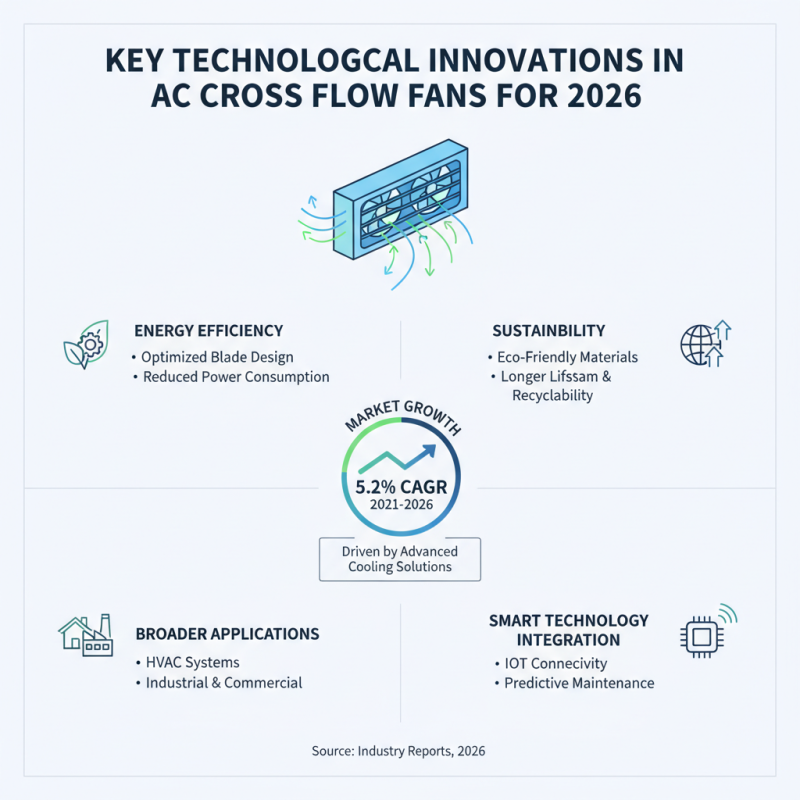
The AC cross flow fan market is experiencing significant innovations in 2026, driven by the need for energy efficiency and sustainability. According to recent industry reports, the global market for cross flow fans is projected to grow at a compound annual growth rate (CAGR) of 5.2% from 2021 to 2026. This reflects an increasing demand for advanced cooling solutions across various applications, including HVAC systems.
Key technological advancements include the integration of brushless DC motors, which enhance energy efficiency by reducing power consumption. New designs are focusing on reduced noise levels while maintaining high airflow. Research shows that consumers are becoming more sensitive to sound levels, prompting engineers to innovate quieter fan designs. Newer models demonstrate up to a 30% reduction in noise without sacrificing performance.
Moreover, smart fan technology is emerging as a game-changer. These fans can adapt their speed based on real-time data, optimizing energy use in changing conditions. Some units even incorporate IoT capabilities, allowing for remote monitoring and control. While these advancements are promising, they also present challenges in standardization and compatibility across different systems. Ensuring reliable integration will be crucial for widespread adoption in the coming years.
Emerging Trends in Energy Efficiency for AC Cross Flow Fans
The AC cross flow fan market is shifting towards energy-efficient designs. A recent report indicates that energy consumption for HVAC systems accounts for nearly 30% of total electricity use in commercial buildings. Therefore, enhancing the efficiency of these fans is crucial. Manufacturers are now focusing on innovations that reduce energy consumption and improve airflow.
New technologies include advanced motor designs and blade configurations. Instead of traditional materials, engineers are exploring composites that reduce weight and enhance performance. According to industry experts, fans designed with these materials can achieve up to 25% greater energy efficiency. However, the integration of these materials poses challenges. It often increases production costs and may affect pricing.
Energy-efficient fans not only lower operational costs but also minimize environmental impact. The U.S. Department of Energy suggests that improving efficiency in HVAC systems could cut energy consumption by 20-40%. Still, many users struggle to adopt these newer technologies. Factors like installation expertise and upfront costs deter some potential buyers. Balancing these innovations with practicality remains an ongoing conversation in the industry.
2026 Energy Efficiency Trends in AC Cross Flow Fans
This chart illustrates the projected trends in energy efficiency for AC cross flow fans from 2019 to 2026. It showcases a significant upward trend in efficiency, reaching 92% by 2026, reflecting ongoing innovations and advancements in fan technology.
Materials and Design Advances in AC Cross Flow Fan Manufacturing
The landscape of AC cross flow fans is evolving rapidly. Recent advances in materials significantly impact manufacturing processes. Manufacturers are exploring lighter and more durable materials that enhance performance. For instance, composites and advanced plastics provide better structural integrity while reducing weight. These innovations lead to energy efficiency, important for sustainability.
Design is equally pivotal. Sleek, streamlined designs improve airflow dynamics. Computational fluid dynamics (CFD) simulations help engineers create fan blades that optimize air movement. These innovations not only enhance cooling effectiveness but also reduce noise levels in applications.
Tips for fans' performance: Ensure proper maintenance to avoid dust buildup, which can decrease efficiency. Always consider the specific environment the fan will operate in. Lastly, regular testing and adjustments based on airflow patterns are crucial. Keep these aspects in mind to improve longevity and functionality.
Integration of Smart Technology in AC Cross Flow Fan Systems
The integration of smart technology into AC cross flow fan systems is reshaping the HVAC landscape. Recent market analysis indicates that smart fans can improve energy efficiency by around 30%. This is a significant reduction, especially as energy costs rise. Moreover, smart integration allows for real-time monitoring and control. This means users can adjust settings remotely via apps, increasing convenience.
Sensors embedded in these systems collect data on environmental conditions. They help optimize airflow based on room occupancy and temperature changes. For instance, a study from the International Energy Agency suggests that intelligent systems can lead to a 20% increase in cooling performance over traditional methods. This is crucial for both comfort and sustainability.
However, the transition to smart technology is not without challenges. Some users report complications with installation or connectivity issues. The learning curve can also be steep for those unfamiliar with smart devices. Additionally, data security concerns remain a significant barrier. Ensuring the privacy of consumer information is vital to gaining widespread acceptance. Balancing innovation with user confidence will be key as the industry evolves.
2026 Top AC Cross Flow Fan Innovations and Trends Explained - Integration of Smart Technology in AC Cross Flow Fan Systems
| Feature |
Description |
Benefits |
Trends |
| Smart Sensors |
Integration of sensors for real-time performance monitoring. |
Enhanced efficiency and predictive maintenance. |
Increased adoption of IoT in HVAC systems. |
| Energy Efficiency |
Advanced blade design to reduce power consumption. |
Lower operational costs and reduced carbon footprint. |
Focus on sustainability and energy regulations compliance. |
| Remote Control |
Smartphone apps for controlling fan settings. |
Convenience and user-friendly experience. |
Growing trend in home automation systems. |
| Noise Reduction |
Innovative rotor designs to minimize operational noise. |
Improved user comfort and satisfaction. |
Market demand for quieter HVAC solutions. |
| Data Analytics |
Utilization of big data for optimizing fan performance. |
Informed decision-making and performance tuning. |
Increased prominence of data-driven technologies. |
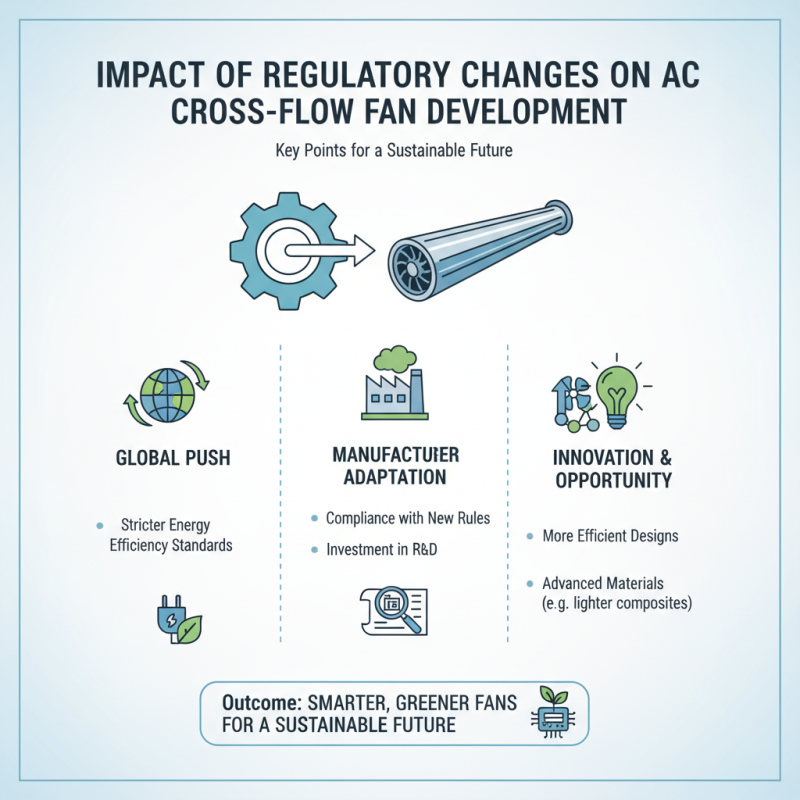
Impact of Regulatory Changes on AC Cross Flow Fan Development
The impact of regulatory changes on AC cross flow fan development is significant. As governments around the world push for stricter energy efficiency standards, manufacturers must adapt. Compliance with new regulations can drive innovation. This creates opportunities for more efficient designs and materials.
Manufacturers face challenges in balancing performance and regulation. Changes may require redesigns, which can be costly. Yet, this can lead to advancements in fan technology. Energy-efficient motors and better airflow designs are emerging. However, there is a need for ongoing evaluation of these innovations.
Understanding the regulations is crucial. Companies must stay informed to avoid penalties and ensure competitiveness. Engaging with stakeholders can provide insights into future developments. The collaborative efforts fuel industry growth and foster innovation. This dynamic environment presents risks and rewards, requiring careful navigation.