How to Choose the Best AC Cross Flow Fan for Your Needs?
Choosing the right AC Cross Flow Fan can be a daunting task. Experts in the industry emphasize various factors to consider. John Smith, a seasoned HVAC engineer, states, “An efficient AC Cross Flow Fan can significantly improve air circulation and comfort.” This insight highlights the importance of selecting the right model for your specific needs.
Consider the fan’s design and airflow capacity. Variations exist in the market, and not all fans fit every application. Width, height, and mounting options can influence performance. It is crucial to assess your space to avoid potential inefficiencies. Additionally, the noise level of the fan can greatly impact comfort.
While many focus solely on price, quality should not be overlooked. An investment in a high-quality AC Cross Flow Fan often pays off in energy savings and enhanced performance. Reflecting on how these factors interact will lead you to a more informed choice. Understanding the technical specifications is just as vital. In the end, your selected fan should align with your requirements and environment.

Factors to Consider When Selecting an AC Cross Flow Fan
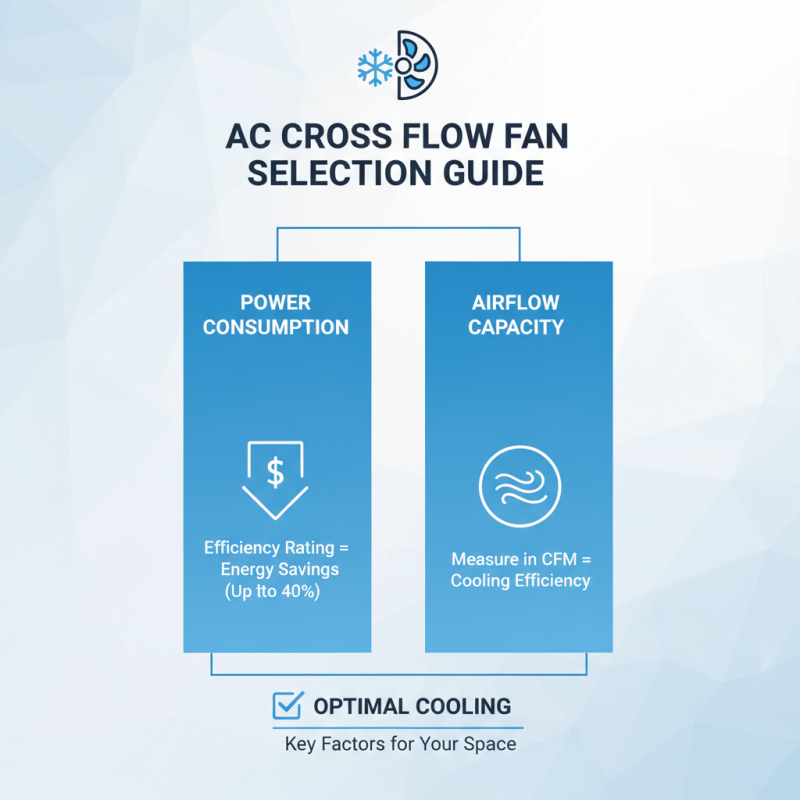
When selecting an AC cross flow fan, several important factors come into play. Power consumption stands out. Research indicates that fan efficiency can significantly impact energy costs. A fan with a higher efficiency rating ensures less energy wasted, potentially saving up to 40% on operational costs over its lifetime. Understanding the fan's airflow capacity is essential as well. It is measured in cubic feet per minute (CFM). An inadequate CFM can affect the cooling efficiency in your space.
Another crucial aspect is the noise level. Fans are typically rated in decibels (dB), and as noise levels rise, comfort can diminish. For example, a fan operating above 50 dB may interfere with a workspace or a quiet room. Manufacturers often provide sound ratings, but real-world performance may vary. Testing fans in actual operating conditions can provide insights not captured in product specifications.
Lastly, consider the physical dimensions and installation requirements of the fan. The available space may limit the type of fan suitable for your needs. Not all fans fit every environment seamlessly. Evaluating the necessary airflow and dimensions can lead to better cooling solutions tailored to specific areas. Building relationships with certified professionals can augment this knowledge and guide selection processes.
Understanding Different Types of AC Cross Flow Fans
When selecting an AC cross flow fan, it's crucial to understand the different types available. Cross flow fans are designed to move air efficiently across surfaces. They come in two primary types: single inlet and double inlet. Single inlet fans draw air from one side, while double inlet fans intake air from two sides. This distinction affects airflow performance and suitability for various applications.
A report from the American Society of Heating, Refrigerating and Air-Conditioning Engineers (ASHRAE) highlights that double inlet fans provide greater airflow and are typically more efficient in larger setups. In contrast, single inlet fans might perform better in compact spaces, where design constraint is a factor. Implementing the right type can significantly optimize cooling systems.
Yet, even with extensive knowledge, selecting the right fan can be tricky. Factors like noise levels, energy efficiency, and installation space can complicate decisions. Noise ratings are particularly vital as they affect comfort in residential or office spaces. A fan designed with lower decibel levels may come at a higher price. Balancing cost, performance, and comfort can require careful thought and reflection.
Evaluating Airflow Requirements for Your Space
Choosing the right AC cross flow fan for your space hinges on understanding your airflow needs. Begin by assessing the dimensions of the area you intend to cool. A small office will require a different airflow capacity than a large warehouse. Calculate the required airflow in cubic feet per minute (CFM) based on room size and ceiling height. This step is crucial in ensuring your fan can effectively circulate air.
Next, consider the layout of your space. Open areas may benefit from stronger fans to push air across longer distances. Narrow or enclosed spaces might need less powerful fans to avoid excessive noise and airflow turbulence. Take into account potential obstacles such as furniture or walls, which can disrupt airflow patterns. It's essential to reflect on these factors, as overlooking them could lead to inefficient cooling and wasted energy.
Finally, evaluate any specific environmental conditions. For instance, if you live in a particularly humid area, a fan with higher airflow might be necessary to prevent moisture buildup. Conversely, in less humid climates, a lower airflow may suffice. Each space is unique, and minor adjustments may be needed to optimize performance. Taking the time to understand these variables will aid significantly in finding the right fan for your needs.
Assessing Energy Efficiency and Noise Levels
When choosing an AC cross flow fan, energy efficiency and noise levels are crucial factors. High energy efficiency means lower electricity bills. Look for fans with good ratings. These models help you save on energy costs over time. Noise levels can affect your comfort. If the fan is too loud, it can disrupt your work or relaxation. Consider fans with lower decibel ratings for quieter operation.
Tips: Always check user reviews. They often highlight real-life experiences regarding noise and efficiency. Test the fan, if possible, before buying. This hands-on experience can give insight into how it performs in a real setting.
Balancing performance with noise can be challenging. Some fans may excel in one area but falter in another. Adjusting expectations is vital. Consider your specific needs, like where the fan will be used. A powerful fan may not be necessary for a small room. Taking time for this reflection will lead to a better purchase decision.
Energy Efficiency and Noise Levels of AC Cross Flow Fans
Maintenance Tips for Longevity of Your AC Cross Flow Fan
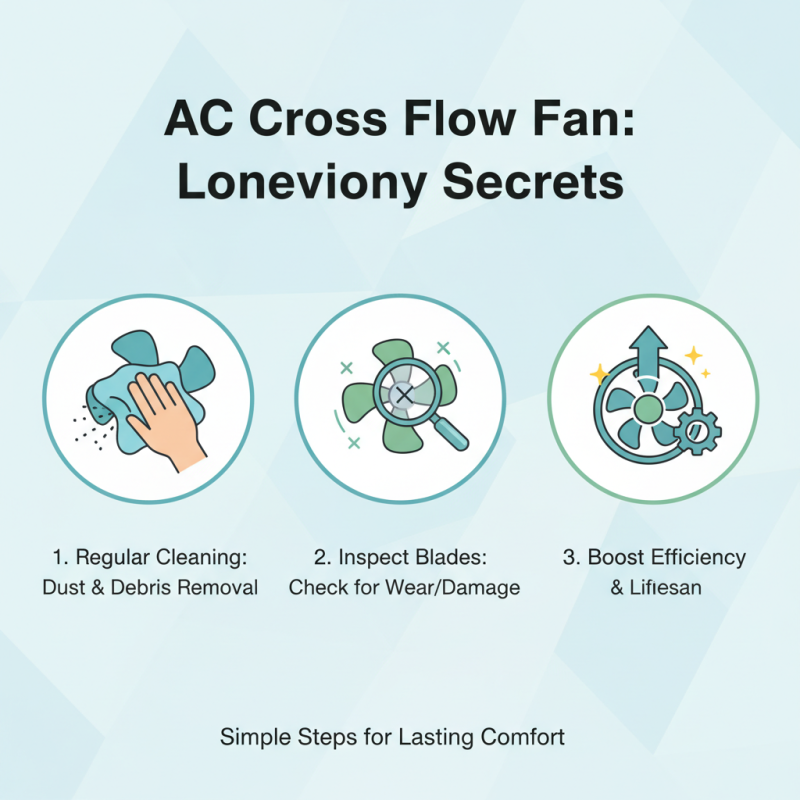
Proper maintenance of your AC cross flow fan is crucial for its longevity. Regular cleaning can greatly improve its efficiency. Dust and debris can accumulate over time, reducing airflow. A simple dusting with a dry microfiber cloth can do wonders. Make sure to also check the fan blades for any signs of wear or damage.
Alongside cleaning, lubricating the motor is essential for smooth operation. Using the right lubricant helps minimize friction and wear. However, avoid over-lubrication. This can attract more dust and create a mess. It’s important to perform these maintenance tasks regularly, ideally every few months, to avoid more significant issues later.
Listening to your fan can also provide valuable insights. Unusual noises may signal potential problems. Ignoring these sounds can lead to bigger malfunctions. Document any changes you observe to help track the fan's performance. Keeping a maintenance log helps identify patterns over time and can guide future actions.