2026 How to Choose the Best Cooling Fan for Your Home or Office?
Choosing the right cooling fan for your home or office can significantly impact your comfort level. As expert Tom Henderson, a leading specialist in the cooling industry, once said, "A cooling fan is not just about airflow; it’s about creating a personal climate." This truth highlights the importance of making an informed decision.
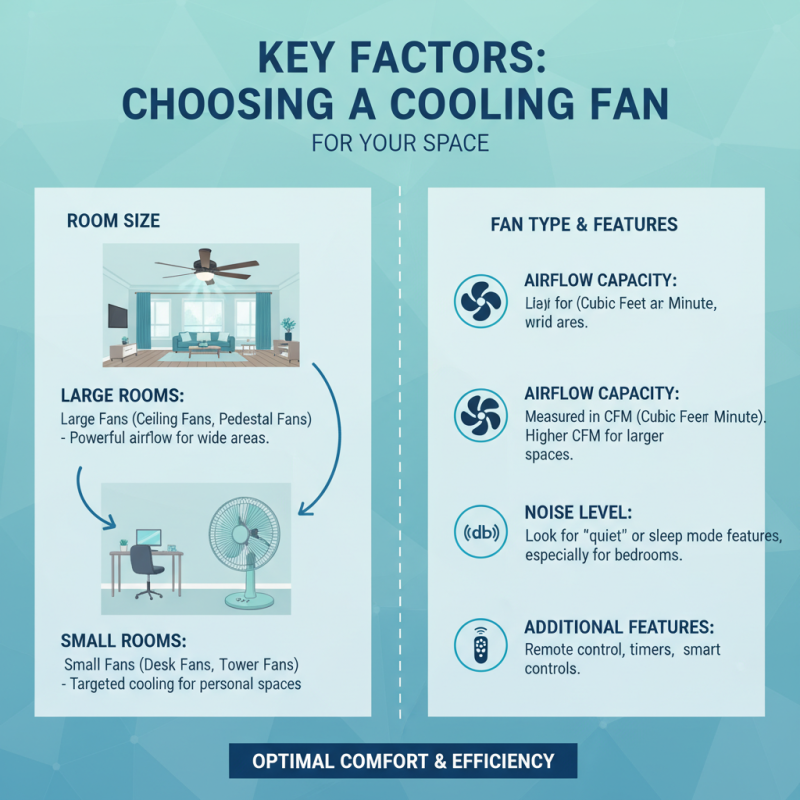
When selecting a cooling fan, consider various factors such as size, noise level, and energy efficiency. It’s essential to identify your needs before exploring options. A small fan may suffice for a desk, while a larger model is better suited for an open space. The effectiveness can also vary based on the fan’s design.
Many people overlook the fan's aesthetic appeal. It should blend with your décor while serving its purpose. Not every choice will be perfect. Technical issues might arise, or the fan could neglect other comfort aspects, such as humidity. Being thoughtful about these details can lead to a better experience, making your selection process more rewarding.
Understanding Different Types of Cooling Fans Available on the Market
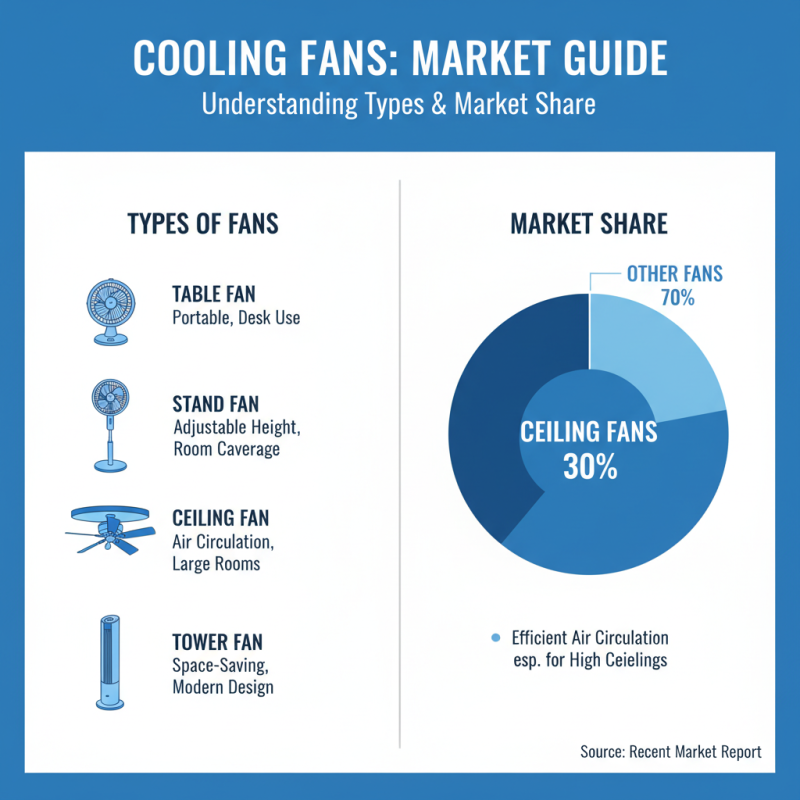
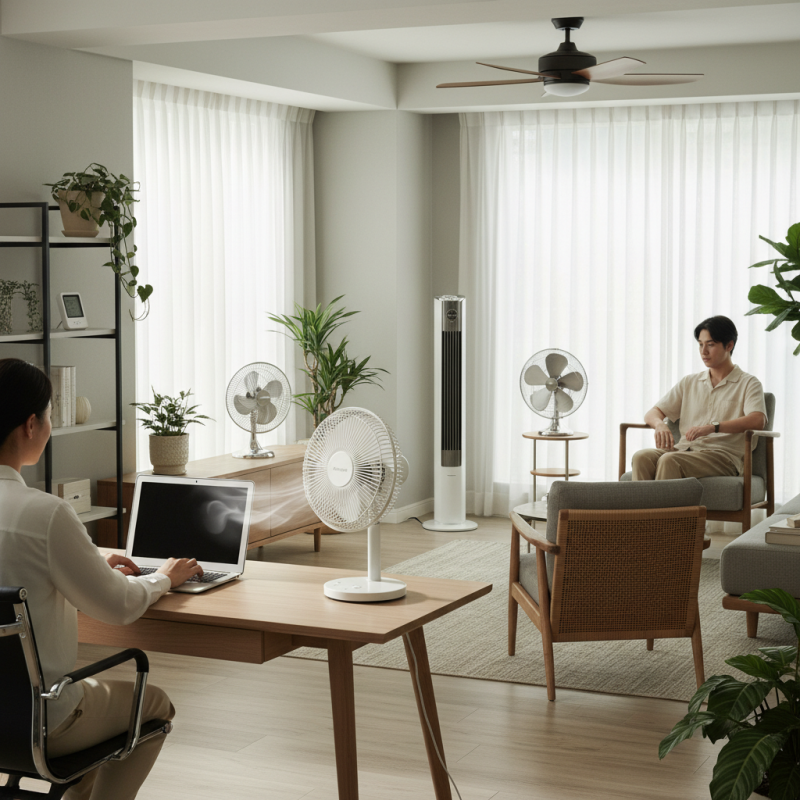
When selecting a cooling fan, understanding the different types available is crucial. There are table fans, stand fans, ceiling fans, and even tower fans. Each has unique advantages to fit various spaces. A recent market report noted that ceiling fans hold an impressive 30% of the home cooling market. Their ability to circulate air efficiently makes them popular in homes with higher ceilings.
Table fans are portable and budget-friendly. They typically cover small areas and are convenient for personal use. According to a survey, over 50% of office workers prefer table fans for desk cooling. However, they may lack the power to cool larger rooms effectively. On the other hand, tower fans are known for their sleek designs and quiet operation. They are suitable for areas where space-saving is essential, but they often require regular cleaning due to dust accumulation.
Energy efficiency is a critical factor when choosing a fan. A US Department of Energy report indicated that an energy-efficient fan can use up to 50% less electricity than standard models. When making a decision, consider your space's needs. Personal preferences play a significant role, and comfort varies from person to person. Reflect on what you truly need in a fan.
Evaluating Fan Size and Power Requirements for Optimal Cooling
When selecting a cooling fan for your home or office, size and power are crucial factors. A larger space requires a more powerful fan. For small rooms, a compact model can suffice. Pay attention to the fan's airflow rating. Usually measured in cubic feet per minute (CFM), this rating indicates how much air the fan can move. Higher CFM means better cooling efficiency.
Placement of the fan is essential for maximizing its effectiveness. Position it near heat sources like windows or doors. This helps circulate cooler air while expelling warm air. Remember, fan height matters too. An elevated fan can disperse air more evenly throughout the space. However, avoid excessive noise; it can be disruptive in quiet environments.
Consider energy efficiency when choosing a fan. Higher power doesn’t always mean better performance. Energy-efficient models save on electricity bills, making them practical. Some fans come with multiple speed settings. This feature lets you customize airflow based on your comfort level. Remember, too much airflow can be uncomfortable. Finding balance is key. Reflect on your cooling needs to make a truly informed decision.
2026 How to Choose the Best Cooling Fan for Your Home or Office? - Evaluating Fan Size and Power Requirements for Optimal Cooling
| Fan Type |
Size (Inches) |
Power (Watts) |
CFM (Cubic Feet per Minute) |
Noise Level (dB) |
Recommended Room Size (sq ft) |
| Table Fan |
12 |
25 |
900 |
50 |
100 |
| Floor Fan |
16 |
50 |
1500 |
55 |
250 |
| Ceiling Fan |
52 |
70 |
6000 |
40 |
300 |
| Wall-Mounted Fan |
14 |
30 |
1000 |
45 |
150 |
| Bladeless Fan |
10 |
40 |
800 |
35 |
120 |
Comparing Features: Noise Levels, Speed Settings, and Energy Efficiency
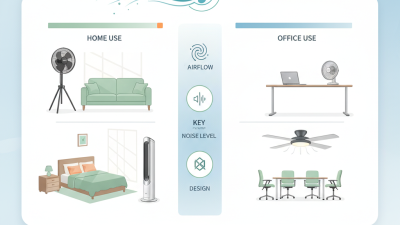
Choosing the right cooling fan involves more than just picking a design. One important factor is
noise level. If you work from home or need to sleep,
a quiet fan is essential. Some models operate at a whisper,
while others can be quite loud. Always check the decibel rating
before making a choice. You want comfort, not distraction.
Speed settings also matter. Many fans offer multiple speeds. Some people enjoy a gentle breeze,
while others need something stronger to combat heat. Find a fan that allows you to adjust the speed
easily. This flexibility can enhance your comfort level significantly.
Energy efficiency is critical, especially as electricity costs rise. Look for fans that are
energy-efficient. They provide cooling
without a huge electricity bill. Consider checking for energy ratings or reviews focused on
efficiency. It’s a common oversight to overlook this aspect when buying. Remember, a small
investment in efficiency can save money in the long run.
Maintenance Tips to Extend the Lifespan of Your Cooling Fan
Cooling fans can significantly enhance comfort at home or in the office. Proper maintenance is essential to ensure your fan lasts longer and performs efficiently. Regular cleaning is one of the pivotal tasks. Dust and grime can accumulate on the blades and motor, reducing airflow and increasing energy consumption. Use a damp cloth to wipe the blades and a vacuum with a brush attachment for hard-to-reach areas.
Another key aspect to consider is lubrication. Fans with motors require occasional lubrication to operate smoothly. Apply a few drops of suitable oil to the motor's bearings. This simple step can reduce wear and tear. Ensure the fan runs quietly and doesn't overheat. Also, check the power cord for any signs of damage regularly. A damaged cord can be a fire hazard.
Be mindful of your fan's placement. Position it away from direct sunlight and heat sources to avoid overheating. Observe how it performs in different areas. You might find it works better in one room than another. Each of these steps contributes to a longer lifespan and optimal performance of your cooling fan. Regular attention is essential.
Cooling Fan Performance Comparison