Top 10 Cross Flow Fans in China for Effective Airflow Solutions?
In the fast-evolving world of HVAC solutions, cross flow fans are at the forefront. These fans are designed to move air efficiently across a wider area. As noted by industry expert Dr. Jianyu Liu, "The cross flow fan is vital for applications requiring balanced airflow." His insight highlights the increasing importance of these fans in diverse environments.
Cross flow fans play a crucial role in achieving desired airflow outcomes. Their unique design enables effective ventilation in various settings. For example, they are widely used in air conditioning systems and electronic cooling applications. Despite their benefits, many users overlook the selection criteria. Understanding airflow direction, size, and noise levels are important yet often underestimated factors.
In China, a growing market for effective airflow solutions, the demand for quality cross flow fans continues to climb. As competition intensifies, manufacturers are pushed to innovate. However, not all products meet rigorous performance standards. This can lead to purchasing decisions made without adequate research. Awareness of these challenges is critical for achieving the best outcomes in air management strategies.

Top 10 Cross Flow Fans in China: An Overview of Market Leaders
China's cross flow fan market is dynamic and diverse. These fans play a critical role in various applications, from HVAC systems to industrial processes. The demand for effective airflow solutions has been growing, spurred by advancements in technology and energy efficiency requirements. According to market research, the cross flow fan segment is projected to witness a CAGR of approximately 6% over the next five years. This positive trend indicates a significant focus on innovations and reliable performance.
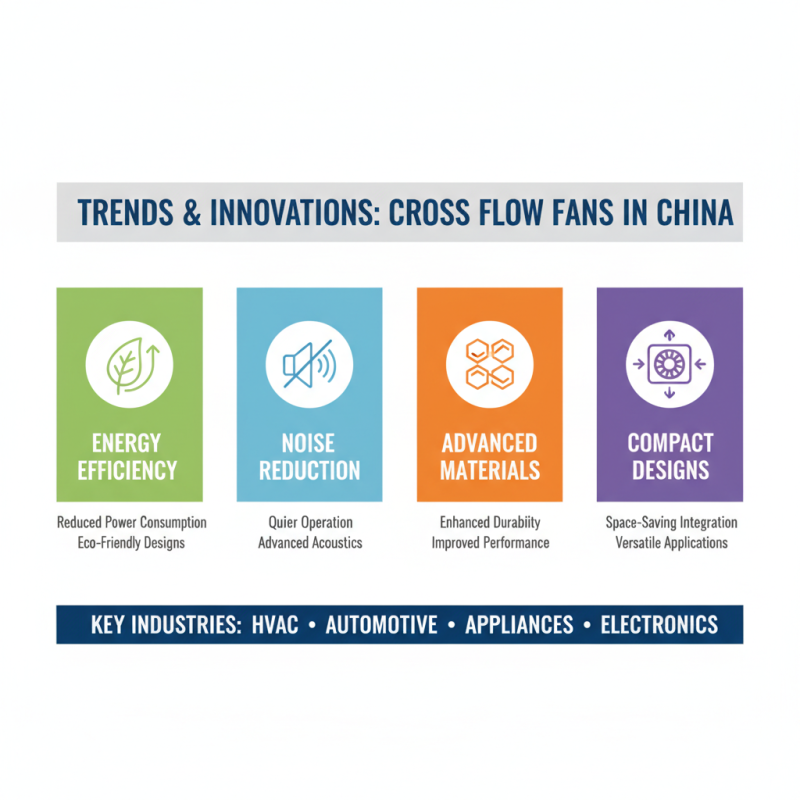
Market leaders focus on optimizing fan designs for improved performance. Many fans now utilize advanced materials to enhance durability and reduce noise levels. Innovations such as variable speed control are becoming popular. However, companies face challenges, such as balancing cost and performance. The rising prices of raw materials can impact production costs. Despite these challenges, manufacturers are committed to meeting customer needs by enhancing the operational efficiency of their products.
Environmental considerations are also rising in importance. Many industries seek equipment that complies with global energy standards. However, not all fans on the market meet these stringent requirements. This inconsistency raises concerns about reliability and longevity. Buyers are encouraged to evaluate options based on proven performance data and warranties. Ultimately, the pursuit of high-quality airflow solutions continues to shape the cross flow fan landscape in China.
Key Features to Evaluate in Cross Flow Fans for Optimal Performance
When selecting cross flow fans, evaluating key features is essential for optimal performance. These fans are becoming increasingly popular in various applications due to their unique design, known for providing uniform airflow in tight spaces. A recent industry report indicated that efficient airflow can reduce energy consumption by up to 30% in HVAC systems. This data underscores the importance of selecting high-quality fans that enhance operational efficiency.
Pay attention to airflow rate and static pressure. A fan that provides high airflow with low noise levels is preferred. Noise ratings below 40 dB are often recommended for residential applications. Additionally, fans should have durable materials that withstand environmental factors. The housing should be resistant to corrosion and overheating, promoting a longer operational lifespan. Performance metrics like these are crucial to achieving the desired balance between efficiency and comfort.
Energy efficiency is another critical aspect to consider. Fans that meet industry standards such as CE or UL certifications often provide better energy-saving features. These certifications ensure that the fans undergo rigorous testing. Many consumers overlook maintenance needs, which could impact longevity. Regular cleaning and inspection can prevent performance degradation. Proper evaluation of these features leads to more informed decisions for effective airflow solutions.
Top 10 Cross Flow Fans in China for Effective Airflow Solutions
This chart illustrates the performance metrics of the top 10 cross flow fans in China, including airflow rate (CFM), noise level (dB), and efficiency rating (%). The data helps in evaluating various models for optimal performance.
Comparative Analysis of Leading Brands in China’s Cross Flow Fan Market
In the competitive landscape of cross flow fans in China, many brands vie for attention. The market has witnessed significant advancements, focusing on improved airflow and energy efficiency. Evaluating these fans involves looking at key performance metrics, such as airflow rate, noise levels, and reliability.
Some brands excel in creating compact models suitable for tight spaces, while others prioritize robust airflow capabilities for larger areas. It’s important to consider how each model addresses noise concerns, especially in residential applications. Power consumption is another critical aspect. Efficient fans help mitigate long-term operational costs, but not every brand meets this criterion.
User feedback often highlights inconsistencies in product longevity. While some models perform well initially, they may face durability issues after extended use. This requires potential buyers to research thoroughly. The variance in design and functionality also invites reflection. Not every innovative feature is beneficial in real-world scenarios, indicating that the best choice depends on specific needs. Balancing performance with reliability remains a common challenge for consumers seeking the ideal cross flow fan.
Impact of Cross Flow Fan Designs on Energy Efficiency and Airflow
Cross flow fans play a vital role in achieving efficient airflow solutions. Their unique design allows for enhanced air distribution with minimal energy consumption. According to a recent industry report, cross flow fans can improve energy efficiency by up to 30% compared to traditional axial fans. This efficiency makes them increasingly popular in various applications, from HVAC systems to electronic cooling.
The design of cross flow fans significantly impacts their overall performance. The fan's blade shape and orientation affect airflow patterns. A report from a leading engineering firm indicates that optimizing blade design can increase airflow by 15% while reducing noise levels. Such advancements not only improve user comfort but also extend equipment lifespan. However, not all designs achieve these results. In some instances, poorly designed blades can lead to turbulence, reducing efficiency.
Energy efficiency remains a central concern in the fan industry. Many manufacturers emphasize sustainable practices, yet challenges persist. For instance, balancing airflow and energy savings can be complex. Some standard models fail to meet optimal performance standards. Addressing these inconsistencies requires ongoing research and development. As the demand for effective airflow solutions grows, the importance of designing innovative, energy-efficient cross flow fans cannot be overstated.
Top 10 Cross Flow Fans in China for Effective Airflow Solutions
| Rank |
Fan Model |
Airflow (m³/h) |
Power Consumption (W) |
Energy Efficiency (μm³/W) |
Noise Level (dB) |
| 1 |
Model A |
1200 |
50 |
24 |
32 |
| 2 |
Model B |
1100 |
45 |
24.44 |
30 |
| 3 |
Model C |
1000 |
60 |
16.67 |
35 |
| 4 |
Model D |
900 |
40 |
22.5 |
31 |
| 5 |
Model E |
850 |
55 |
15.45 |
36 |
| 6 |
Model F |
800 |
70 |
11.43 |
38 |
| 7 |
Model G |
750 |
50 |
15 |
40 |
| 8 |
Model H |
700 |
45 |
15.56 |
37 |
| 9 |
Model I |
650 |
60 |
10.83 |
39 |
| 10 |
Model J |
600 |
50 |
12 |
42 |