China Top Dc Cross Flow Fan Characteristics and Applications Explained
The "Dc Cross Flow Fan" is a pivotal component in various applications, ensuring efficiency in air circulation. Industry expert Dr. Anna Li, a renowned engineer in thermal management, states, “The design of a Dc Cross Flow Fan is crucial for maximizing performance.” This highlights the importance of understanding fan characteristics in engineering applications.
These fans offer unique benefits, such as compact size and high air pressure. Their design allows for a uniform airflow, making them ideal for cooling electronics. However, complexity in their manufacturing process can lead to variations in performance, challenging engineers to find reliable solutions.
Additionally, while the technology is advanced, it requires careful consideration of materials and energy efficiency. Not every Dc Cross Flow Fan meets industry standards, which raises concerns about reliability. In this landscape, understanding the characteristics and applications of these fans becomes essential for optimal performance in any system.

Characteristics of DC Cross Flow Fans in Chinese Market
DC cross flow fans have gained popularity in various applications across the Chinese market. These fans are known for their compact design and efficient airflow. Their unique structure allows them to distribute air uniformly, making them ideal for heat dissipation in electronics and HVAC systems. In densely packed environments, they excel at maintaining stable temperatures, which is crucial for equipment longevity.
One significant characteristic is their low noise operation. Users often seek quiet solutions, especially in residential or office settings. However, the balance between airflow and noise levels is not always perfect. Some models may underperform in noise reduction at higher speeds. This aspect prompts ongoing improvements in fan design and engineering.
Energy efficiency is another vital feature. DC cross flow fans consume less power compared to traditional AC fans. Yet, the initial investment can be higher. As the market matures, more affordable options are emerging. Still, potential buyers should consider long-term savings against upfront costs. The decision-making process reflects the broader trend of balancing performance, cost, and sustainability in fan technology.
Advantages of Using DC Cross Flow Fans Over Traditional Fans
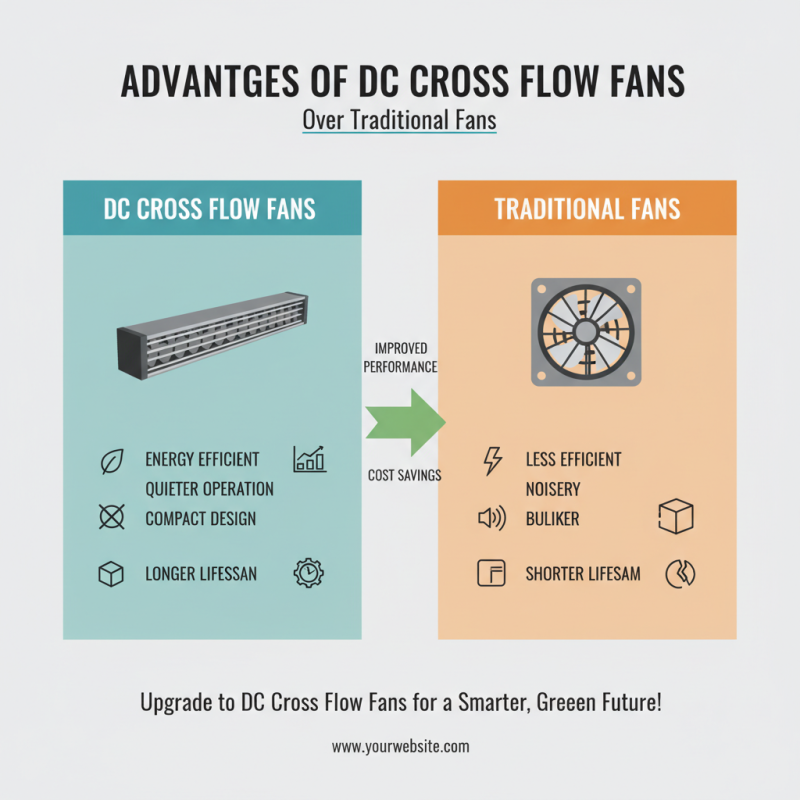
DC cross flow fans are increasingly favored in various applications due to their notable advantages over traditional fans. These fans operate using direct current (DC) motors, which are more energy-efficient than their alternating current (AC) counterparts. They require less power to deliver the same airflow, resulting in lower energy bills and reduced carbon footprints. This is particularly important in an era when energy conservation is a priority for both consumers and industries.
Another key advantage is their compact design. DC cross flow fans are smaller and more lightweight than traditional fans. This allows for easier integration into tight spaces, such as in electronic devices and appliances. Their quiet operation is also a significant benefit. Many users appreciate the subdued noise level, making these fans ideal for environments where silence is needed, such as offices and residential areas. However, not all applications may see the same benefits. In some cases, the initial cost might be a concern, prompting one to weigh long-term savings against upfront expenses.
Despite their advantages, there can be limitations. The lifespan of DC motors may vary, and they might require careful management in high-heat situations. Users should also consider potential compatibility issues when integrating these fans into existing systems. These factors highlight the importance of thorough research and planning before making a switch. Balancing these aspects can lead to informed decisions and optimal outcomes.
Common Applications of DC Cross Flow Fans in Various Industries
DC cross flow fans play a crucial role in various industries due to their unique design and efficiency. These fans provide effective airflow in compact spaces. They are often found in HVAC systems, electronic cooling, and automotive ventilation. Their low energy consumption makes them a preferred choice for energy-efficient designs.
In the electronics sector, DC cross flow fans help maintain optimal temperatures in devices. They prevent overheating and extend product life. In automotive applications, these fans enhance cabin comfort by promoting airflow. Users often appreciate the quiet operation of these fans, contributing to a pleasant driving experience.
However, not all applications might utilize these fans to their full potential. Some designs may require additional adjustments for maximum efficiency. Ensuring correct installation and alignment can lead to better performance. In certain cases, inadequate airflow can occur if the fans are not properly integrated. A deeper understanding of their limitations can improve overall functionality in diverse environments.
Common Applications of DC Cross Flow Fans in Various Industries
Tips for Selecting the Right DC Cross Flow Fan for Specific Needs
Selecting the right DC cross flow fan is crucial for efficiency in various applications. Understanding your specific needs is essential. Consider the airflow requirement, typically measured in cubic feet per minute (CFM). According to industry standards, optimal airflow can greatly enhance performance in cooling systems and electronic devices.
Next, pay attention to noise levels. A fan with a low decibel (dB) rating is necessary for quiet environments. Many reports highlight that noise levels above 30 dB can be disruptive in sound-sensitive spaces, like offices or studios. Performance and noise should be balanced, as higher airflow often leads to increased noise.
Finally, evaluate the energy efficiency of the fan. Look for fans that offer a good power-to-airflow ratio. Reports show that energy-efficient fans can reduce operational costs by up to 40% annually. However, a fan with a high initial cost might lead to regret if it doesn’t meet longevity or performance expectations. Always consider the long-term benefits alongside short-term investments.
Maintenance Best Practices for Ensuring Longevity of DC Cross Flow Fans
Maintaining DC cross flow fans is essential for longevity and performance. Regular inspections should be routine. Dust and debris can accumulate, affecting efficiency. According to industry reports, proper maintenance can extend fan life by up to 30%. Keeping the fan blades clean is crucial. A simple vacuum or damp cloth can suffice.
Lubrication also plays a significant role. Using the right lubricant ensures smooth operation. Over-lubrication can cause issues. Scheduled maintenance routines are recommended every six months. Tracking performance metrics helps in identifying potential failures. Sharp drops in airflow are warning signs.
Temperature monitoring is vital too. High operating temperatures can shorten the fan's life. Installing temperature sensors can provide crucial data. Reports indicate that continuous temperature checks can predict failures before they occur. Understanding these aspects is key to maximizing efficiency.