Leave Your Message

2026 Best DC Fan vs AC Fan Which Should Buyers Choose?

Choosing between a DC fan and an AC fan is not just a motor-specification exercise. It affects electricity use, noise, speed control, and long-term running costs. ENERGY STAR reports that certified ceiling fans are, on average, 60% more efficient than conventional fan-and-light units. That figure compares product categories, not DC motors directly with AC motors, so buyers should read it carefully. Details matter.

The U.S. Department of Energy also notes that fans cool people by moving air; they do not lower a room’s temperature. That distinction can change how a fan is used on a warm afternoon, with curtains still and air moving across the skin. Energy-efficiency expert Amory Lovins offers a useful guiding principle: “The cheapest energy is the energy you don’t use.” For this comparison, that means considering how many hours the fan runs, not just its purchase price. A DC model often offers finer speed control and lower power draw at comparable settings, while an AC model may cost less upfront and suit simpler installations. Actual performance varies by design, size, and operating speed. A quiet showroom test can mislead. This guide examines the trade-offs behind “Dc Fan Ac Fan” choices, including efficiency claims, controls, maintenance, and total ownership cost. One caveat remains: published efficiency figures rarely predict every home’s experience. Check the product label, room size, and warranty before deciding.
2026 Best DC Fan vs AC Fan Which Should Buyers Choose?

What Are DC Fans and AC Fans?

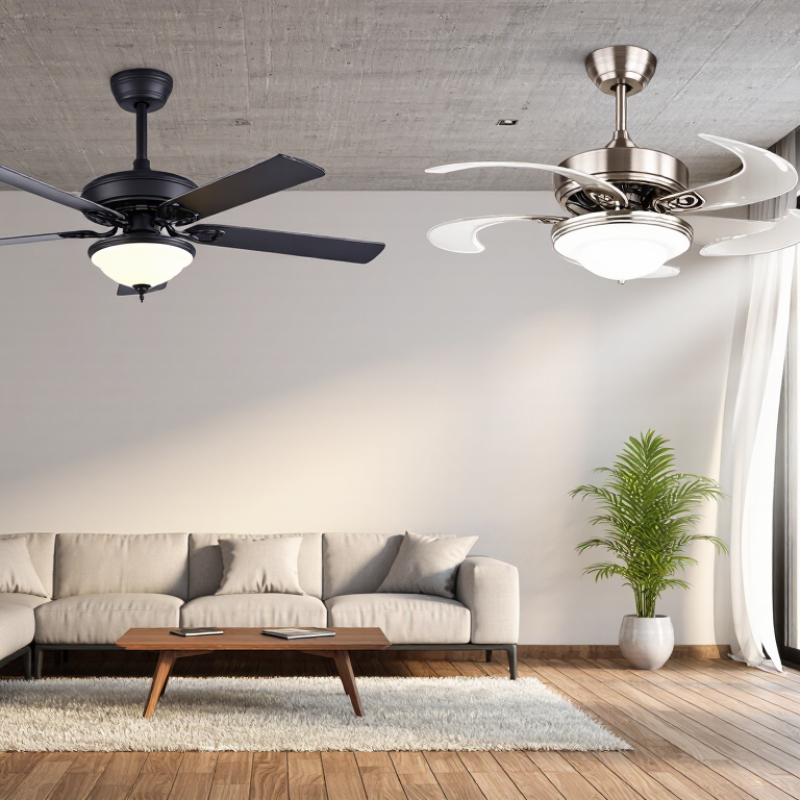
An AC fan uses alternating current, the type supplied by standard household outlets. Its motor changes direction electrically as the current cycles, creating rotation. Many traditional ceiling and desk fans use AC motors. Their controls may offer a few fixed speed settings, though designs vary.

A DC fan runs on direct current. In many household models, an internal circuit converts incoming AC power to DC, then controls the motor electronically. This can allow finer speed adjustment and efficient operation at lower speeds. Not magic. Actual energy use and noise depend on the motor, blade shape, and operating speed, so “DC” alone does not guarantee quieter airflow or lower bills.

Look at the motor and control system, not just the label. A DC fan may respond smoothly when you lower its speed on a warm evening. An AC model may suit buyers who prefer simpler controls or a familiar setup. Check the product’s power rating and measured sound level when available. One practical wrinkle: specifications are not always tested under identical conditions, so comparisons can be imperfect.
How Do DC and AC Fan Motors Work?

How Do DC and AC Fan Motors Work?

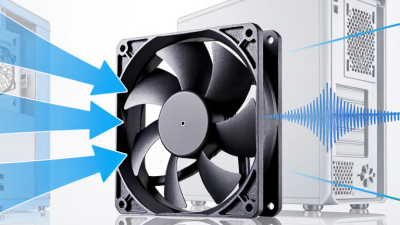
An AC fan motor receives alternating current directly from the household supply. In a common induction design, current in the stator creates a changing magnetic field. That field induces current in the rotor, making it turn. A capacitor may help start the motor or maintain its rotation. The motor’s speed is generally tied to supply frequency and its design, so adjustment can be less flexible. The exact setup varies by fan.

A DC fan may still plug into an AC outlet. Its internal electronics convert incoming AC to DC, then a controller switches current through the motor’s coils to keep the rotor moving. This electronic control allows finer speed changes and can reduce power use at lower settings, though results depend on motor design and how the fan is used. That distinction matters. The conversion circuitry also adds components that can affect repair options and cost.

Tips: Check the product specifications for motor type, control range, and rated power. Compare airflow at the speeds you actually use, not just the maximum setting. A quiet, low-speed room fan may suit a DC motor; for basic operation, an AC model may be sufficient. Small detail: listen for humming at low speed, since room acoustics can make it more noticeable.

How Do DC and AC Fans Compare in Efficiency and Cost?

DC fans usually use less electricity than comparable AC fans, especially at reduced speeds. Their electronic controls can offer finer speed settings and quieter operation in a bedroom. Still, efficiency varies with blade size, motor design, and airflow. Compare airflow ratings, not motor type alone. An efficient fan that barely moves air is no bargain. AC models often cost less upfront and have simple controls. For a guest room used occasionally, that lower purchase price may matter more than modest energy savings.

Tips: Check the rated watts and compare fans at the speed you will actually use. To estimate running cost, multiply watts by daily hours, divide by 1,000, then multiply by your electricity rate.

For example, a 30-watt fan running eight hours uses 0.24 kWh. Multiply that figure by your local rate to estimate its daily energy cost. Compare it with an AC fan’s wattage at a similar comfort level. The purchase-price gap matters too, and payback can take years if the fan runs only briefly. I would not call DC the automatic winner; room size, noise tolerance, and usage habits can change the better choice.

2026 Best DC Fan vs AC Fan: Efficiency and Cost

Estimated annual electricity use for fans operating at comparable airflow.

Example assumptions: a 28 W DC fan and a 65 W AC fan run 8 hours per day for 365 days. At an electricity rate of $0.16 per kWh, estimated annual electricity costs are about $13 for the DC fan and $30 for the AC fan—a difference of roughly $17 per year. Actual power use, airflow, purchase price, and savings vary by model and operating speed.

Which Fan Type Fits Different Rooms and Uses?

A DC fan often suits bedrooms, nurseries, and home offices, where low noise and precise speed control matter. Its motor typically uses less electricity than a comparable AC model, especially when it runs for many hours. On a warm night, a gentle setting can move air without making papers rustle or interrupting sleep. That matters at night. Still, efficiency varies by fan design and use, so check the rated airflow and power consumption rather than relying on motor type alone.

An AC fan can be a sensible choice for a living room, garage, or space where simple controls and a lower purchase price matter more. Some models offer fewer speed settings, but that may be enough for occasional use. Check the room’s size, ceiling height, and existing wiring before choosing; a powerful fan in a small room can feel drafty, while a weak one may barely reach the sofa. Measure the room first. Kitchens and dusty workshops also need easy-to-clean blades and guards. I would not choose by room label alone: a quiet AC model may fit a bedroom, and a well-sized DC fan may work beautifully in a large shared room. The details can be a little inconvenient, but they matter.

What Factors Should Buyers Consider in 2026?

In 2026, the choice between a DC and AC fan depends on how and where it will run. A bedroom fan used every night makes efficiency and low-speed noise more important than a utility-room fan used occasionally. DC models often offer more speed settings and use less electricity, especially at lower speeds. AC models can cost less upfront and may suit straightforward replacements. Measure the room first.

Compare the full setup, not just the motor. Check the fan’s airflow rating, room size guidance, control type, and whether the included remote or wall control fits your routine. Confirm ceiling height and mounting requirements; a fan that hangs too low can feel intrusive. Check the wiring, too. Existing switches and controls may not work with every fan, so verify compatibility before buying or arranging installation.

Look beyond the purchase price. Estimate expected hours of use and local electricity rates, then consider whether energy savings could offset a higher initial cost. Also check warranty terms, replacement-part availability, and cleaning access. A dust-covered fan may move less air and become noisier over time. Efficiency labels help, but they do not tell the whole story; published test conditions may differ from your room. One overlooked detail: some buyers value simple controls more than extra speed settings, and that preference is easy to underestimate.

2026 Best DC Fan vs AC Fan: Which Should Buyers Choose? What Factors Should Buyers Consider in 2026?

Buying factor DC fan AC fan What buyers should consider
Motor and power supply Uses an electronically commutated motor. The fan converts incoming AC power to controlled DC internally. Typically uses an AC motor designed to run from the household AC supply. Both types can plug into standard household power when designed for the local voltage and frequency. Check the product specifications and electrical requirements.
Energy use Often uses less electricity than a comparable AC model, particularly at lower operating speeds; actual performance varies by fan design and setting. Can use more electricity than an efficient DC model, but consumption varies considerably among models and speeds. Compare the rated input power in watts at the speeds you expect to use. Do not rely on motor type alone to estimate savings.
Running cost May cost less to run if its measured power consumption is lower and it is used regularly. May be economical when the purchase price is lower or the fan is used infrequently. Estimate annual cost using: watts ÷ 1,000 × hours used × local electricity price per kWh. Compare that result with the purchase-price difference.
Speed settings and control Commonly offers several speed levels and may support fine electronic speed control, depending on the model. Often uses stepped speed settings; available controls depend on the motor and fan design. Check whether the included remote, wall control, timer, or smart feature meets your needs. Controls are not interchangeable across all fans.
Noise and smoothness Can operate quietly and smoothly, especially at lower speeds, but noise also depends on blade balance, bearings, airflow, and installation. Noise levels vary by model; motor hum or vibration may be noticeable on some fans. Look for measured noise information where available and review the fan’s expected sound level at the speed you will use most.
Purchase price May have a higher upfront price because of its motor electronics and included control features. Often available at a lower initial price, although feature-rich models can cost more. Compare the total cost of ownership, including expected electricity use, controls, installation, and warranty coverage.
Existing wiring and controls May require its supplied receiver or control system; some electronic motors are not compatible with conventional wall speed controllers. May work with certain conventional fan controls, but compatibility depends on the motor and controller. Check the installation manual before reusing a wall controller, dimmer, receiver, or smart switch. Use only controls approved for that fan.
Maintenance and repair Electronic components can make diagnosis or replacement more model-specific. The design may be more familiar to some technicians, but parts availability and repairability vary by model. Review warranty terms, service access, and availability of replacement parts before buying.
Best fit by use case A strong option for frequent use, low-speed operation, and buyers who value flexible electronic controls. A practical option when upfront price, straightforward operation, or compatibility with an existing setup is the priority. Match the fan to room size, airflow needs, expected daily use, installation conditions, and the available budget.
2026 buying takeaway Choose by verified airflow, wattage, noise information, control compatibility, safety certification, and warranty—not by AC or DC labeling alone. Energy performance and features differ between individual models.