Leave Your Message

What is a Cooling Fan and How Does It Work?

Cooling fans are essential components in many devices, ensuring optimal temperature regulation. According to Mark Chen, a leading expert in thermal management systems, "A cooling fan not only enhances performance but also prolongs equipment lifespan." This highlights the significance of understanding how cooling fans function.

In simple terms, a cooling fan works by moving air to dissipate heat. The basic mechanics involve rotating blades that create airflow, which helps to cool sensitive components in computers, appliances, and even vehicles. Yet, not all cooling fans are created equal. Their efficiency can vary based on design, materials, and operating speed.

While many users rely on cooling fans without a second thought, it's essential to consider their potential shortcomings. A poorly designed fan can be noisy or less effective, leading to heat-related issues. Understanding the working principles of a cooling fan can empower users to make informed choices. Investing in a high-quality product can mitigate these concerns and enhance overall performance.
What is a Cooling Fan and How Does It Work?

What is a Cooling Fan?

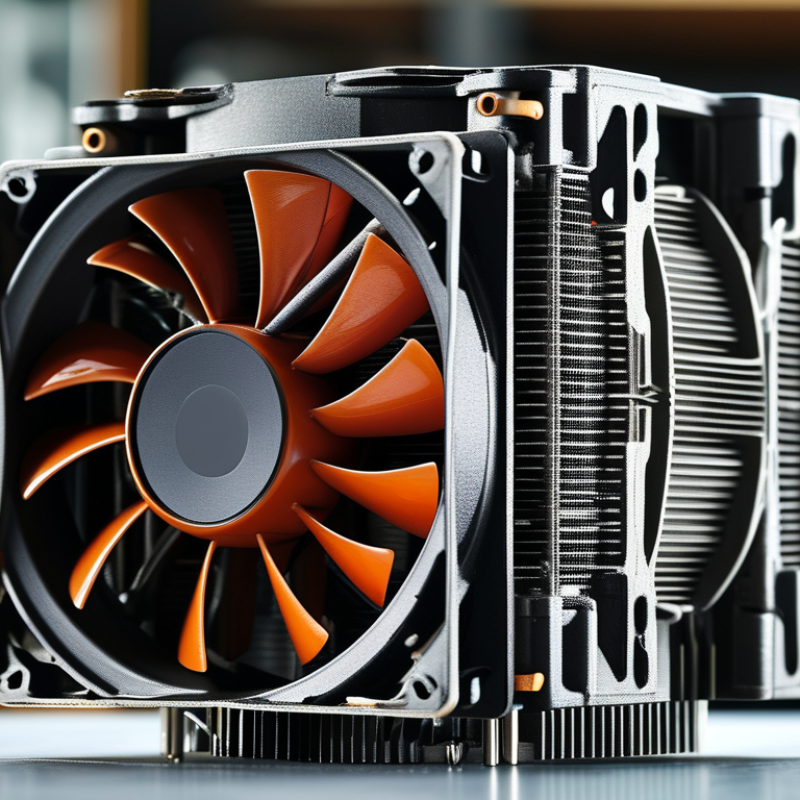
A cooling fan is a mechanical device used to create airflow. It helps regulate temperature, especially in electronic equipment and living spaces. Fans can be found in various sizes and designs, from tiny computer cooling fans to large industrial fans. They function primarily by rotating blades that push air, helping to dissipate heat.

The working principle of a cooling fan is straightforward. When powered, the electric motor drives the blades to spin. As the blades rotate, they generate a movement of air, creating a wind effect. This airflow can lower the temperature of nearby objects and improve ventilation. The effectiveness of a fan often depends on its design and the speed at which it operates.

Understanding the nuances of fan performance is crucial. Sometimes, users may overlook the importance of proper placement. A fan positioned near a heat source can enhance cooling efficiency. However, if it’s placed incorrectly, it may lead to barely noticeable cooling. It’s essential for users to assess their specific cooling needs and environment. Not all situations require a high-speed fan; sometimes slower settings can work just as effectively with less noise.


Cooling Fan Types and Their Typical Airflow (CFM)

This bar chart illustrates the typical airflow (measured in cubic feet per minute - CFM) of different types of cooling fans. Axial fans are commonly used due to their efficiency, while centrifugal fans offer higher pressures suitable for various applications. Blowers and embedded fans have their specific uses based on airflow requirements.

The Principle of Operation Behind Cooling Fans

Cooling fans are essential components in various applications, from household appliances to industrial machinery. They operate on a simple principle: air movement. The basic mechanism involves rotating blades that push air, creating circulation and reducing temperature. According to a report by the International Energy Agency, nearly 13% of global electricity consumption is attributed to fans and blowers. This highlights their significant role in energy consumption and temperature control.

Understanding the operational principles of cooling fans involves examining airflow dynamics. The efficiency of a fan relies on design elements such as blade shape and motor speed. Data indicates that improving blade aerodynamics can lead to a 20% increase in airflow efficiency. However, many fans continue to underperform due to outdated designs. Regular maintenance and optimization are often overlooked, leading to energy wastage and reduced effectiveness.

Challenges persist in balancing noise levels and airflow efficiency. As fans work harder to maintain desired temperatures, they can generate unwanted noise. This trade-off impacts both user comfort and system efficiency. Addressing these issues is essential in the design and operation of cooling fans, emphasizing a need for continual improvement in technology and application practices.

What is a Cooling Fan and How Does It Work?
Dimension Description Function Application
Type Axial Fan Moves air along the axis of the fan. Used in computers for cooling components.
Size 120 mm Common size for PC case fans. Standard in most mid-tower cases.
Speed 1800 RPM Rotations per minute—indicates airflow strength. Increased airflow for better cooling.
Noise Level 22 dBA Decibel rating indicating quiet operation. Ideal for silent PC builds.
Power Consumption 2.0 W Amount of power the fan uses. Efficient cooling with low energy use.
Lifespan 50,000 hours Estimated operating duration. Long-term reliability for continuous use.

Types of Cooling Fans and Their Applications

Cooling fans play a crucial role in various environments, from homes to industrial settings. There are several types of cooling fans designed for specific applications. One common type is the axial fan. These fans move air parallel to the fan axis, making them ideal for cooling large areas.

Centrifugal fans are another popular option. They draw air in and expel it at a 90-degree angle. This design generates higher pressure, making them suitable for ventilation systems. Besides these, there are specialized fans like blowers for cooling electronic devices and evaporative coolers for managing humidity levels.

Each fan type has its strengths and weaknesses. Axial fans are energy-efficient but may struggle in high-resistance applications. On the other hand, centrifugal fans can be more complex and expensive but offer better pressure capabilities. Understanding these differences can help in selecting the right cooling solution, although the choices can sometimes be overwhelming.

Key Components of a Cooling Fan

Cooling fans are essential in various applications, ensuring proper airflow and temperature regulation. Understanding their key components provides insight into their functionality. A typical cooling fan consists of several core elements: the motor, blades, housing, and control mechanisms.

The motor powers the fan, converting electrical energy into mechanical movement. Industry reports indicate that brushless direct current (BLDC) motors are increasingly popular due to their efficiency and low noise levels. This type of motor enhances longevity, making fans more reliable.

The fan blades, shaped aerodynamically, are crucial in creating effective airflow. Studies show that blade design significantly impacts cooling performance, with certain shapes providing up to 30% better airflow compared to standard designs.

The housing encases these components, contributing to both aesthetics and safety. Often made from durable materials, it must balance lightweight properties with robustness. Control mechanisms, including speed regulators and thermostats, allow users to adjust fan operation according to specific needs. However, improper adjustments can lead to overcooling or wasted energy. Understanding these components helps users make better choices for their cooling needs, ensuring efficient performance.

Factors Affecting Cooling Fan Performance

Cooling fans play a crucial role in maintaining optimal temperatures in various environments. However, several factors can significantly affect their performance. One primary factor is the fan’s design. For instance, blade shape and size influence airflow and pressure. According to a report by the International Society of Automation, optimal blade design can enhance airflow efficiency by up to 30%.

Another vital element is the motor used in the fan. High-quality motors typically provide better performance and longevity. Data from mechanical engineering studies suggest that brushless DC motors can increase fan efficiency compared to traditional options. Despite this, many consumers still overlook motor quality when purchasing.

Ambient conditions also impact cooling fans. High humidity or temperature levels can decrease a fan's efficiency considerably. A study published in the Journal of Thermal Science highlighted that fans in humid environments can lose as much as 25% of their cooling capacity. This variance emphasizes the importance of context when assessing fan performance. Recognizing these factors is essential for optimizing cooling solutions in diverse settings.