How to Choose the Best DC Blower Fan for Your Needs?
Choosing the right DC blower fan is crucial for various applications. According to a report by MarketsandMarkets, the global market for blower fans is expected to reach $1.5 billion by 2025, growing at a CAGR of 4.7%. This growth reflects the increasing demand for efficient cooling and ventilation solutions in industrial and commercial sectors.
John Peters, a leading expert in airflow technology, emphasizes, "The performance of a DC blower fan can significantly impact energy efficiency." Selecting the best DC blower fan involves understanding the required airflow rate, noise levels, and energy consumption. Many users overlook these factors, leading to inefficient setups that cost more in the long run.
It's essential to assess specific needs before making a decision. The variety of options can be overwhelming. A poorly chosen fan may underperform or contribute to higher energy bills. Finding reliable data and expert advice can aid users in their selection process. Make informed choices to ensure optimal performance and sustainability.

Understanding the Basics of DC Blower Fans
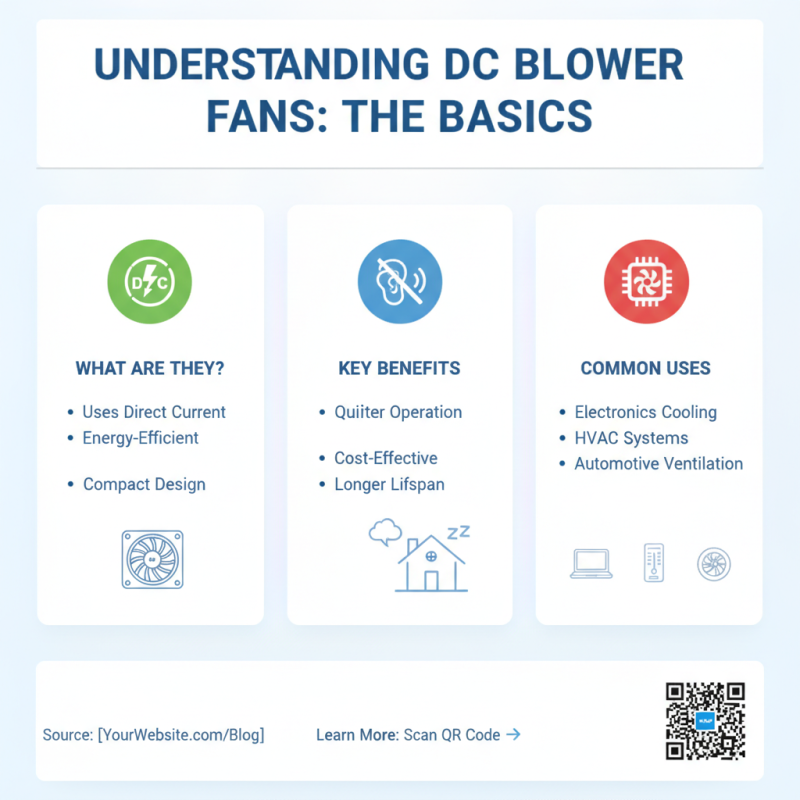
DC blower fans are essential tools in various applications. Understanding their fundamentals can help you choose the right one for your needs. A DC blower fan operates using direct current, making it energy-efficient. They are typically quieter than AC fans, making them ideal for residential areas and offices.
When considering these fans, it’s crucial to assess airflow and pressure ratings. Different tasks require specific airflow levels. However, it’s easy to overlook these metrics. Some fans may deliver high airflow but struggle with static pressure. This can lead to inadequate performance in confined spaces. Always check specifications carefully.
Another aspect is size. A compact fan may seem appealing, but it could sacrifice performance. Duct sizes can affect efficiency as well. Oversized ducts can lead to energy loss, while undersized options can cause excessive noise. Balancing these factors requires thoughtful consideration and may require some trial and error. Adjustments may be needed once installation occurs.
Key Factors to Consider When Selecting a DC Blower Fan
When selecting a DC blower fan, consider several key factors to ensure it meets your needs. Efficiency is crucial. According to the Department of Energy, energy-efficient fans can save up to 50% on energy costs compared to standard models. Check the fan's airflow rating, measured in cubic feet per minute (CFM). Higher CFM ratings indicate more powerful airflow.
Noise levels are another important consideration. Many users prefer quieter fans, especially in residential or office spaces. Look for models with decibel ratings below 30dB for a more peaceful environment.
Tip: Always check user reviews for real-world insights on noise levels. Performance can vary widely among models, despite specifications.
Another factor is the fan's size and weight. Ensure it fits your installation space and consider the layout of your environment. If you require portability, a lightweight fan model might be necessary.
Tip: Measure your available space before making a decision. This step can prevent future headaches with fitting.
Lastly, durability is essential. Investigate the materials used in the fan's construction. Fans made of high-quality plastics or metals typically last longer. Remember, a more durable fan may have a higher upfront cost but can lead to cost savings in the long run.
Evaluating Performance Specifications of DC Blower Fans
When evaluating performance specifications of DC blower fans, it’s crucial to consider several key metrics. Airflow, measured in cubic feet per minute (CFM), indicates how much air the fan can move. A fan with higher CFM ratings is more effective for cooling or ventilating large spaces. According to industry reports, optimal airflow should match the requirements of your specific application, ensuring efficient operation without excessive noise.
Another critical specification is static pressure, often measured in inches of water column (inWC). This reflects the fan's ability to move air against resistance, such as filters or ductwork. A fan designed for high static pressure will be beneficial in restrictive environments, while those intended for low-pressure areas can operate quietly and efficiently.
Tips: Focus on the noise level. A quieter fan often enhances comfort in residential or office applications. Also, reviewing efficiency ratings can save on energy costs.
Lastly, consider factors like size and mounting options, as they affect installation ease. Fans come in various dimensions, giving flexibility for different setups. Make sure to analyze what fits your available space. Balancing specifications with practical needs can lead to a more informed decision.
Assessing the Size and Design for Your Application
When selecting a DC blower fan, size and design play critical roles. The fan’s size should match the specific application needs. A larger fan offers more airflow, but it may take up too much space. Conversely, a smaller fan might not deliver sufficient airflow. Knowing the dimensions of the area requiring ventilation is essential. Measure both the space and the airflow needed to ensure optimal performance.
Design is equally important. Fans come in various configurations that can impact airflow direction and efficiency. Consider both blade design and motor type. Curved blades often provide better airflow, while straight blades are easier to clean. Reflect on how these designs fit into your setup. For example, a compact design might suit tight spaces but could sacrifice airflow and noise levels.
Tips for choosing the right fan include evaluating your space carefully. Look at how the fan can be mounted for optimal airflow. Assess how the design can affect noise levels in your environment. A fan that operates too loudly might disrupt work or daily activities. Consider potential design trade-offs based on your specific needs, and don’t hesitate to measure and compare different options thoroughly.
Comparing Costs and Energy Efficiency in DC Blower Fans
When selecting a DC blower fan, cost and energy efficiency are essential factors. Reports reveal that DC blower fans can be up to 70% more energy-efficient than traditional AC fans. This is particularly beneficial in industries that operate fans continuously. The initial investment may be higher for DC models, but savings in energy bills can offset these costs over time.
Energy efficiency ratings, such as the Energy Star certification, should be a priority. Fans that meet this standard often use advanced motor technology. For example, a study highlighted that energy-efficient models reduce energy consumption by around 40%. This aligns with the increasing demand for sustainable options in both residential and commercial spaces.
While the upfront costs of high-efficiency fans might deter some buyers, long-term savings add up. Companies often overlook maintenance costs when comparing fans. Investing in a reliable model with lower energy requirements can lead to fewer breakdowns and repairs. This reflection is crucial as the true cost of ownership includes both initial price and ongoing expenses. Choosing wisely can lead to better resource management and environmental benefits.
Comparison of DC Blower Fan Cost and Energy Efficiency
This chart compares the cost and energy efficiency (in watts) of various DC blower fans. You can see how the price correlates with the energy consumption, helping you to choose the best option for your needs.