Why Choose a DC Blower Fan for Your Ventilation Needs?
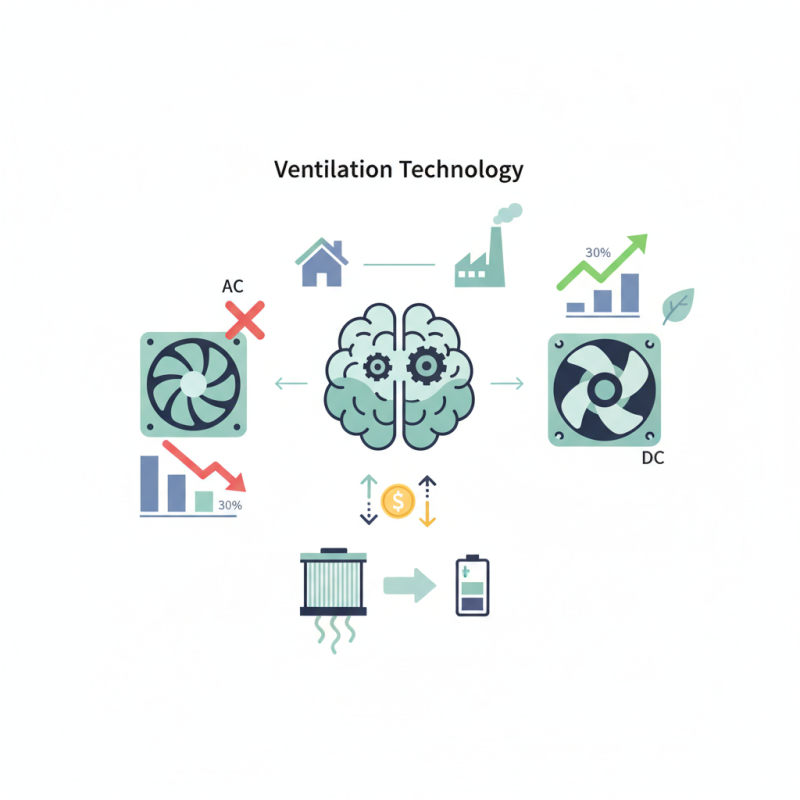
When considering ventilation systems, the choice of a DC blower fan stands out. According to a report by the American Society of Heating, Refrigerating and Air-Conditioning Engineers (ASHRAE), DC blower fans are 20-30% more energy-efficient than traditional AC fans. This efficiency translates into significant cost savings and reduced environmental impact. Industry experts highlight their growing importance in various applications, from residential to industrial settings.
Dr. Emily Thompson, a leading expert in HVAC technology, states, “The adaptability and efficiency of DC blower fans are revolutionizing ventilation.” This sentiment reflects the trend towards sustainable energy solutions. With their ability to produce high airflow at lower power consumption rates, DC blower fans meet the demands of modern ventilation needs effectively.
Moreover, while the benefits are substantial, some challenges exist. Users might experience initial installation costs that appear daunting. However, long-term savings often outweigh these upfront investments. Overall, DC blower fans are not just a trend but a crucial element in advancing ventilation technologies. Their role in enhancing air quality while minimizing energy use cannot be overlooked.
Understanding the Basics of DC Blower Fans in Ventilation
DC blower fans offer a unique solution for ventilation needs. They are designed to move air efficiently and quietly, making them ideal for various applications. A recent study by the Air Movement and Control Association International indicates that DC blower fans can operate up to 90% more efficiently than traditional AC fans. This efficiency not only reduces energy costs but also extends the lifespan of the fan.
When selecting a DC blower fan, consider the airflow requirements. The fan’s performance is influenced by its size and design. A larger fan typically moves more air, but it may also consume more power. It’s crucial to choose a fan that balances airflow and energy consumption. Ensure that the blower is suitable for your specific environment, whether it’s an industrial setting or a residential space.
Tip: Regular maintenance is key. Clean the fan blades to prevent dust buildup. This simple act can improve efficiency.
While DC blower fans are remarkably efficient, they may have limitations in high-temperature environments. This can lead to performance issues if not addressed. If your application involves extreme conditions, investigate alternatives that maintain performance in those settings.
Tip: Always check the fan's specifications for maximum operating temperatures. Ensure it meets your application demands.
Advantages of Using DC Blower Fans for Efficient Airflow
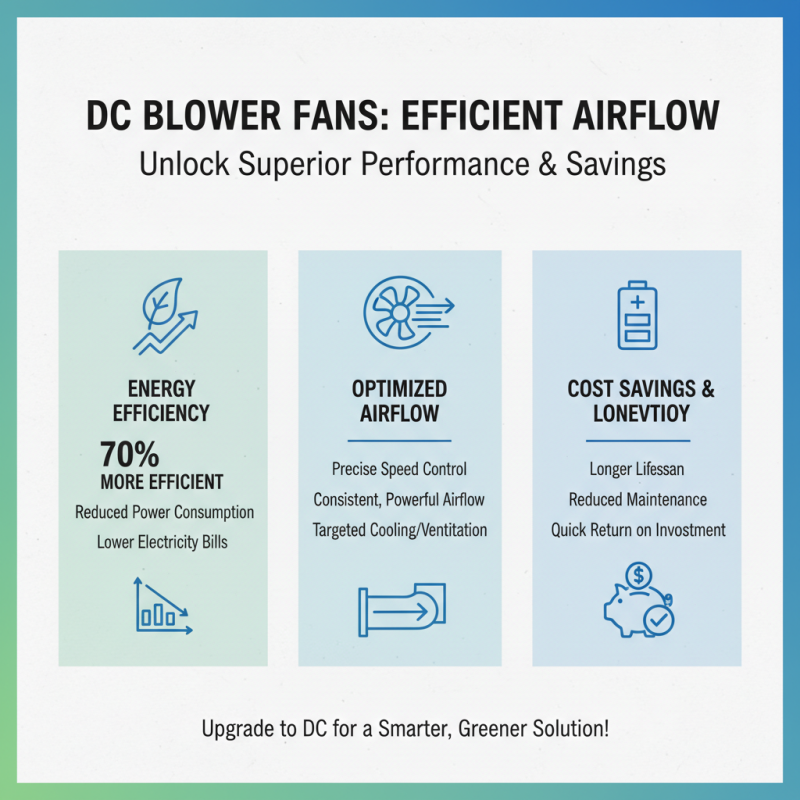
DC blower fans have become a crucial tool for efficient airflow in various applications. Unlike traditional AC fans, DC fans utilize direct current, which provides significant benefits in energy efficiency. Reports indicate that DC fans can be up to 70% more efficient than their AC counterparts. This translates to reduced energy consumption and lower electricity bills for both residential and commercial spaces.
The quiet operation of DC blower fans is another advantage. Many users report that these fans can run at lower noise levels, making them ideal for settings where noise reduction is essential. The variation in speed control also allows users to customize airflow based on specific needs, further enhancing comfort. However, the initial cost of DC fans can be higher than traditional options, which may deter some buyers.
Moreover, the lifespan of DC blower fans typically exceeds that of traditional fans. Studies show that DC fans can last up to 50,000 hours. This durability can justify the investment over time, as replacements are less frequent. However, it's essential to consider the compatibility of these fans with existing systems to maximize their benefits. Balancing initial costs with long-term advantages is a key aspect that requires thoughtful reflection.
How DC Blower Fans Compare to AC Fans in Performance
When it comes to ventilation, DC blower fans are becoming increasingly popular. Their efficiency sets them apart from traditional AC fans. A DC blower fan typically consumes less energy. This translates into lower electricity bills. They often run quieter, providing a more pleasant atmosphere.
In terms of performance, DC fans have a distinct edge. They tend to offer superior airflow control. This is crucial in settings needing precise ventilation. Many users appreciate the ability to adjust speed easily. Some models can even be controlled remotely. However, these fans may come with a higher upfront cost.
Experience shows that while DC fans excel in energy efficiency, they require careful selection. Not all DC fans are built the same. It's important to consider the specific needs of your space. Ultimately, the choice between DC and AC will depend on what you value more—cost or efficiency.
Why Choose a DC Blower Fan for Your Ventilation Needs? - How DC Blower Fans Compare to AC Fans in Performance
| Feature |
DC Blower Fan |
AC Blower Fan |
| Energy Efficiency |
High (up to 70% more efficient) |
Moderate |
| Noise Level |
Low (quieter operation) |
Higher noise levels |
| Speed Control |
Variable speed control |
Limited speed options |
| Lifespan |
Longer lifespan due to lower heat generation |
Shorter lifespan, prone to overheating |
| Weight |
Lightweight |
Heavier |
| Cost |
Higher initial investment |
Lower initial cost |
Applications of DC Blower Fans in Various Industries
DC blower fans are versatile tools used in a variety of industrial applications. In manufacturing, they provide essential cooling for equipment. This prevents overheating and maintains efficiency on the production line.
In data centers, these fans circulate air to manage the temperature of servers. Effective cooling is crucial for reliability in this industry.
In the automotive field, DC blower fans play a key role. They are used to ventilate cabins and improve air quality. Their compact design allows for easy integration into vehicles.
In healthcare, these fans help regulate airflow in hospitals and laboratories. Proper ventilation is vital for patient safety and equipment function.
However, not all applications suit DC blower fans. Some processes may require higher airflow or specific noise levels. Selecting the right fan requires careful consideration of these factors.
It’s important to assess needs fully before committing to a solution. The balance between efficiency and effectiveness can be challenging to achieve.
Factors to Consider When Choosing a DC Blower Fan for Your Needs
When selecting a DC blower fan for ventilation, several factors come into play. Start by considering the airflow rate required for your space. Use an airflow measurement like cubic feet per minute (CFM) to determine how much ventilation you need. Too little airflow can lead to stale air, while excessive airflow may create unwanted noise.
Noise level is another crucial aspect. DC blower fans are known for their quiet operation, but not all models are equally silent. Look for specifications that detail decibel ratings, especially if the fan will be used in shared spaces. Energy efficiency is also key. DC fans typically consume less power than AC fans, which can lead to significant cost savings over time.
Don’t forget about the size and mounting options. A fan must fit well within your chosen space. Measure your area carefully. Some units are more difficult to install, so consider ease of installation. Lastly, think about the lifespan and maintenance of the fan. Many fans require minimal upkeep but always check the manufacturer's recommendations to ensure reliability.
Comparison of DC Blower Fan Performance Characteristics