Top 10 Best Dc Cross Flow Fans for Efficient Air Circulation?
In modern industries, efficient air circulation is vital for performance. **Dc Cross Flow Fans** are at the forefront of this need. Industry expert Dr. Emily Choi has stated, "The right fan can transform air dynamics in any space." Her insights highlight the crucial role these fans play in ensuring optimal airflow.
Choosing the best **Dc Cross Flow Fans** can be challenging. There are numerous options with varying features and specifications. Some fans may promise high efficiency but fall short in real-world applications. Exploration and understanding of product details are essential to avoid disappointment.
The following guide lists the top 10 **Dc Cross Flow Fans** that excel in performance and reliability. Each product is assessed based on efficiency, noise levels, and user feedback. This ensures that you invest in a fan that truly meets your needs, rather than one that simply looks good on paper.
Understanding the Basics of DC Cross Flow Fans and Their Applications
DC cross flow fans are increasingly popular for their efficiency and versatility. Unlike traditional fans, these fans push air through a narrow profile. This design allows them to fit into tight spaces, making them ideal for various applications, including HVAC systems and electronic cooling. Their ability to circulate air evenly contributes to optimal performance in many settings.
The operation of DC cross flow fans relies on direct current technology. This allows for better energy efficiency compared to AC models. They generate less heat, which can be crucial in maintaining a safe temperature for sensitive equipment. However, their reliance on specific conditions means they may not always outperform other fan types. Users must assess their unique needs before making a choice.
When considering a DC cross flow fan, pay attention to factors such as size and noise level. Some fans may be quieter than others, which is crucial in residential areas. It's also important to regularly maintain these fans to avoid dust buildup and ensure longevity. In some cases, improper installation can lead to poor performance, prompting reflection on user practices.
Key Features to Consider When Choosing a DC Cross Flow Fan
When choosing a DC cross flow fan, several key features are essential for optimal performance. Fan size matters; it should match the intended application. Consider airflow capacity, measured in cubic feet per minute (CFM). Higher CFM ratings indicate a stronger airflow, which enhances circulation in larger spaces. Think about noise levels as well. Some fans operate quietly, making them ideal for bedrooms or offices.
Energy efficiency is another critical factor. DC motors generally consume less power than traditional AC motors. This can lead to significant savings over time. Check the fan's design; streamlined models offer better airflow and reduce drag. A feature worth considering is the fan's control options. Models with adjustable speed settings provide flexibility for various environments. Don't overlook the durability of materials used. A well-constructed fan will last longer and resist wear.
Not all fans suit every need. Be mindful of specific requirements for your space. Sometimes, more expensive fans offer features you may not need. Reflect on your priorities before making a decision. Different environments may require different specifications. Take time to evaluate your options carefully. Each detail counts towards achieving the right air circulation for your needs.
Top 10 Best DC Cross Flow Fans for Efficient Air Circulation
| Model |
Air Flow (CFM) |
Power Consumption (W) |
Noise Level (dB) |
Dimensions (inches) |
Weight (lbs) |
Control Type |
| Model A |
150 |
20 |
30 |
12 x 4 x 4 |
5.0 |
Remote |
| Model B |
180 |
25 |
32 |
14 x 4 x 4 |
6.5 |
Button |
| Model C |
200 |
22 |
28 |
15 x 4 x 4 |
5.5 |
Remote |
| Model D |
210 |
27 |
35 |
16 x 4 x 4 |
7.0 |
Button |
| Model E |
160 |
21 |
29 |
13 x 4 x 4 |
5.2 |
Remote |
| Model F |
175 |
24 |
33 |
14 x 4 x 4 |
6.0 |
Button |
| Model G |
190 |
26 |
30 |
15 x 4 x 4 |
5.8 |
Remote |
| Model H |
170 |
23 |
28 |
14 x 4 x 4 |
6.2 |
Button |
| Model I |
165 |
19 |
34 |
13 x 4 x 4 |
5.4 |
Remote |
| Model J |
155 |
18 |
36 |
12 x 4 x 4 |
5.1 |
Button |
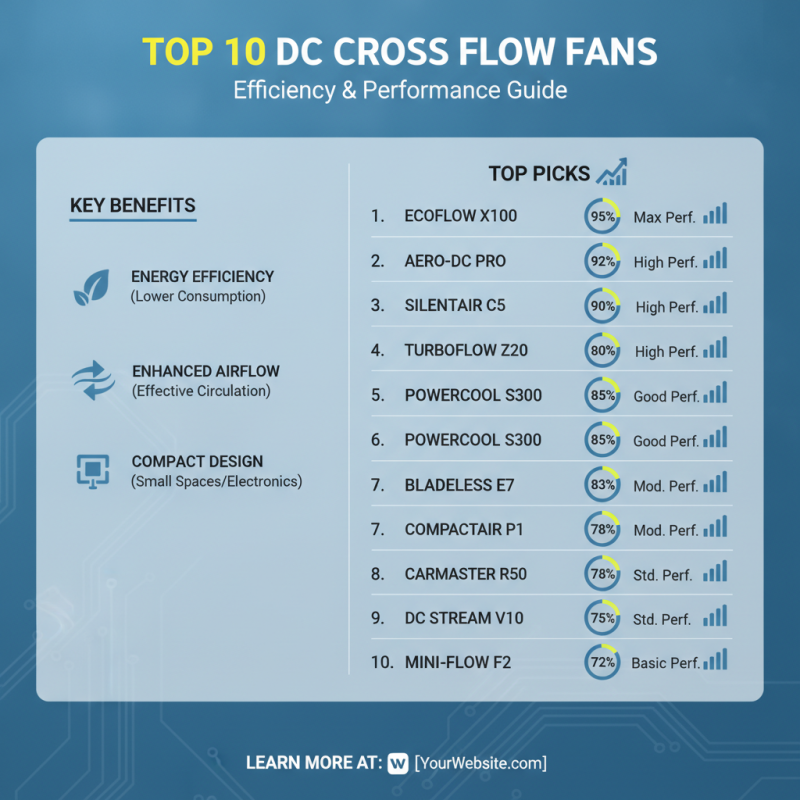
Top 10 Best DC Cross Flow Fans Based on Efficiency Ratings and Performance
When selecting DC cross flow fans, efficiency ratings and performance are critical. These fans are designed to promote effective air circulation in various settings. Their compact design makes them ideal for limited spaces, such as small appliances or electronics. Higher efficiency ratings typically indicate lower energy consumption and better airflow.
One tip to consider is the noise level of the fan. Some models operate quietly, while others may produce a noticeable hum. It is essential to choose a fan that suits your environment, especially if you need a quiet operation. Moreover, pay attention to airflow direction. Proper orientation can significantly enhance circulation and performance.
Another important aspect is the fan's build quality. Well-constructed fans tend to be more durable and reliable. Always check user reviews and performance tests to gauge long-term satisfaction. Don't overlook these factors; they can save you from frequent replacements and unexpected failures. Choosing the right fan requires careful assessment of efficiency, noise, and durability to meet your specific needs.
Comparative Analysis of Noise Levels and Airflow Efficiency in DC Fans
When choosing DC cross flow fans, noise levels and airflow efficiency are crucial factors. These components impact comfort and performance in various settings. Users often overlook the importance of how sound affects the environment. A quiet fan can greatly enhance the experience in offices, homes, or workshops.
Fans with lower decibel levels typically use advanced technology for silent operation. Yet, efficiency should not be sacrificed for noise reduction. The best models maintain excellent airflow while minimizing sound. Users must weigh these aspects carefully.
Tips for selecting the right fan include checking airflow ratings. Airflow is measured in cubic feet per minute (CFM). Higher CFM can lead to better cooling, especially in larger spaces. Consider the size of the space when assessing fan requirements. Small areas benefit from compact fans with targeted airflow.
Not all fans will fit every need. Some may provide adequate airflow but generate excessive noise. Users should compare multiple options. Reading reviews and testing fans can reveal hidden flaws. It’s wise to prioritize both quiet operation and strong airflow for the best results.
Market Trends in DC Cross Flow Fans: Innovations and Energy-Saving Technologies
In recent years, the market for DC cross flow fans has seen significant innovations. Manufacturers focus on energy-saving technologies to improve efficiency. These fans now offer advanced designs that optimize air circulation while consuming less power. Many models are equipped with brushless DC motors, which enhance durability and reduce noise levels.
When selecting a DC cross flow fan, consider its airflow capacity. The right fan should meet the specific needs of your space. Additionally, look for models with built-in speed control features. These add flexibility to adjust airflow as needed.
Tips: Regular maintenance enhances performance. Clean the fan blades periodically to prevent dust buildup. In some cases, even small obstructions can hinder airflow. Evaluate energy consumption regularly. This can highlight if an upgrade or replacement is necessary. It's essential to stay informed about new advancements in fan technologies that promise higher energy efficiency.