




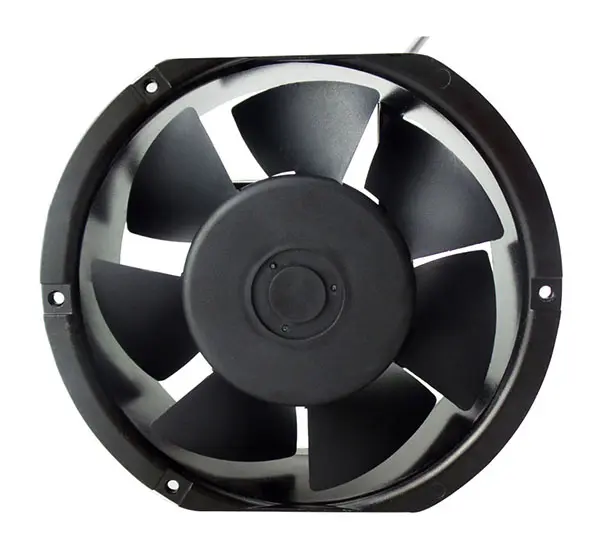
Why is it necessary to use PWM cooling fans in conjunction with temperature sensors?
1. The Relationship Between Temperature Variation and Heat Dissipation Requirements
The internal temperature of the equipment has a direct impact on its performance and stability. Excessive heat can lead to reduced operational efficiency and may even result in hardware failure. Consequently, precise and timely heat dissipation control is essential. Temperature fluctuations dictate the adjustment of Fan speeds. By continuously monitoring the temperature in real-time, the fan speed can be increased as needed to prevent overheating. Conversely, when the temperature is low, the fan speed can be decreased to minimize noise and power consumption.
2. Working Principle of PWM Fans
PWM fans control their rotational speed by modulating the duty cycle of the input signal. A higher duty cycle results in increased fan speed, while a lower duty cycle leads to reduced fan speed. Given that the load and temperature of the device are subject to dynamic variations, the fan must adjust its speed in accordance with these changes. By utilizing PWM signals, the fan can adapt flexibly to temperature fluctuations and ensure optimal thermal management performance.
However, relying solely on preconfigured PWM signals for fan speed control may not provide sufficiently precise responses to device temperature changes. In this context, the role of the temperature sensor becomes crucial. It enables real-time monitoring of the device's temperature and provides accurate temperature data to facilitate effective adjustments of the PWM fan.
3. Integration of the Temperature Sensor with the PWM Fan
The temperature sensor is capable of detecting real-time temperature variations within the device and transmitting this information to the PWM controller. Based on the feedback from the temperature sensor, the PWM controller adjusts the duty cycle of the signal to regulate the fan speed accordingly. Specifically, when paired with PWM fans, the temperature sensor offers several advantages:
✅A. Precise Fan Speed Control
The temperature sensor provides continuous real-time data regarding the internal temperature of the device, enabling the PWM fan to adjust its speed accurately based on this input. For instance, if the temperature sensor detects an increase in device temperature, the duty cycle of the PWM signal increases, thereby accelerating the fan speed to enhance heat dissipation efficiency. Conversely, when the temperature decreases, the duty cycle reduces, slowing down the fan speed appropriately.
✅B.The PWM fan, when paired with a temperature sensor, can automatically adjust its speed in accordance with the device's actual heat dissipation requirements, thereby preventing unnecessary energy consumption. During periods of low device load and reduced temperatures, the fan operates at a slower speed, consuming less power. Conversely, under high load and elevated temperatures, the fan increases its speed to ensure the device does not fail due to overheating.
✅C. The integration of the temperature sensor with the PWM fan not only facilitates speed adjustment but also significantly reduces equipment noise. At lower temperatures, the temperature sensor provides a weaker feedback signal to the PWM fan, resulting in a lower duty cycle and slower fan speed, which diminishes operational noise. In contrast, during higher temperatures, the fan accelerates to guarantee adequate heat dissipation.
✅D . Furthermore, this system extends the service life of the device by maintaining an optimal fan speed through real-time data feedback from the temperature sensor. Excessive fan speeds may lead to additional wear, while insufficient speeds could cause inadequate heat dissipation. By sustaining an appropriate speed, the system prevents potential damage to the device, thus prolonging its lifespan.
The integration of PWM Cooling Fans and temperature sensors represents an effective cooling solution for modern electronic devices. By continuously monitoring device temperature in real time via the temperature sensor, the PWM fan can accurately regulate its rotational speed, thereby enabling intelligent thermal management, enhancing energy efficiency, reducing noise levels, and prolonging the lifespan of the equipment. Whether in high-performance computing systems, industrial machinery, or household appliances, the synergy between PWM fans and temperature sensors delivers superior and more efficient thermal dissipation capabilities, serving as a critical factor in ensuring the long-term stable performance of the equipment.