


What is the relationship between the ventilation resistance of a cooling fan and its static pressure characteristics?
1. Definition of Ventilation Resistance and Static Pressure Characteristics:
In technical terms, static pressure refers to the force exerted by a Fan to drive airflow, whereas ventilation resistance represents the impediment that obstructs this flow. These two factors are interdependent and mutually restrictive. The design of the fan must carefully balance these parameters to achieve optimal heat dissipation performance.
2. The Relationship between Ventilation Resistance and Static Pressure Characteristics
There is a strong correlation between ventilation resistance and static pressure characteristics, which can be summarized in the following aspects:
a. Static pressure increases with added resistance.
When airflow within the equipment encounters greater resistance, the fan must generate higher static pressure to overcome these obstacles. For example, in the design of a cooling system, when fans are installed in narrower or more complex channels, airflow becomes restricted, leading to an increase in static pressure. At this point, the fan's performance curve shifts to the right, indicating a higher static pressure value.
b. Excessive static pressure may reduce air volume.
An increase in static pressure is often accompanied by a reduction in air volume. While the fan can generate relatively high static pressure to overcome resistance, its airflow efficiency decreases. If the static pressure exceeds the fan's optimal operating range, the air volume (airflow rate) may drop significantly, thereby weakening the heat dissipation effect.
c. Balancing static pressure and air volume is critical.
In designing a cooling system, the ideal objective is to find an equilibrium point where the fan generates sufficient static pressure while maintaining adequate air volume. This typically involves selecting an appropriate fan based on the specific channel resistance of the equipment and the required heat dissipation performance.
3. Optimization of Static Pressure and Fan Design
The static pressure characteristics of a Cooling Fan are critical for its performance in specific working environments. To achieve an optimal balance between static pressure and airflow, manufacturers typically implement the following strategies:
a. Fan Blade Design
High-static-pressure fans are engineered with specialized blade geometries and angles to enhance airflow efficiency while maintaining high static pressure under conditions of elevated resistance. These designs enable the fan to overcome significant system resistance while preserving adequate airflow output.
b. Fan Speed Control
The rotational speed of a fan directly influences the static pressure and airflow it generates. By employing advanced speed control techniques, such as Pulse Width Modulation (PWM), the static pressure and airflow can be dynamically adjusted to accommodate fluctuating load requirements more effectively.
c. Air Duct Optimization
Optimizing the air duct design reduces unnecessary resistance, allowing the fan to achieve higher airflow outputs even at lower static pressures. Enhancements in channel smoothness, elbow design, and filter screen selection contribute to minimizing ventilation resistance, thereby reducing the demand for elevated static pressure.
4. Impact in Practical Applications
• Application of High-Static-Pressure Fans: In scenarios where high air resistance must be overcome, such as in high-density electronic devices, industrial equipment, and specific cooling systems, the deployment of high-static-pressure fans can effectively enhance airflow and ensure consistent and reliable heat dissipation for the equipment.
• Challenge of Excessive Air Resistance: If air resistance becomes excessively high, even though the fan is capable of generating high static pressure, its energy efficiency will decrease, and the airflow volume will drop significantly. Consequently, the heat dissipation performance of the equipment may be compromised. Particularly in environments requiring efficient heat dissipation, excessive static pressure not only fails to increase airflow effectively but may also result in inadequate cooling capacity.
5. How to Choose the Appropriate Fan Based on Ventilation Resistance?
- Understand the Airflow Requirements of the Equipment: Prior to purchasing a fan, it is essential to determine the precise airflow requirements of the equipment, including both resistance values and required air volume. Accurate measurements can be obtained using airflow testing instruments, enabling the selection of an appropriate fan.
- Refer to the Fan Performance Curve: Most fan manufacturers provide performance curves (P-Q curves) that illustrate the air volume output under varying static pressures. When selecting a fan, identify the optimal operating point for your equipment and ensure the fan operates efficiently within the specified static pressure range.
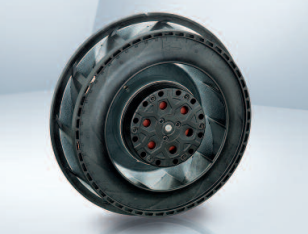
- Select the Suitable Fan Type: Depending on actual needs, choose a fan with either high static pressure or high air volume. For example, in the cooling systems of high-density electronic devices, a centrifugal fan with higher static pressure may be more suitable.
There exists a significant interrelationship between the ventilation resistance and static pressure characteristics of the cooling fan. These factors jointly determine the operational efficiency of the fan as well as the heat dissipation performance of the equipment. By thoroughly analyzing and optimizing this relationship, it is possible to significantly enhance the fan's performance, ensuring its ability to maintain optimal functionality even in high-resistance environments.
When selecting and designing cooling fans, it is essential to comprehensively evaluate the specific application environment of the equipment and choose an appropriate fan type and performance level to guarantee the long-term stable operation of the system.