

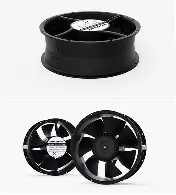
What is the correlation between the lifespan of cooling fans and vibration testing?
What is the Vibration Testing of Cooling Fans? Vibration testing involves subjecting cooling fans to controlled vibration simulations in order to assess the potential vibrations that may occur during long-term operation. These tests enable engineers to evaluate the amplitude and frequency of fan vibrations during operation, as well as identify any damage or performance degradation caused by excessive vibration. Generally, the purpose of vibration testing is to replicate the vibration environment that the equipment will encounter during actual use. This includes:
• Bearing Vibration: During fan operation, friction and rotation of the bearings can generate certain levels of vibration. Excessive bearing vibration may accelerate wear, thereby reducing the lifespan of the fan.
• Mechanical Resonance: When the fan operates in conjunction with other components within a device, resonance phenomena may amplify vibrations, potentially causing structural damage to the fan.
• External Vibration Sources: External environmental factors, such as the location of the device or vibrations generated by adjacent machinery, may also impact the stability of the fan.
How does vibration impact the lifespan of a cooling fan? The lifespan of a cooling fan is typically influenced by several factors, with vibration being a critical factor that significantly affects these aspects:
1. Bearing wear: The bearing is one of the core components of a cooling fan, and prolonged vibration can accelerate its wear. Frequent vibration and movement of the bearings may lead to issues such as cracks, fatigue, or inadequate lubrication due to increased friction on the metal surface. Particularly for common types of bearings, such as plain bearings and ball bearings, vibration can compromise their long-term operational stability, resulting in premature failure.
2. Blade deformation: High-speed rotation under excessive vibration can cause the fan blades to deform. Blade deformation not only reduces the airflow and cooling efficiency of the fan but may also lead to additional mechanical failures, such as imbalance and increased noise. In high-load working environments, the impact of vibration on the blades becomes more pronounced, further affecting the fan's lifespan.
3. Structural fatigue: Vibration can also affect the entire housing and frame structure of the fan. Long-term exposure to high-intensity vibration environments may cause cracking or deformation of the fan's structure, thereby impacting its overall stability and service life. Especially in miniaturized and high-density devices, vibration-induced material fatigue in the fan frame can lead to fan failure.
4. Reduced cooling performance: Vibration can result in unstable fan operation, which in turn affects its cooling performance. If significant irregular vibrations occur during operation, the airflow between the fan blades and the surrounding air may become unstable, impairing effective air transfer. This not only compromises the cooling effect but may also cause equipment overheating, indirectly shortening the service life of the equipment.
Vibration testing serves as a critical method for assessing the durability and lifespan of cooling fans. By conducting rigorous vibration tests, fan manufacturers can refine designs, select more appropriate materials, and enhance production processes to develop fans that are both reliable and long-lasting. When selecting a cooling fan, users should consider the fan's vibration performance, particularly for equipment operating under high loads or in harsh environments. The fans manufactured by Shenzhen Fuqingda Electronic Technology Co., Ltd. have undergone stringent vibration tests, demonstrating superior vibration resistance. This capability not only effectively extends the service life of the fans but also ensures the long-term stable operation of associated equipment. To address diverse customer requirements, we invite you to contact us for further details.