

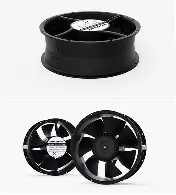
What are the optimal strategies for arranging the cooling fan to minimize the overall ventilation resistance?
1), what is ventilation resistance? Ventilation resistance refers to the opposing force generated by air as it flows through the Fan system, which arises due to the shape, structure, and surface characteristics of components such as ducts, radiators, and filters. High ventilation resistance can lead to a reduction in airflow velocity, diminish the heat dissipation efficiency, and may even render the fan incapable of effectively removing heat, thereby impacting device performance.
2),In the cooling fan system, ventilation resistance is influenced by a variety of factors, including but not limited to the following:
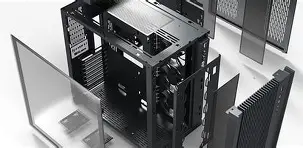
1. Air duct design. The air duct serves as a channel for air circulation, and its design significantly impacts airflow. Turns, narrow sections, and obstacles within the air duct may increase airflow resistance. Curved or irregularly structured air channels can induce turbulence, thereby increasing ventilation resistance.
2. Radiator and heat dissipation element layout. The arrangement of the radiator and heat dissipation elements determines the resistance of the airflow channel. If the radiator design is overly compact or contains excessive fins, it may impede smooth airflow, thus increasing resistance.
3. Filter selection and installation. While filters effectively prevent dust from entering the fan system, a filter with excessively small apertures or significant dust accumulation can increase ventilation resistance. Therefore, the appropriate selection and proper installation of the filter are critical factors in reducing resistance.
4. Airflow linearity. The linearity of airflow is closely associated with the airflow path of the fan. If the airflow path is not smooth, the airflow will encounter more interference, leading to increased flow resistance.
3), how can the layout of the Cooling Fan be optimized to reduce overall ventilation resistance? Optimizing the layout of the cooling fan and minimizing overall ventilation resistance not only enhances fan efficiency but also improves the device's heat dissipation performance. Below are several key optimization strategies:
1. Design streamlined air ducts
Streamlined air duct design effectively reduces airflow resistance and prevents excessive turbulence or collisions. The design should avoid sharp bends, narrow passages, or irregular channels, opting instead for as smooth and straight a path as possible to ensure unobstructed airflow.
Optimization measures:
- Replace right-angle bends with large-radius curves to minimize resistance caused by abrupt turns.
- Ensure no protrusions or obstructions exist within the air ducts to reduce airflow interference.
- Increase the cross-sectional area of the air ducts to prevent excessive airflow density, which could cause additional resistance.
2. Arrange heat sinks and cooling components rationally
The placement of heat sinks and cooling elements should avoid overly compact or irregular arrangements. In the design process, ensure that airflow can pass smoothly through the heat sinks to prevent excessive blockage or localized heat accumulation.
Optimization measures:
- Space heat sinks and radiators appropriately to guarantee airflow across each surface.
- Optimize the size and spacing of the heat sinks to enhance heat dissipation efficiency while reducing air resistance.
3. Select an appropriate filter
The filter plays a critical role in preventing dust from entering the fan system. However, a filter that is excessively fine or heavily laden with dust can substantially increase ventilation resistance. When selecting a filter, its pore size and air permeability should be carefully evaluated to ensure effective dust prevention while minimizing airflow resistance.
Optimization measures:
• Choose a filter with excellent air permeability and an appropriately sized aperture to avoid impeding airflow.
• Regularly clean the filter to prevent increased resistance due to dust accumulation.
• Consider using filters made of antibacterial and antistatic materials to reduce the buildup of dust and debris.
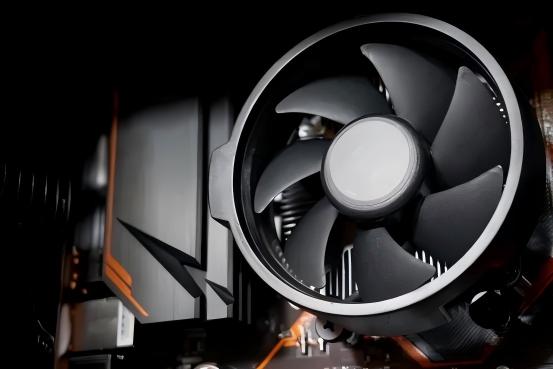
4. Configure the relative position of the fan and the heat dissipation element. The alignment between the fan and the heat dissipation element significantly influences the airflow path. Misalignment between the fan's intake and the radiator's outlet may result in "dead zones" or uneven airflow distribution, thereby increasing resistance. Optimization measures: Ensure precise alignment of the fan's intake with the heat sink's outlet to facilitate smooth airflow through the heat sink. Adjust the fan's installation position to minimize airflow deflection and resistance.
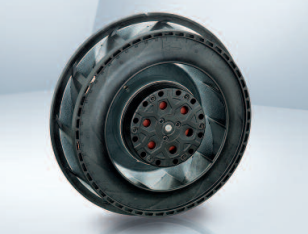
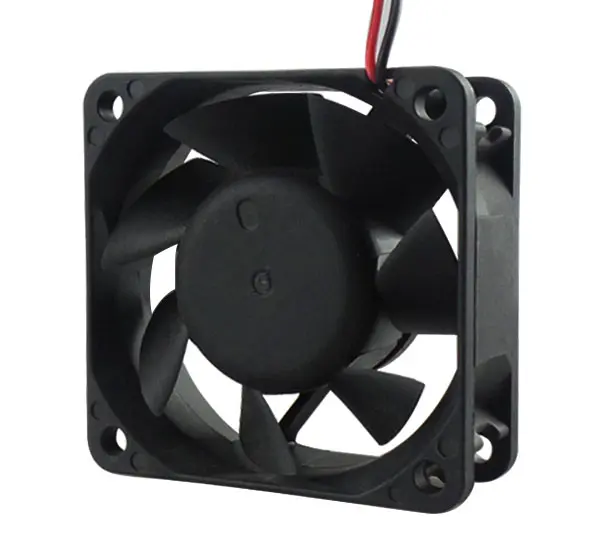
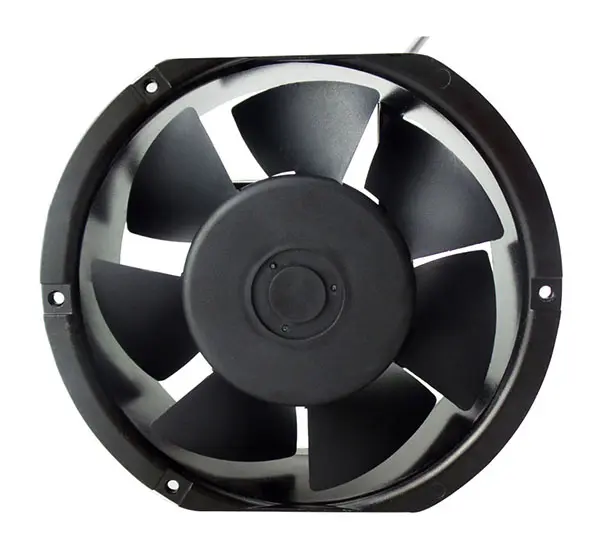
5. Select appropriate fan specifications. Choose suitable fan specifications based on the device's heat dissipation requirements. The fan's airflow and pressure must be compatible with the ventilation resistance of the heat dissipation system. For high ventilation resistance, a centrifugal fan with higher wind pressure is recommended; for low resistance, an axial flow fan with greater airflow capacity is preferable. Optimization measures: Select a fan with adequate airflow and pressure to meet actual demands, ensuring it can effectively overcome the system's ventilation resistance. Avoid selecting fans that are either too large or too small to optimize the heat dissipation system.
6. Optimize the Airflow Path
The airflow path should be designed to be as simple and straight as possible, minimizing redundant branches or bends. The linearity of the airflow directly impacts the efficiency and heat dissipation performance of the fan. Reducing unnecessary obstructions in the airflow helps decrease overall ventilation resistance.
Optimization Measures:
• Design straightforward and linear airflow channels to avoid excessive branching.
• Ensure that the airflow path from inlet to outlet remains as smooth and unobstructed as possible.
4), Summary: How to optimize the layout of the cooling fan to minimize overall ventilation resistance? Optimizing the layout of the cooling fan is crucial for reducing overall ventilation resistance. By rationally designing air ducts, refining the radiator arrangement, selecting appropriate air filters and fan specifications, and enhancing the airflow path, it is possible to significantly decrease air resistance while improving fan efficiency and heat dissipation performance. Only by minimizing ventilation resistance can the fan achieve optimal performance, ensuring the stable operation of the equipment and effective long-term heat dissipation.