

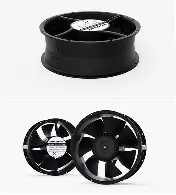
Investigating cooling fan Current Fluctuations: Strategies to Prevent Fan Failure and Prolong Equipment Lifespan
1. Surge Current upon Power Connection
When the Fan is powered on, a significant transient current surge occurs due to dramatic changes in current. This phase typically results in a very high instantaneous current known as "surge current." The electric drive system of the fan usually incorporates components such as filter capacitors, which begin charging upon power connection, leading to substantial current flow. Although the peak value of the surge current is high, its duration is extremely brief, typically ranging from a few milliseconds to several hundred milliseconds. Consequently, despite the large magnitude of the inrush current, its long-term impact on the device remains minimal.
2. Starting Current during
The Startup Phase During the initial startup of the Cooling Fan, the current often rises rapidly and reaches a high peak, referred to as the "starting current." In the early stages of motor startup, due to low rotational speed and high current demand, the starting current is significantly higher than during normal operation. As the fan gradually attains a stable speed, the current decreases accordingly. This is because the motor generates a back electromotive force (EMF) proportional to the fan's speed, which inhibits further current increase. The duration of the starting current is relatively short and varies by model, typically not exceeding 10 seconds.
3. Rated Current during
Stable Operation Once the cooling fan enters a steady operational state, the current stabilizes at a consistent value known as the "rated current." At this stage, the current exhibits minor periodic fluctuations or "ripple," primarily due to factors like back EMF. These fluctuations are generally small and have minimal impact on the device's performance. The rated current represents the typical operating current under stable conditions.
4.When the fan blade is obstructed by an external force
The current exhibits abnormal behavior. Specifically, the current will abruptly surge to a higher peak, resembling the starting current during the initial operation phase. If this excessive current persists, it may lead to overheating and potential damage to the fan motor. Therefore, it is crucial to incorporate protective measures in the design of fans to mitigate this risk. Many manufacturers, such as Shanyang Electric, have integrated anti-burnout protection mechanisms into their products. This protection employs "current cut-off" technology, which periodically interrupts the power supply to limit the current flow, thereby preventing prolonged exposure to peak currents and safeguarding the fan from damage.
In summary
the dynamic changes in fan current encompass various stages, including inrush current, starting current, rated current, and fluctuations during stable operation, as well as abnormal conditions when the fan blade is blocked. Understanding these current characteristics is essential for selecting a fan that ensures device stability and longevity. Implementing appropriate current protection technologies, particularly anti-burnout features, can effectively prevent faults caused by excessive current, ensuring the long-term reliable operation of the fan.