
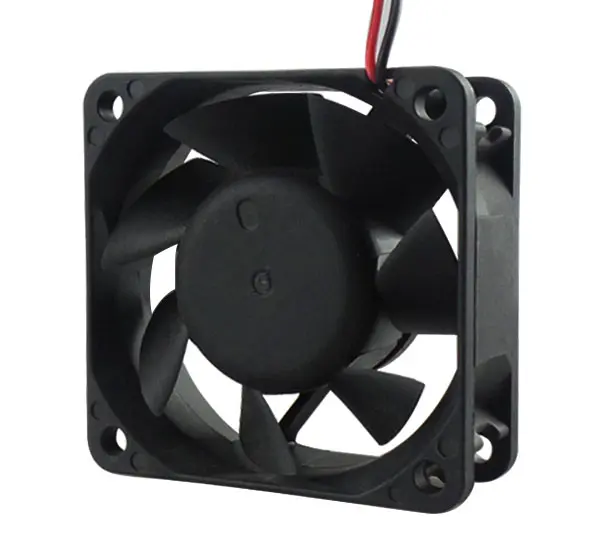

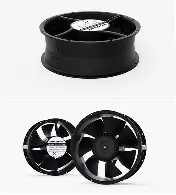
In the event of an RD signal failure, how can one rapidly identify and resolve the issue related to the cooling fan?
I. Core Manifestations and Identification Methods of RD Signal Faults
The RD signal implements fault monitoring by detecting changes in the output level of the open collector. Specifically, when the Fan operates normally, the signal pin outputs a low level; however, if the rotor is obstructed or ceases rotation, a high level will be output. The following phenomena warrant close attention:
1). System Alarm Triggered
If the motherboard or monitoring software detects that the RD signal remains at a consistently high level, it may trigger a "Fan Failure" alarm (e.g., alarm code F012 for data center servers).
2). Abnormal Rotational Speed Data
In comparison with the rotational speed feedback signal from FG (Frequency Generator), if the RD signal triggers an alarm while FG still provides valid data, this could indicate a false alarm originating from the sensor. Conversely, if neither signal outputs any data, the fan itself should be inspected immediately.
3). Correlation Between Load and Temperature
If the CPU/GPU load has not reached its threshold but high-temperature protection is activated, or if the ambient temperature is normal yet the device frequently reduces its frequency, it is necessary to analyze the RD signal in conjunction with other parameters to determine whether a heat dissipation failure has occurred.
II. Troubleshooting Process and Solutions
1. Basic Testing and Emergency Response
- **Signal Line Integrity Check**
Use a multimeter to measure the resistance between the RD signal line and GND (which should typically exhibit low impedance). If an open circuit is detected, either replace the wiring harness or inspect the connector for potential issues.
- **Power Supply and Control Logic Verification**
Verify that the fan's supply voltage falls within its rated range and examine whether the PWM speed regulation signal exhibits any abnormalities.
- **Spare Fan Replacement Test**
Conduct a replacement test to swiftly identify and isolate the problem.
2. In-depth Fault Analysis and Repair
• Rotor Blockage Treatment: If the RD signal remains at a high level along with abnormal vibration, it is necessary to disassemble the fan for bearing cleaning. If cleaning does not resolve the issue, consider replacing the motor.
• Sensor Circuit Repair: For false alarms of RD signals, verify the gap between the Hall sensor and the magnetic ring (recommended range: 0.5-1.0 mm). If the gap is appropriate but the problem persists, replace the signal processing chip.
• Firmware and Driver Updates: To ensure compatibility with new fan protocols, some industrial equipment may require an upgrade to the BMC firmware. This step is essential for maintaining optimal system performance.
III. Preventive Maintenance and Product Selection Recommendations
1). Regular Maintenance Plan
• Quarterly Deep Cleaning: Use compressed air to clean the air inlet filter screen (it is recommended to equip a filter screen with an IP5X protection rating). Perform negative pressure suction on the outlet to ensure optimal airflow performance.
• Semi-Annual Signal Calibration: Monitor the rising edge/falling edge time of the RD signal via an oscilloscope (ensuring it remains below 5μs) to guarantee alarm response speed.
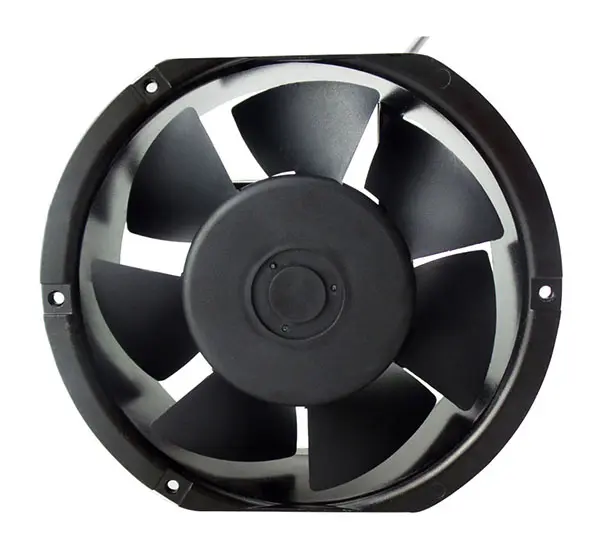
• Annual Life Testing: For critical equipment fans (e.g., the SanAce 172L series with an expected lifespan of 100,000 hours), conduct accelerated aging tests (operate for 1,000 hours at 85°C/85%RH) to assess long-term reliability.
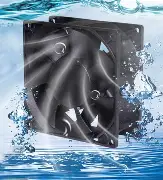
2). High-reliability product recommendations. For instance, the dual ball bearings and pulse sensors provided by Shenzhen Fuqingda Electronic Technology Co., Ltd. support PWM speed regulation and RD/FG dual signal output, and are designed to achieve an IP68 protection rating, thereby fulfilling the diverse requirements of customers.
IV. Professional Service Support System
Fuqingda Electronics, as a manufacturer, offers the following value-added services:
• Fault Diagnosis Toolkit
Equipped with RD signal testers, speed calibrators, and other diagnostic devices, this toolkit enables on-site testing and the issuance of detailed test reports.
• 7×24-hour Technical Response
An ISO 9001-certified engineering team provides timely technical support, ensuring spare parts replacement or factory return maintenance solutions within 48 hours of receiving a request.
• Customized Heat Dissipation Solutions
For specialized industries such as medical equipment and new energy vehicles, we provide comprehensive services ranging from fan selection to thermal simulation design, tailored to meet specific customer requirements.
Conclusion:
The efficient management of RD signal faults necessitates an integrated approach that combines hardware diagnostics, advanced signal analysis, and proactive preventive maintenance. By selecting reliable fans and cost-effective solutions provided by Fuqingda Electronic Technology Co., Ltd., and establishing a standardized maintenance protocol, the likelihood of equipment downtime can be substantially minimized. For additional technical assistance, please do not hesitate to reach out via the official website:site_7b27c6f1-70f2-440b-9623-6392ccfd169f of Fuqingda Electronics for comprehensive product details.