

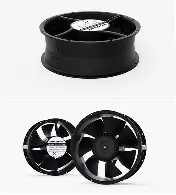
How to decrease power consumption while maintaining a constant air volume for the fan
To reduce power consumption while maintaining the Fan's air volume unchanged, several solutions can be considered.
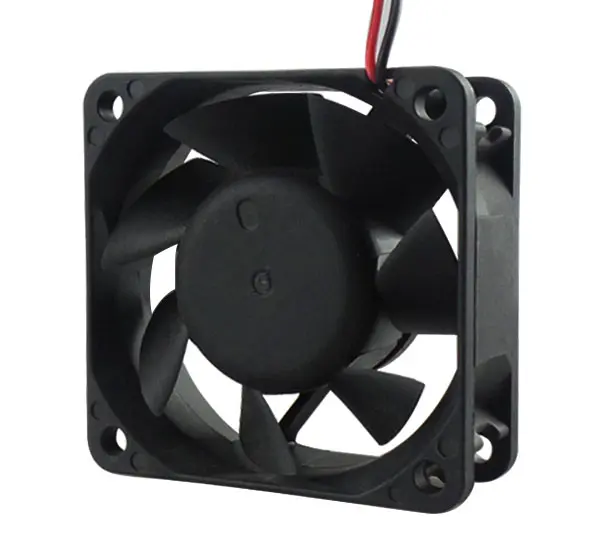
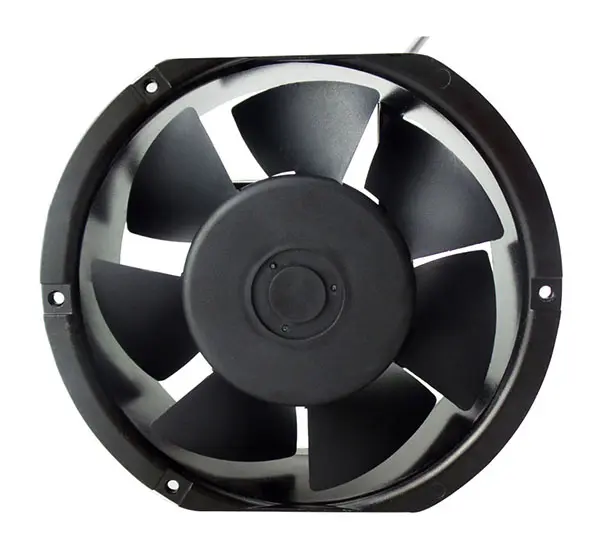
1), by optimizing the fan design through improvements in blade shape, quantity, and angle, the efficiency of the fan can be enhanced, thereby reducing power consumption under the same air volume. Advanced Computational Fluid Dynamics (CFD) analysis tools can be employed to simulate and optimize the design, helping to determine the optimal blade geometry.
2), selecting a high-efficiency motor, such as an AC brushless motor (BLDC) or a DC brushless motor (BLDC), can further reduce power consumption. These motors typically exhibit lower energy losses and provide the same airflow with reduced electrical energy consumption compared to traditional AC induction motors.
3), implementing a variable frequency speed control system allows for the adjustment of the fan's rotational speed and power output according to actual requirements, thus avoiding unnecessary power waste. Traditional fans often operate at a constant speed, which may lead to excessive power consumption. By adopting variable frequency speed control, the rotational speed can be decreased when a smaller air volume is required, thereby reducing power consumption. Finally, using lightweight and efficient materials, such as composite materials or aluminum alloys, can reduce the fan's weight, decrease its moment of inertia, and lower the power required to convert electrical energy into mechanical energy.
4). The utilization of lightweight and highly efficient materials, such as composite materials or aluminum alloys, can reduce the weight of the fan, decrease its moment of inertia, and lower the power consumption required for converting electrical energy into mechanical energy.
5),By optimizing the system layout and duct design, airflow resistance and vortex losses can be minimized, thereby enhancing the efficiency of the fan. Simultaneously, it is essential to ensure that the fan can effectively draw in fresh air and guide the airflow in the desired direction, thus avoiding unnecessary resistance.
6). Consider integrating intelligent control and sensor technologies into the fan system, enabling it to intelligently adjust wind direction and operational status based on actual requirements. For example, temperature and humidity sensors can automatically regulate the fan's operating state, speed, and power consumption according to environmental conditions, ensuring optimal comfort and energy efficiency.
It should be emphasized that these solutions must be selected and implemented based on specific circumstances. Further analysis and optimization tailored to the specific application and working environment of the fan can achieve the best balance of energy efficiency and environmental protection.