
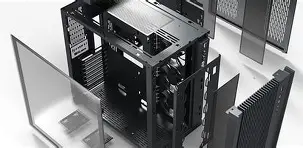
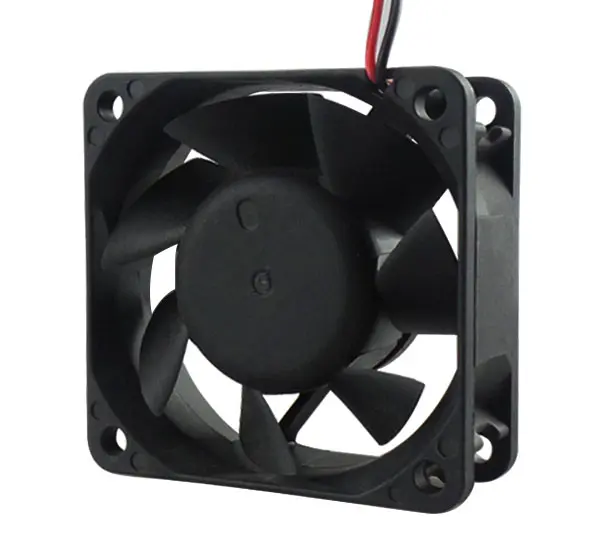

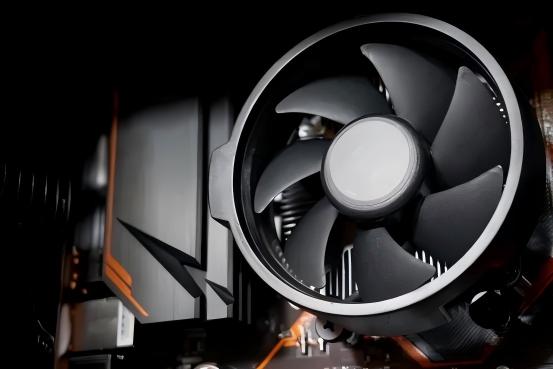
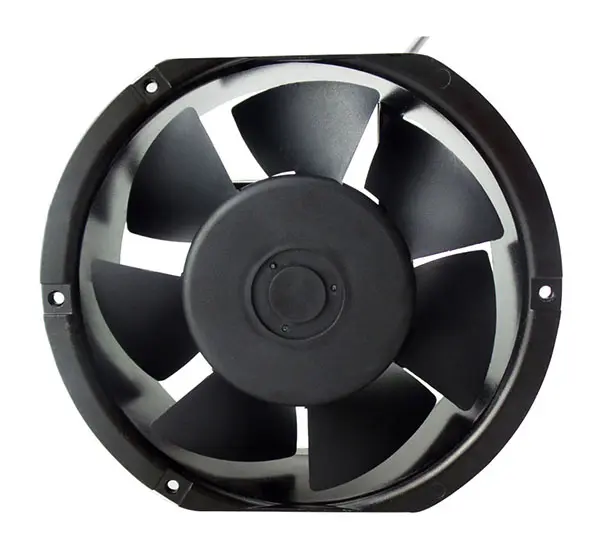
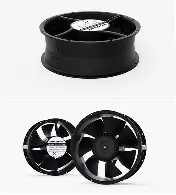
How many of these concealed functionalities in custom cooling fan solutions are you aware of?
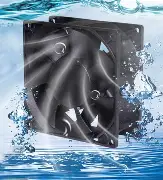
1. Waterproof Function: Ensuring Stable Operation in Moist Environments
In applications such as aquaculture equipment, outdoor communication base stations, and bathroom ventilation systems, which are constantly exposed to high humidity or potential liquid contact, waterproof performance is a fundamental guarantee for the normal operation of Cooling Fans. If cooling fans lack the necessary waterproof capability, water vapor intrusion into the motor or internal circuits can lead to unstable rotation speeds, increased noise, and in severe cases, short circuits or equipment burnout, significantly affecting the overall system's reliability and service life.
The implementation of waterproof functionality requires comprehensive process customization across multiple dimensions. The key technologies involved include:
1. Motor Waterproofing: Core motor components are subjected to dip-coating with specialized waterproof materials, forming a dense insulating barrier that effectively prevents water molecule ingress. For applications demanding higher protection levels, the vacuum potting process may be employed, in which waterproof resin is used to fully encapsulate the motor assembly, achieving IP68-level waterproof performance.
2. PCB Moisture Protection: The control PCB board of the fan is hermetically sealed using high-performance moisture-resistant materials such as epoxy resin. This approach not only blocks environmental humidity but also provides resistance against corrosive agents including salt spray and mold, ensuring reliable operation in harsh industrial environments such as marine and chemical processing applications.
3. Structural Sealing Optimization: A durable, anti-aging sealing gasket is installed at the interface between the fan housing and impeller. Additionally, the outlet flow path is engineered to minimize the accumulation of rainwater or condensation within the unit. These design enhancements collectively improve the overall sealing integrity and long-term waterproof reliability of the product.

2. Dust-proof Function: Effectively resist dust intrusion and ensure long-term stable operation
In high-concentration particulate matter operation sites such as mining machinery, textile workshops, and industrial dust environments, dust will continuously deposit on fan blades, bearing systems, and motor windings, causing two key problems: First, dust accumulation on the blade surface leads to dynamic imbalance, which in turn induces abnormal vibration and noise; second, dust entering the bearing area may disrupt the lubrication state, accelerate mechanical wear, and significantly shorten the equipment's service life. Therefore, implementing customized dust-proof structures is a crucial measure to enhance the reliability and durability of cooling fans in dusty conditions.
The customized implementation of dust-proof functions mainly covers the following six key technical paths:
1. Closed structure design: The motor and control circuit are completely sealed in a dedicated dust-proof housing, with only necessary air intake and exhaust channels retained. Replaceable dust-proof filters are installed at the ventilation openings. The filters can be selected from metal mesh or high-density fiber materials based on actual needs, ensuring effective dust prevention while maintaining good ventilation performance.
2. Dust-proof bearing selection: Conventional oil-filled bearings should be abandoned. Prioritize the use of ball bearings with double-sided seals or custom-made self-lubricating dust-proof bearings. These bearings, through the combination of long-lasting grease inside and multiple sealing structures, significantly reduce the risk of dust entering the bearing interior, enhancing operational stability and service life.
3. Dust-proof material application: Anti-static coating is applied to the inner wall of the fan housing to suppress the dust adhesion caused by static electricity effect; for environments with high wear risk, high-strength and wear-resistant engineering plastics (such as polyphenylene sulfide, PPS) can be selected to enhance the component's resistance to long-term erosion by dust particles.
4. Surface dust-proof coating treatment: Apply Teflon (PTFE) or nano-scale dust-repellent coating to exposed components such as blades and frames, effectively reducing surface energy and decreasing the adhesion strength of dust, making it easier for later maintenance and cleaning. Usually, a light wipe is sufficient to remove accumulated dust.
5. IP protection grade compliance design: Based on the actual dust concentration and environmental conditions, the overall machine protection grade that meets standards such as IP54 and IP65 is customized. Among them, the IP65 and above grades can achieve complete protection against dust and are suitable for industrial scenarios with high dust concentration such as mines and cement plants.
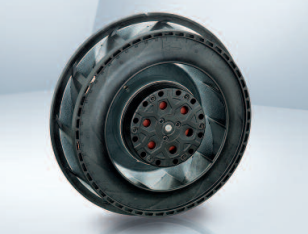
6. Airflow structure optimization: Based on fluid dynamics simulation analysis, the blade curvature, installation angle and geometry of the air intake duct are optimized to reduce internal vortices and low-speed stagnation zones, thereby lowering the probability of dust deposition inside the fan and suppressing dust accumulation from the source of aerodynamic design.
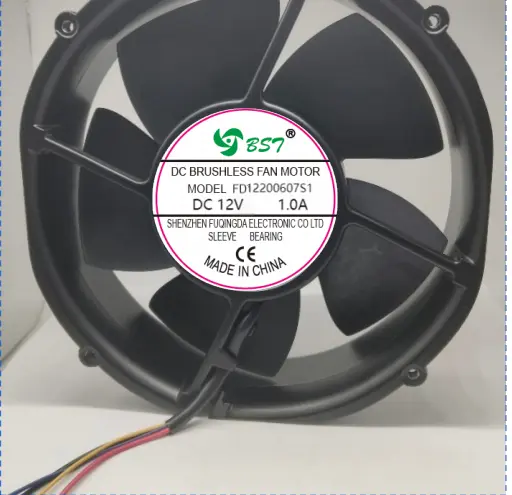
3. Intelligent Control: Real-Time Sensing and Adaptive Regulation
Conventional cooling fans typically operate at a fixed rotational speed, maintaining constant airflow regardless of the actual thermal load of the equipment. This constant-speed operation leads to excessive energy consumption and contributes to increased acoustic noise and mechanical wear due to prolonged high-speed running. In contrast, intelligent control technology utilizes real-time environmental sensing to enable demand-based thermal management, dynamically adjusting fan speed in response to temperature fluctuations. This adaptive approach achieves an optimal balance among energy efficiency, noise reduction, and effective heat dissipation. As a result, intelligent control is widely adopted in precision-critical and energy-sensitive applications such as data center servers, medical diagnostic equipment, and smart home systems.
The customized design of intelligent control functions is centered around the "perception - regulation - feedback" closed-loop system, combined with core patented technologies. The specific implementation methods are as follows:
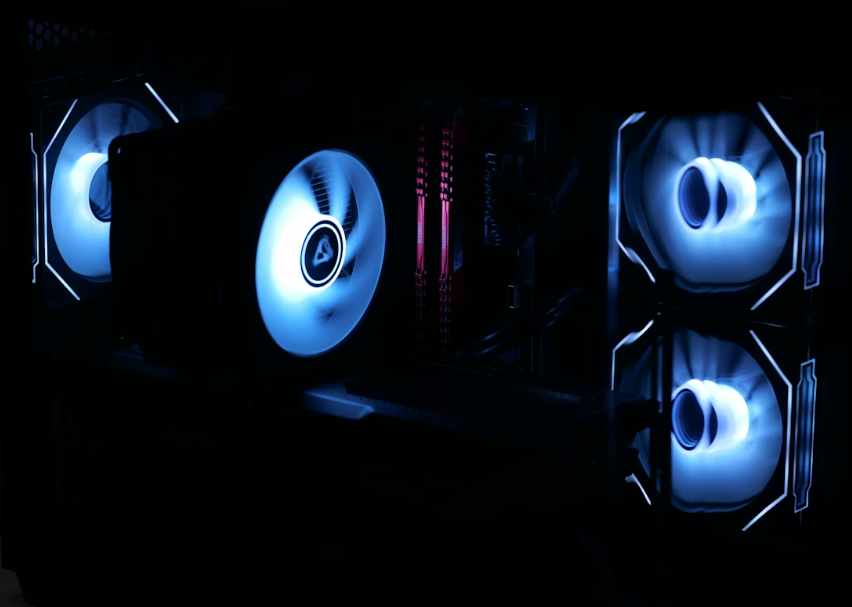
Real-time temperature monitoring: High-precision NTC thermistors or digital temperature sensors are integrated inside the fan to collect temperature data of key components of the device (such as CPU, power module, etc.) in real time. The temperature measurement accuracy can reach ±0.5℃, ensuring the accuracy and timeliness of thermal state perception.
2. Automatic speed regulation: Based on the collected temperature signals, the embedded control chip implements a dynamic speed adjustment strategy - when the detected temperature is lower than the set threshold (such as 30℃), the fan enters a low-speed operation or automatic shutdown mode; when the temperature rises to the preset upper limit (such as 50℃), the speed is automatically increased to achieve a dynamic match between the heat dissipation performance and energy consumption level, balancing energy efficiency and reliability.
3. Real-time feedback on operating status: Through standard communication interfaces such as RS485 and PWM, the current fan speed, working temperature, and fault information (such as locked rotor, overcurrent, stall, etc.) are uploaded in real-time to the main control system, supporting remote monitoring and diagnosis. This enables maintenance personnel to promptly detect anomalies and take intervention measures, enhancing the maintainability and operational safety of the system.
4. Speed Regulation Function: Flexible Adaptation, Supplying Air as Needed
The speed regulation function can be regarded as an extended form of basic intelligent control. Although it lacks the ability to automatically perceive the environment, it can achieve manual or semi-automatic speed adjustment through external input signals. It is suitable for applications where the heat dissipation requirements change dynamically with operating conditions, such as industrial ovens and precision laboratory equipment. Its core advantages lie in its high operational flexibility, significantly lower implementation costs compared to fully intelligent control solutions, and the ability to be quickly integrated into existing equipment control systems, offering good compatibility and ease of deployment.
The common speed regulation customization methods and their technical characteristics are as follows:
PWM speed control: It uses pulse width modulation (PWM) signals to achieve precise control over fan speed, featuring high adjustment accuracy (speed control can be stabilized within ±100 RPM) and maintaining a low noise level and good operational stability during the speed adjustment process. As the current mainstream speed control technology, it is widely applied in the cooling systems of computer cases, servers, and high-performance electronic devices.
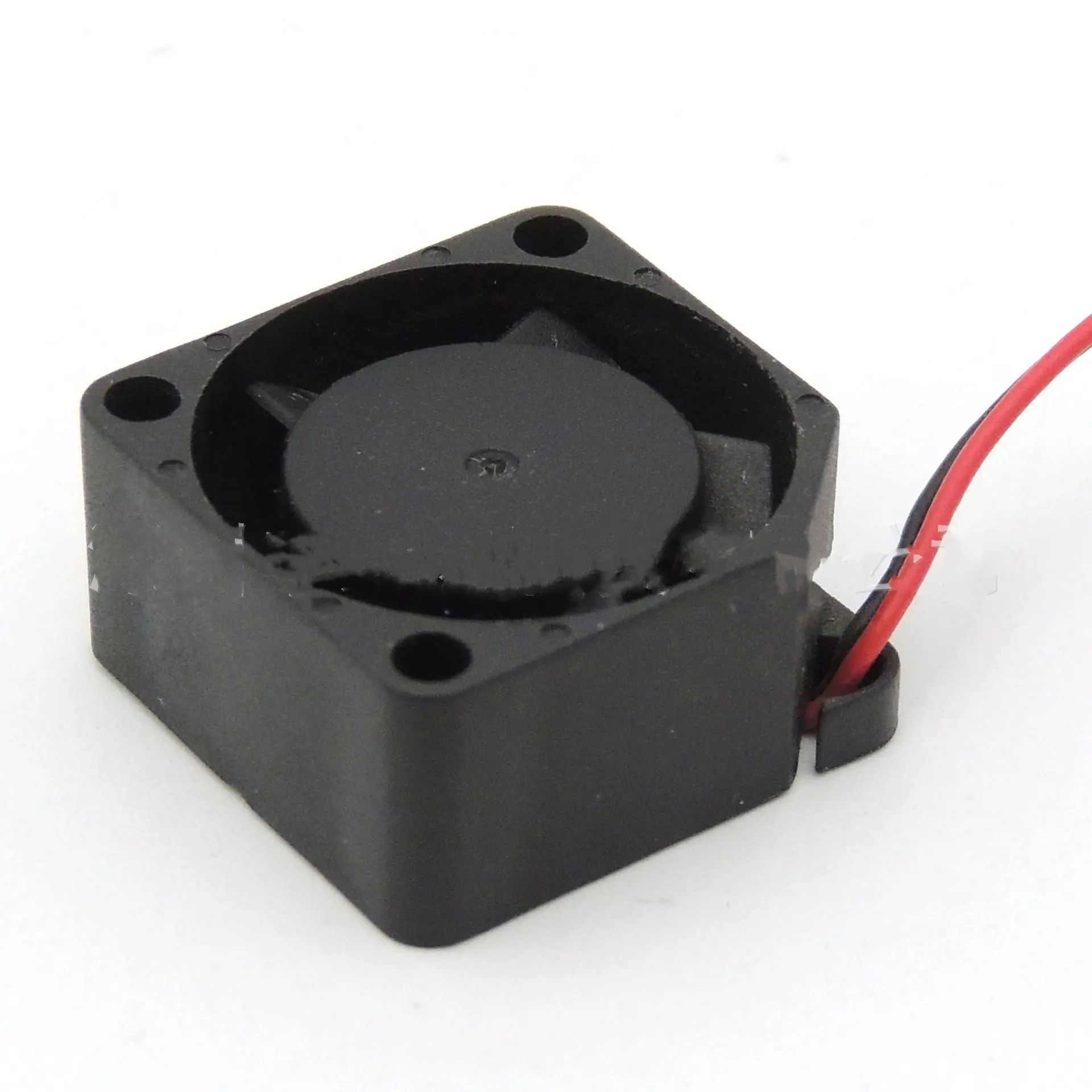
2. Voltage speed regulation: By adjusting the input voltage (for example, a 12v Fan can be continuously adjusted within the range of 5V to 12V), the rotational speed is changed. This method features a simple circuit structure and low manufacturing cost, making it suitable for applications with limited budgets or where control accuracy is not a critical requirement. However, its speed regulation linearity is poor, and it is prone to speed fluctuations. It is typically used in small ventilation devices and other equipment with low dynamic performance requirements.
3. Temperature-controlled speed regulation (semi-automatic mode): This mode achieves temperature feedback control through an external independent temperature controller. Users can preset the target temperature threshold, and the temperature controller automatically outputs corresponding control signals to adjust the fan speed based on the real-time temperature. This solution lies between manual control and fully intelligent control, combining a certain degree of automation with economic implementation. It is suitable for medium and small-sized industrial equipment where there are certain requirements for heat dissipation response but no need for complex integration.
4. Resistance speed control: By connecting resistors in series to reduce the driving current, the fan's speed can be decreased. This method has the simplest structure and requires no additional control circuits. However, it has problems such as high energy loss, low efficiency, and a limited speed adjustment range. It is only recommended for low-power devices or temporary heat dissipation needs, and is not suitable for long-term operation or energy efficiency-sensitive applications.
5. Other Special Features: Ensuring Stable Operation and Extended Service Life
In addition to the core functions mentioned above, to meet the specific requirements of different application scenarios, the cooling fan can be further customized with various "protective" functional modules. These functions aim to enhance the reliability and durability of the system operation, effectively reduce the failure rate, and extend the overall service life of the equipment. Common customized functions include:
1. Overload protection: When the fan's working current exceeds the rated value due to faults such as blocked rotation or short circuit, the built-in protection circuit can automatically cut off the power supply, effectively preventing motor overcurrent damage. It is suitable for equipment with large motor load fluctuations or complex operating environments, such as fans and pump devices.
2. Overheat protection: A temperature-sensitive overheat protector is integrated into the motor windings. When the internal temperature exceeds the preset threshold (default 120°C, customizable as needed), the system automatically disconnects the circuit. Once the temperature drops back to a safe range, the fan resumes operation. This feature significantly reduces the risk of insulation aging and performance degradation due to long-term high-temperature operation of the motor.
3. Startup delay protection: After the fan is powered on, the embedded control chip enables a delay start of 0.5 to 3 seconds, avoiding the instantaneous current surge and grid voltage fluctuation caused by the simultaneous startup of multiple fans. This effectively protects the stability of the power supply system and is particularly suitable for high-density cooling scenarios with multiple fans in parallel, such as large cabinets and server arrays.
4. Reverse connection protection: When the positive and negative terminals of the power supply are accidentally reversed, the protection circuit will automatically cut off the current input, preventing the motor from reversing or being burned out due to abnormal current. This significantly reduces the equipment failure rate caused by installation errors, and is especially suitable for applications where installation is performed by non-professionals.
Optimized Text:
Summary: Core Logic of Function Customization
The customization of cooling fan functionalities should follow the principle of "demand-driven configuration and precise matching," rather than merely accumulating features. An effective customization strategy must comprehensively address the interplay among application scenarios, environmental conditions, and equipment operational requirements. Specifically, waterproofing should be prioritized in high-humidity environments; dust-proof designs are essential in dusty operating conditions; intelligent control or speed regulation technologies are recommended for energy-sensitive applications; and in safety-critical systems, protective mechanisms such as overload and overheat protection should be incorporated. Only through accurate function selection and rational integration based on actual needs can the full value of customization be realized—ensuring optimal thermal performance, long-term system reliability, minimized unnecessary costs, and a balanced optimization of performance, efficiency, and economic viability.