

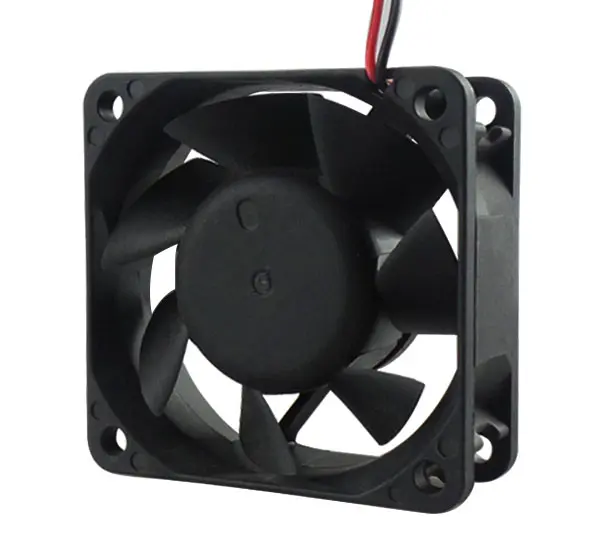

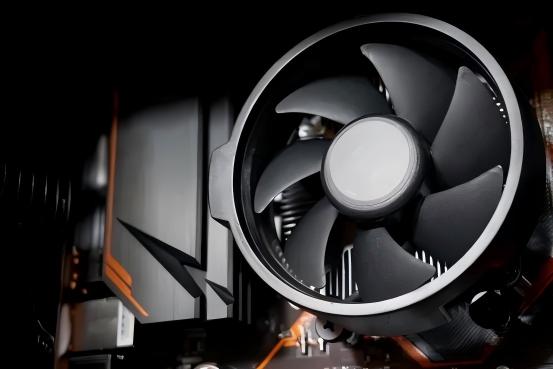
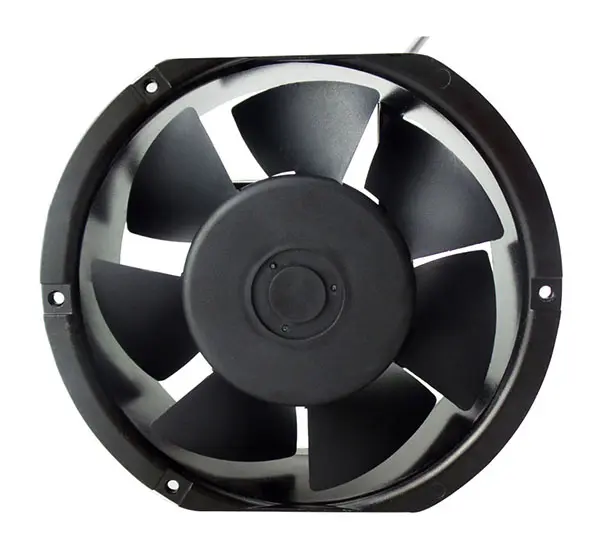
How do the DC motor and AC motor of the cooling fan influence the sound pressure level?
I. Basic Differences between DC Motors and AC Motors
Before analyzing their influence on sound pressure levels, it is essential to first examine the primary distinctions between DC motors and AC motors:
1). DC Motor
DC motors are powered by direct current (DC) power supplies and offer convenient speed adjustment capabilities. They are commonly employed in environments where noise control is critical. Key advantages of DC motors include:
• Superior speed regulation performance: Through the implementation of Pulse Width Modulation (PWM) technology, smooth and precise speed control can be achieved.
• Low operational noise: Due to the absence of a mechanical commutator, DC motors generate relatively low noise during operation, making them ideal for applications requiring silence.
• Enhanced energy efficiency: Compared with AC motors, DC motors exhibit superior energy efficiency at the same power output.
2). AC Motor
AC motors are driven by alternating current (AC) power sources and feature a relatively simple construction, enabling widespread application. Notable advantages of AC motors include:
• High reliability: As they do not rely on brushes or commutators, AC motors typically possess a long service life and require minimal maintenance.
• Cost-effectiveness: The production cost of AC motors is generally lower than that of DC motors, rendering them more economical for large-scale manufacturing.
• Suitability for high-power applications: AC motors are capable of delivering substantial output power, making them well-suited for high-power and high-load scenarios.
2. The Impact of DC Motors and AC Motors on Sound Pressure Level
1). The Impact of DC Motors on Sound Pressure Level
Owing to the characteristics of current flow, DC motors typically produce less mechanical noise. The primary sources of noise include: electromagnetic noise, which arises from fluctuations in the electromagnetic field of a DC motor but tends to remain relatively stable; rotational speed noise, which can be minimized through precise control of the motor's rotational speed for smooth operation, particularly at low speeds. Consequently, DC motors generally exhibit a lower sound pressure level and are especially suited for low-noise environments such as household appliances, office equipment, and medical devices.
2). The Influence of AC Motors on Sound Pressure Level
AC motors tend to generate a higher sound pressure level, particularly during high-speed operation. The main sources of noise include: electromagnetic noise, which is more pronounced due to the frequent fluctuations in current within AC motors; mechanical noise, which results from increased friction between bearings and other components at high rotational speeds. Despite these challenges, AC motors often produce a higher sound pressure level compared to DC motors under high-power conditions. In applications requiring significant airflow or high power output, AC motors provide superior heat dissipation capabilities, though they may not match the noise control performance of DC motors.
3 How to Select the Appropriate Motor Type Based on Application Requirements?
1). Applications with High Demands for Low Noise Levels
If your equipment requires a lower noise level, such as medical devices, household appliances, and office equipment, it is advisable to select a DC motor fan. DC motors are characterized by their low sound pressure levels and excellent speed regulation performance, which enhance the user experience in these applications.
2). Applications with High Power Requirements
For applications that demand high air volume and power, such as industrial equipment, large air conditioning systems, and server rooms, AC motor Fans are typically more suitable. AC motors exhibit superior stability and durability under high load and high-speed conditions compared to DC motors. Although they may generate higher noise levels, they offer better heat dissipation capabilities.
3). Comprehensive Consideration of the Plan
If the equipment needs to balance performance and noise, a variable-frequency AC motor (also known as a variable-frequency drive motor) can be considered. This type of motor combines the high power output of an AC motor with precise speed control, thereby reducing noise to some extent.
4. Conclusion: Selection of Appropriate Motor Type for Optimized Noise and Performance
In the design and application of Cooling Fans, selecting the appropriate motor type is essential for effective noise control and optimal cooling performance. DC motors are ideal for applications prioritizing low noise levels and energy efficiency, whereas AC motors are better suited for high-power and heavy-load scenarios. When selecting a fan, it is necessary to comprehensively evaluate the power requirements, noise constraints, and operational environment of the equipment to determine the most suitable motor type