

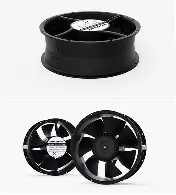
Have you selected the appropriate protection level for the cooling fan in Zone I?
What is the IP rating?
The IP rating is a standardized system developed by the International Electrotechnical Commission (IEC) to describe the protective capabilities of electrical equipment in specific environments. The IP rating comprises two digits: the first digit represents the level of protection against solid objects, such as dust and sand, while the second digit denotes the level of protection against liquids, including water and moisture.
The first numeral: Protection against solid objects
• 0: No protection
• 1:Prevents entry of objects with a diameter exceeding 50 mm
• 2:Prevents entry of objects with a diameter exceeding 12.5 mm
• 3: Prevents entry of objects with a diameter exceeding 2.5 mm
• 4:Prevents entry of objects with a diameter exceeding 1 mm
• 5: Dust protected
• 6: Dust tight
The second digit: Liquid ingress protection
- 0: No protection
- 1: Protection against vertically dripping water
- 2: Protection against dripping water within a 15° angle
- 3: Protection against sprayed water
- 4: Protection against splashed water
- 5: Protection against water jets
- 6: Protection against powerful water jets
- 7: Complete waterproofing
- 8: Protection against prolonged water immersion
- 9: Protection against high-pressure and high-temperature water jets
The Influence of IP Rating on Cooling Fans
1. The IP rating determines the operating environment of the fan.
Cooling fans with different IP ratings are suited to various application environments. In particular, under harsh conditions, selecting an appropriate IP rating becomes critical. For example, in high-humidity, salt spray, or dust-dense environments, it is essential to choose fans with a higher protection level.
- IP20: Suitable for standard indoor environments with minimal exposure to dust or liquids.
- IP54: Ideal for factory workshops and industrial control equipment, providing dust ingress prevention and resistance to general water splashes.
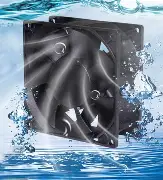
- IP67: Designed for outdoor or underwater applications, offering protection against immersion up to 1 meter and suitable for high-humidity or highly corrosive environments.
2. Improving the reliability and lifespan of equipment is crucial.
Cooling fans with a higher Ingress Protection (IP) rating are capable of effectively resisting damage from external environmental factors, thereby minimizing the corrosion of motors, bearings, and circuit boards caused by dust and moisture. This enables the fan to operate stably in challenging environments, thus extending the overall service life of the equipment.
- Reduction in failure rate: Fans with high IP ratings can efficiently prevent dust and moisture from infiltrating the circuit system, significantly reducing failures induced by external contamination.
- Enhanced stability: These fans ensure consistent rotational speed and optimal heat dissipation performance, even under adverse conditions.
3.High IP-rated cooling fans are essential for ensuring safety.
These fans effectively prevent external solid objects, such as tools and debris, from entering the interior, thereby protecting electrical components and ensuring the safe operation of equipment. Additionally, their waterproof design prevents short circuits and electrical failures in humid environments.
How to choose the appropriate IP level?
1. Environmental Assessment
When selecting the IP rating, it is essential to conduct an environmental assessment to determine the operational conditions of the fan. Different environments necessitate varying levels of protection:
- For dry and clean environments, such as offices or household appliances, an IP20 or IP21 rating is typically adequate.
- In industrial settings, such as factories or workshops, where dust is prevalent, a minimum of IP54 is recommended. If liquid splashing is a concern, IP55 or IP65 ratings should be considered.
- For outdoor applications, such as external electrical equipment or transportation vehicles, IP67 or IP68 ratings are advisable to ensure protection against water ingress and potential equipment submersion.
2️ 。Equipment Requirements:
Select the appropriate IP rating based on the specific requirements of the equipment to ensure that the cooling fan is compatible with its operating environment. For example, servers in data centers generally function in environments with stringent temperature control and relatively dry conditions; therefore, a high IP rating may not be necessary. Conversely, outdoor equipment or devices exposed to rainwater require a higher waterproof rating to ensure reliable performance.
3️。 Future Environmental Considerations:
Given the potential for changes in the equipment's operating environment over time, selecting a cooling fan with a higher IP rating can provide enhanced assurance for the stable operation of the equipment. For instance, if there is a possibility that the equipment will be relocated to an area with higher humidity levels, it would be prudent to select a fan with a higher waterproof rating in anticipation of such changes.