

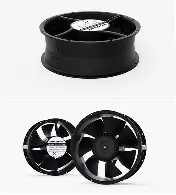
Frequently Asked Questions about Cooling Fans
1. What size Cooling Fan should I choose?
When choosing a cooling fan, size is crucial! Fan sizes are typically measured in millimeters (mm), and this is essential to ensure a perfect fit for your specific space. Whether you're cooling a small PC case or a large server rack, be sure to measure your installation area before purchasing. Remember, an oversized fan can catch you off guard—it really can!
2. What is the importance of rated voltage for cooling fans?
Rated voltage, measured in volts (V), refers to the optimal voltage at which a cooling fan can operate efficiently for extended periods. Think of it as the fan's energy drink—too low a voltage and the fan might sluggish; too high a voltage and it might overheat! Always check the specifications to ensure your fan receives the appropriate voltage for optimal performance.
3. How does fan speed affect performance?
Fan speed is measured in revolutions per minute (RPM), representing the number of times the fan blades rotate per minute. Higher RPMs mean greater airflow, which is very beneficial for heat dissipation! However, keep in mind that higher RPMs also result in higher noise levels. This is a classic example of "faster speed, better cooling, but also more noise." Choose carefully!
4. What is airflow? Why is it important?
Airflow is the lifeblood of any cooling fan, measured in cubic feet per minute (CFM). It indicates how much air a fan can move, directly impacting its cooling performance. If you want to keep your device cool and stable, choose a fan with a higher CFM value. After all, nobody likes an overheated computer!
5. Why should I care about the noise level of the cooling fan?
Noise levels, usually measured in decibels (dBA), are a major concern for many users. A fan that roars like a jet engine can be incredibly distracting, especially in quiet environments. If you want a quiet workspace or gaming experience, choose a fan designed for low-noise operation. After all, nobody wants to compete with a fan for the title of "noisiest thing in the room"!
In summary, when choosing a cooling fan, consider its size, rated voltage, speed, airflow, and noise level to ensure you find the best fit for your cooling needs. Enjoy your cooling experience!