

Blowing air and forced air circulation: Which is the more efficient method of heat dissipation?
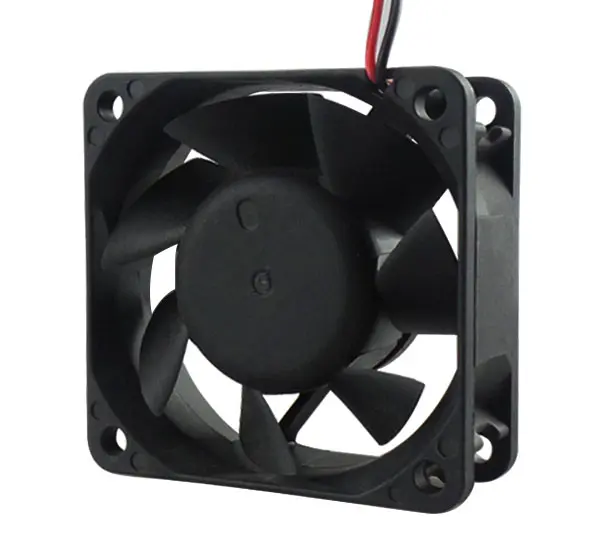
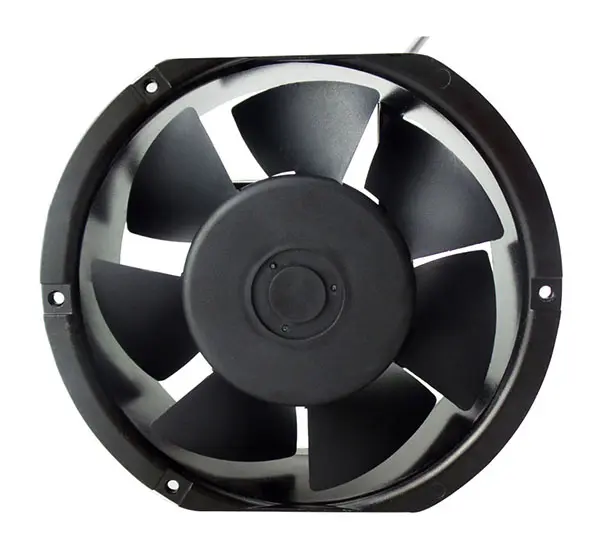
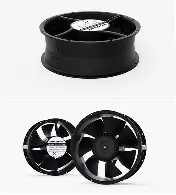
Blowing air refers to a heat dissipation method where a Fan forces cold air from the outside to be blown onto the surface of the heat-generating object.
Its main advantages include:
Concentrated airflow, strong local heat dissipation capacity - The airflow directly impacts the surface of the heat sink or heating element at a high velocity and pressure, effectively breaking the stagnant hot air layer (i.e., the boundary layer), thereby achieving efficient forced convective heat transfer. This characteristic is particularly crucial for high heat density core components such as CPUs and GPUs;
Controllable airflow direction - It can precisely guide the cold air to the most critical cooling areas, improving the utilization efficiency of cooling resources;
Easy to handle high wind resistance structures - When the heat sink fins are dense and the ventilation resistance is high, the blowing mode can more effectively "push" the air through the gap between the fins, reducing the diffusion of the airflow at the inlet and ensuring sufficient penetration force.
However, this method also has the following limitations:
It is prone to causing turbulence and heat accumulation - if there is no smooth exhaust path inside the equipment, the hot air blown in may form vortices or circulation within the chassis, resulting in heat accumulation and raising the overall ambient temperature;
It is prone to accumulating dust - as the interior of the chassis is often under positive pressure, air will be sucked in through gaps other than the fan, and these areas usually do not have dust filters, making it more likely for dust to accumulate inside the equipment and affecting the long-term operational reliability.
Exhaust cooling refers to a heat dissipation method in which a fan extracts hot air from inside the equipment and discharges it to the external environment.
Its main advantages include:
High efficiency in expelling hot air – Hot air naturally rises due to thermal convection, and the exhaust mode aligns with this physical principle, enabling smoother and faster removal of accumulated heat from the upper regions of the device, thereby enhancing overall thermal performance;
Formation of an organized airflow channel – By creating a negative pressure environment within the enclosure, cool air is drawn in through designated intake openings. These inlets can be equipped with dedicated dust filters, contributing to stable airflow management while effectively reducing internal temperature and minimizing dust accumulation;
Relatively uniform heat dissipation – The exhaust configuration allows airflow to spread more evenly across heated components, improving overall thermal distribution, although its localized impingement cooling effect is less pronounced than that of the blowing method.
However, this approach also presents certain limitations:
Reduced local cooling capability – By the time the airflow reaches the fan, it has already dispersed, resulting in lower velocity and static pressure. This diminishes direct cooling effectiveness on high-power-density components such as CPU cores, compromising thermal management at critical hotspots;
Poor performance under high airflow resistance – In exhaust mode, air must pass through high-resistance structures (e.g., densely packed heat sink fins) before being extracted by the fan. At this stage, the airflow is already under low pressure, and the fan’s ability to “pull” air becomes significantly less efficient compared to the “push” mechanism, potentially leading to restricted or uneven airflow.
Application scenarios and how to choose
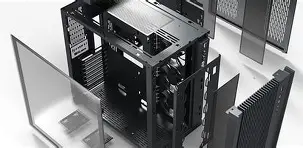
1. Computer case cooling (typical combination case study)
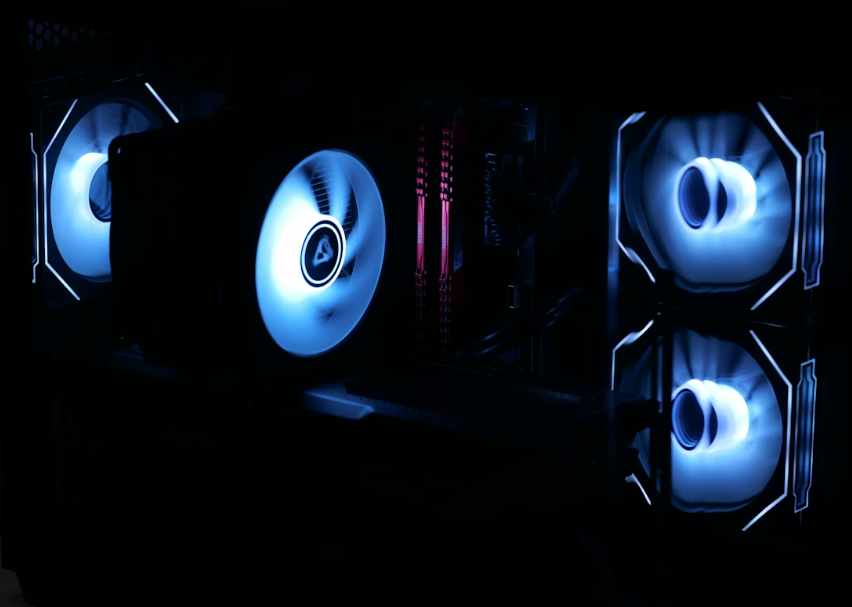
Front Panel Fan: Blows air, drawing in cold air into the chassis.
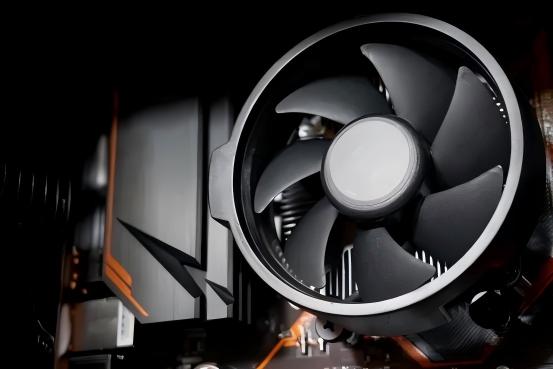
CPU/graphics card Cooling Fan: Blows air, directly directing cold air towards the dense heat-sink fins to achieve efficient local cooling of the core.
Back panel and top panel fans: Extract air, rapidly expelling the heated internal air.
Conclusion: The best computer case airflow pattern is "forward-in, backward-out, bottom-in, top-out", combining the advantages of both blowing and extracting air.
2. Laptop computer cooling
Most gaming laptops or high-performance notebooks adopt the "blowing" mode. The fan directly blows cold air towards the heat pipe and fin assembly that constitutes the heat dissipation module, and then the hot air is expelled from the side outlets. This is because the space is limited and the highest local heat dissipation efficiency is required.
Some lightweight laptops, in order to achieve silence and prevent hot air from blowing onto the user, may be designed to draw in air from positions such as the keyboard and then exhaust it uniformly through the hinge area.
3. Electronic product shells / enclosed equipment
For sealed or semi-sealed equipment, if there is only one fan, it is usually more recommended to use "suction" mode. Because hot air naturally rises and gathers at the top, the suction fan can efficiently remove these hottest air, while cold air will naturally replenish from the bottom gaps, forming an effective natural convection-assisted cooling cycle.
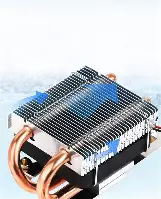
4. Situations where the heat dissipation fins are particularly dense (such as high-end CPU air-cooling radiators)
I highly recommend "blowing air". Because the dense fins have a high wind resistance, only blowing air can ensure sufficient wind pressure to allow the airflow to penetrate the entire radiator. If you switch to suction air, the airflow will become very weak within the fins, significantly reducing the cooling effect.
Comparison Table
Shenzhen Fuqingda Electronic Technology Co., Ltd. has 20 years of experience in manufacturing electronic heat dissipation products. It has a complete product specification system and efficient production and delivery capabilities, and can support customized orders for small batches. The company is committed to providing professional and reliable heat dissipation solutions for customers. We welcome inquiries and cooperation.