

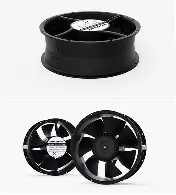
Analysis of cooling fan structure and main parameters
Classification of Cooling Fans
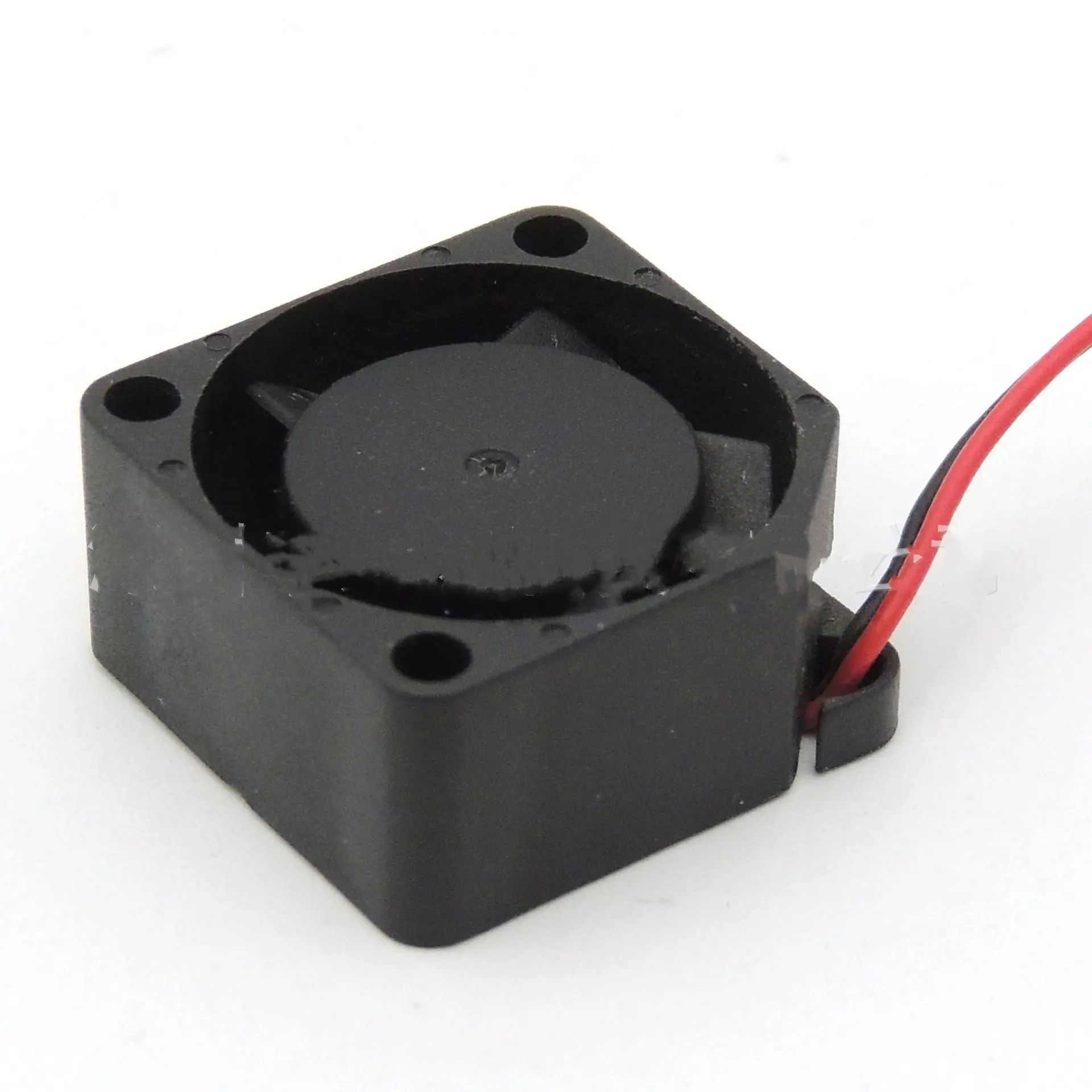
According to the type of power supply voltage, the fans can be divided into DC brushless fans and Ac Fans. According to the difference in the direction of the inlet and outlet air, they can be divided into axial flow fans and centrifugal fans. According to the different bearings, they can also be divided into ball bearing fans and oil bearing fans.
Dc brushless fan working principle: there is a magnetic rubber magnet on the fan rotor, the Hall component on the circuit board will sense its magnetic field, in order to determine the circuit on and off the winding coil on the silicon steel sheet, the repulsive force generated between the two magnetic fields to promote the fan rotation, Hall synchronous induction of the rubber magnet pole and then switch the energized coil, so that the fan can continue to operate.
Ac fan operation principle: The AC fan coil power direction itself is constantly switching, so there is no need for Hall induction to generate a repulsive force to promote fan operation.
According to the flow of air in and out of the cooling fan, it can be divided into the following categories:
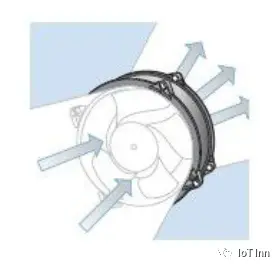
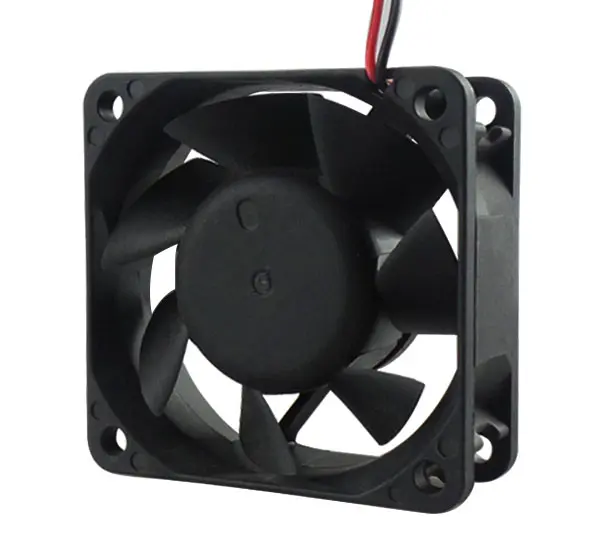
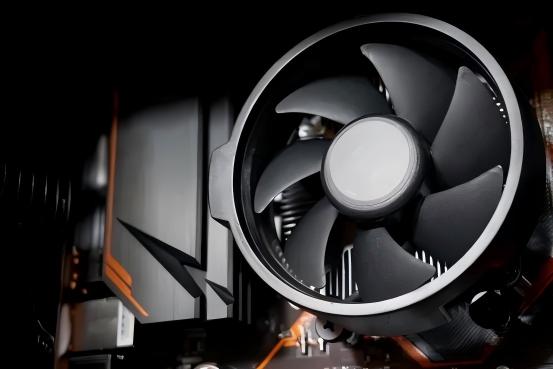
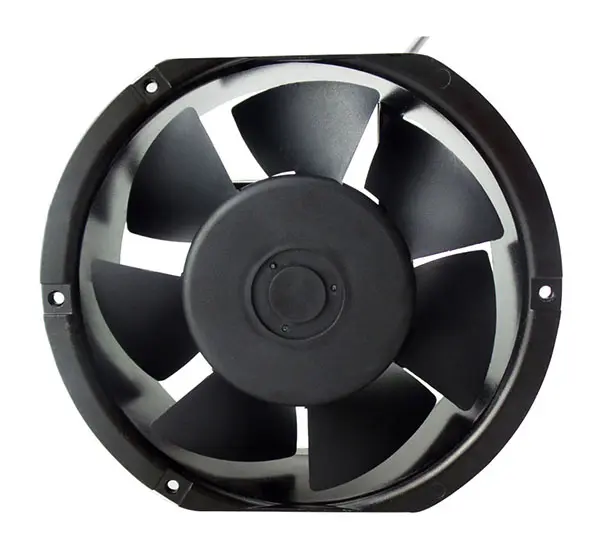
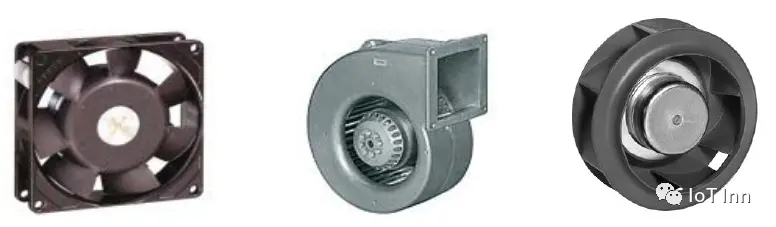
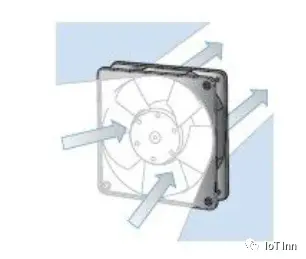
Axial fan: The blades of an axial fan push air in the same direction as the shaft. The blades of an axial fan push the air in the same direction as the shaft. The impeller of the axial flow fan is somewhat similar to the propeller, when it is working, the flow of most of the air is parallel to the axis, in other words, along the axis. The axial fan has the lowest power consumption when the inlet air is free air of 0 static pressure, and the power consumption will increase with the rise of the air flow back pressure when running. The axial fan is usually installed on the cabinet of the electrical equipment, and sometimes integrated on the motor, because the axial fan is compact, it can save a lot of space, and it is convenient to install, so it is obtained
Widely used. It is characterized by high flow rate and moderate wind pressure
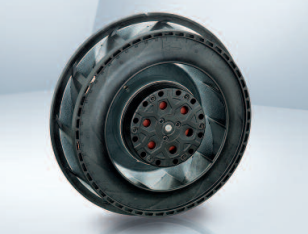
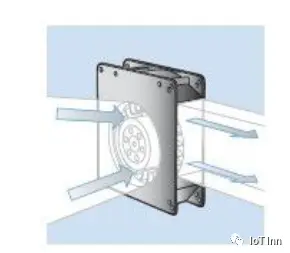
Centrifugal fan: When the centrifugal fan works, the blade pushes the air in a direction perpendicular to the axis (i.e., radial), the inlet air is along the axis, and the outlet air is perpendicular to the axis (as shown in the figure above). In most cases, the cooling effect can be achieved by using an axial flow fan, however, sometimes if the air flow needs to be rotated 90 degrees to discharge or if a large wind pressure is required, a centrifugal fan must be used. Strictly speaking, the fan is also a centrifugal fan. It is characterized by limited flow rate and high wind pressure
Mixed flow fan: mixed flow fan is also known as the diagonal flow fan, at first glance, mixed flow fan and axial flow fan is no different, in fact, the inlet of the mixed flow fan is along the axis, but the outlet is along the diagonal direction of the axis and the vertical axis (as shown in the figure above). Due to the conical shape of the blades and casing, this fan has a higher wind pressure and is less noisy than an axial fan at the same size and other comparable performance. It is characterized by high flow rates and relatively high wind pressure