


Industry News
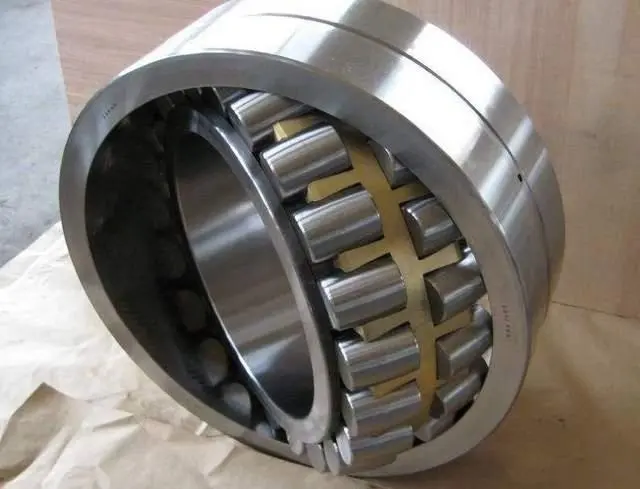
Introduction to different bearings of cooling fan
1. Definition of Bearings:
In a broad sense, when two components have relative motion, their interaction can be considered as forming a bearing. Bearings are mechanical components designed to support moving parts, reduce friction, and bear the load of the device. They typically involve surface, line, or point contact with other rotating components, generating friction as these surfaces move relative to each other. The goal is to minimize friction and wear while occupying minimal space and offering cost-effective solutions.
2. Bearings can be classified into two main categories: sliding contact bearings and rolling contact bearings.

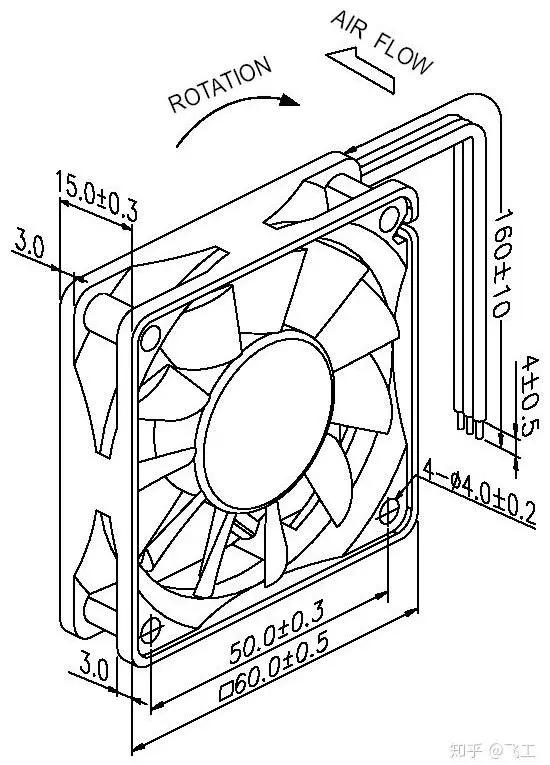
Type and classification of cooling fans
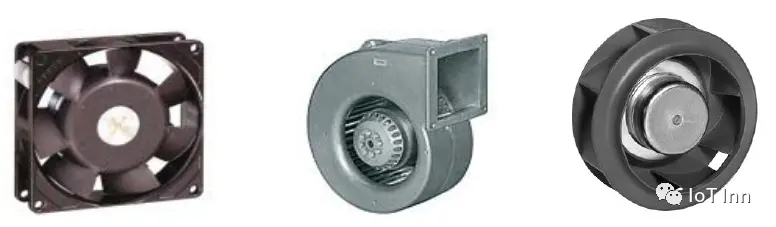
Cooling Fans can be classified as follows:
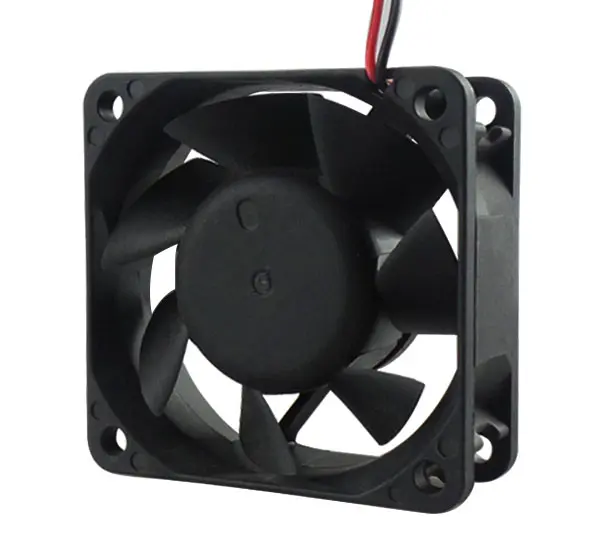
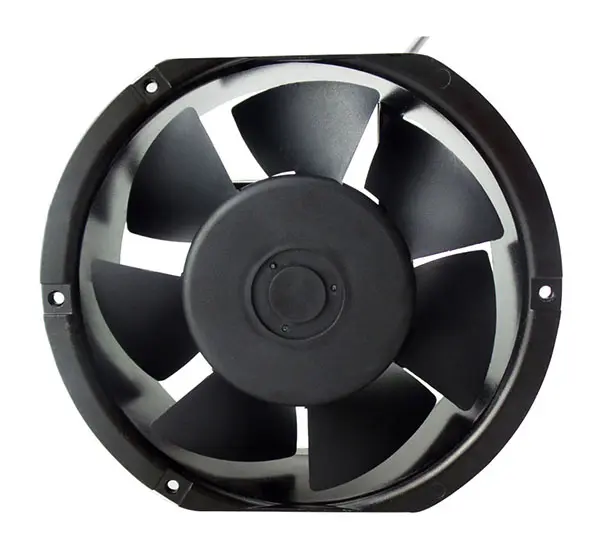
1. According to the blade type and air flow mode: Axial Fan, centrifugal fan (BLOWER), side fan, oblique fan; When the AXIAL FAN works, the blade pushes the air to flow in the same direction as the shaft, so it is called the axial fan. When the runoff fan works, the blade pushes the air to flow in a direction perpendicular to the axis (that is, radial),

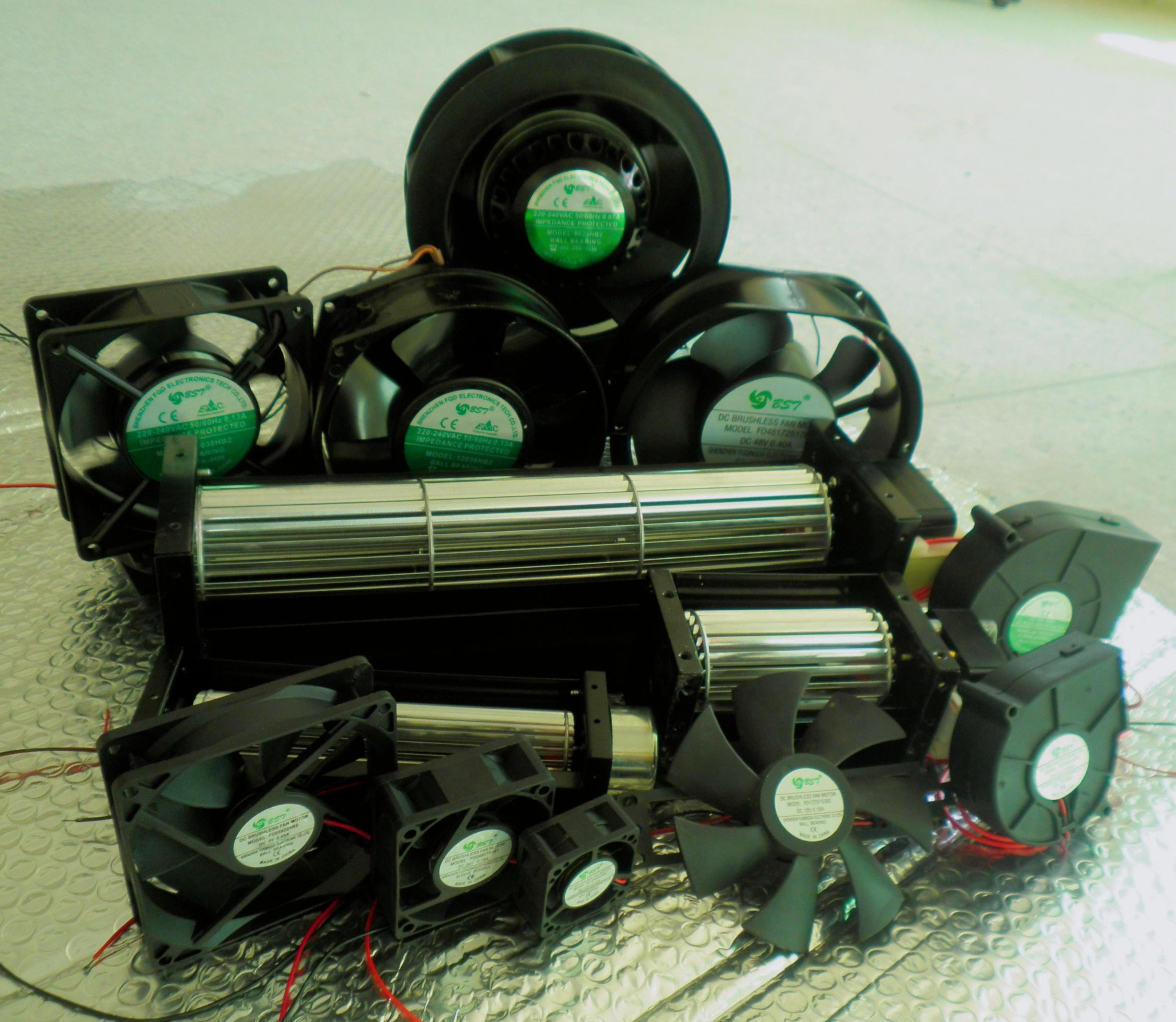
Share the characteristics and features of four cooling fans
The technology and performance of cooling fans have reached a mature stage, and new technologies continue to emerge.
The cooing fan size ranges from 8 mm to 280 mm, and the voltage is 5V, 12V, 24V, 48V, 110V, 220V, 380V, square, round, olive, etc.
Analysis of cooling fan structure and main parameters
"With the continuous progress of science and technology, the more powerful the function of electronic products, the popularity of personal computers, video surveillance, routers, switches and other electronic equipment, the function of the equipment is increasingly powerful, the integration of electronic components is becoming more powerful, the heat and noise generated by electronic components, but let us feel tired, so the heat dissipation of electronic components has become more and more important."
Fan is the use of forced heat convection way of heat dissipation, it relies on its own diversion effect, so that the air at a certain speed, a certain way through the heat sink, using the heat exchange between the air and the heat sink to take away the heat accumulated on it, so as to achieve the "forced convection" heat dissipation method.
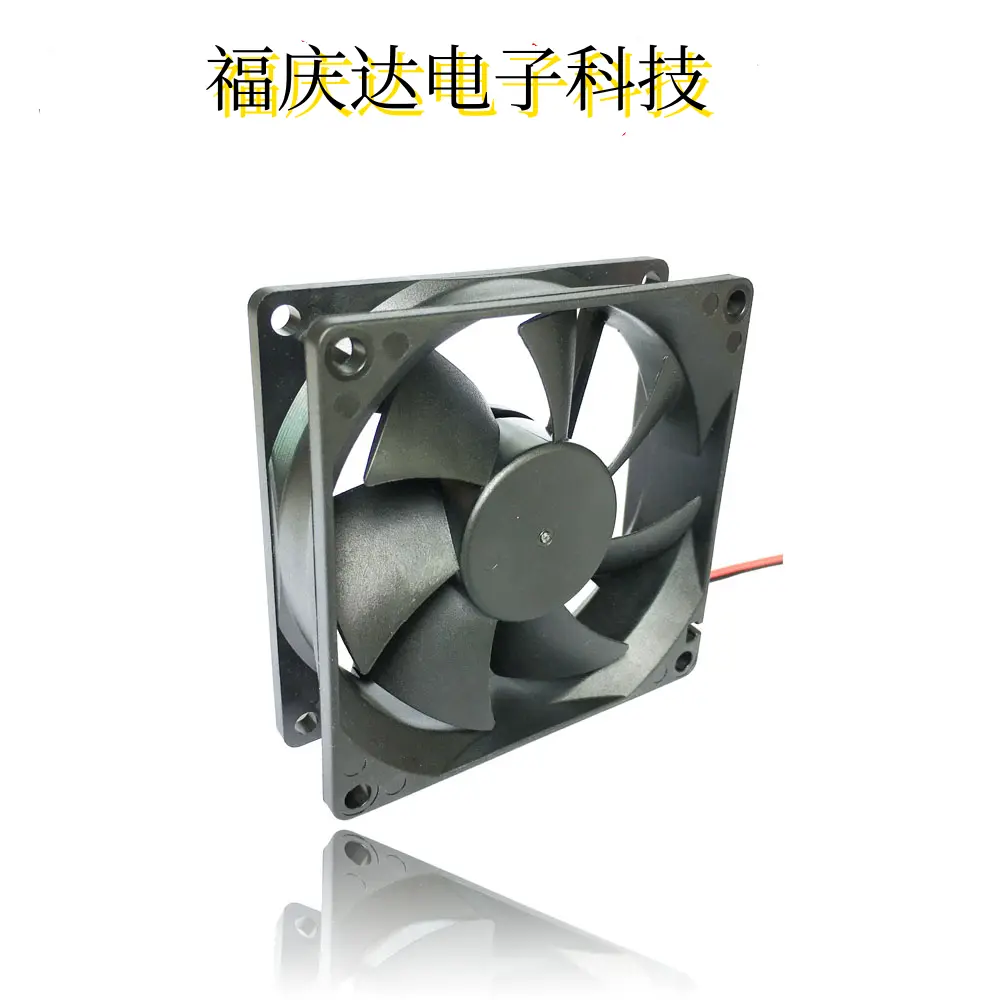
Cooling fan bearing introduction: analysis of advantages and disadvantages of different bearings
Different functions and types of cooling fans, the bearings used by the fans are not the same. What are the main bearings of the cooling fan, and what are the advantages and disadvantages of different bearings? The following health electronics to give you a detailed introduction:
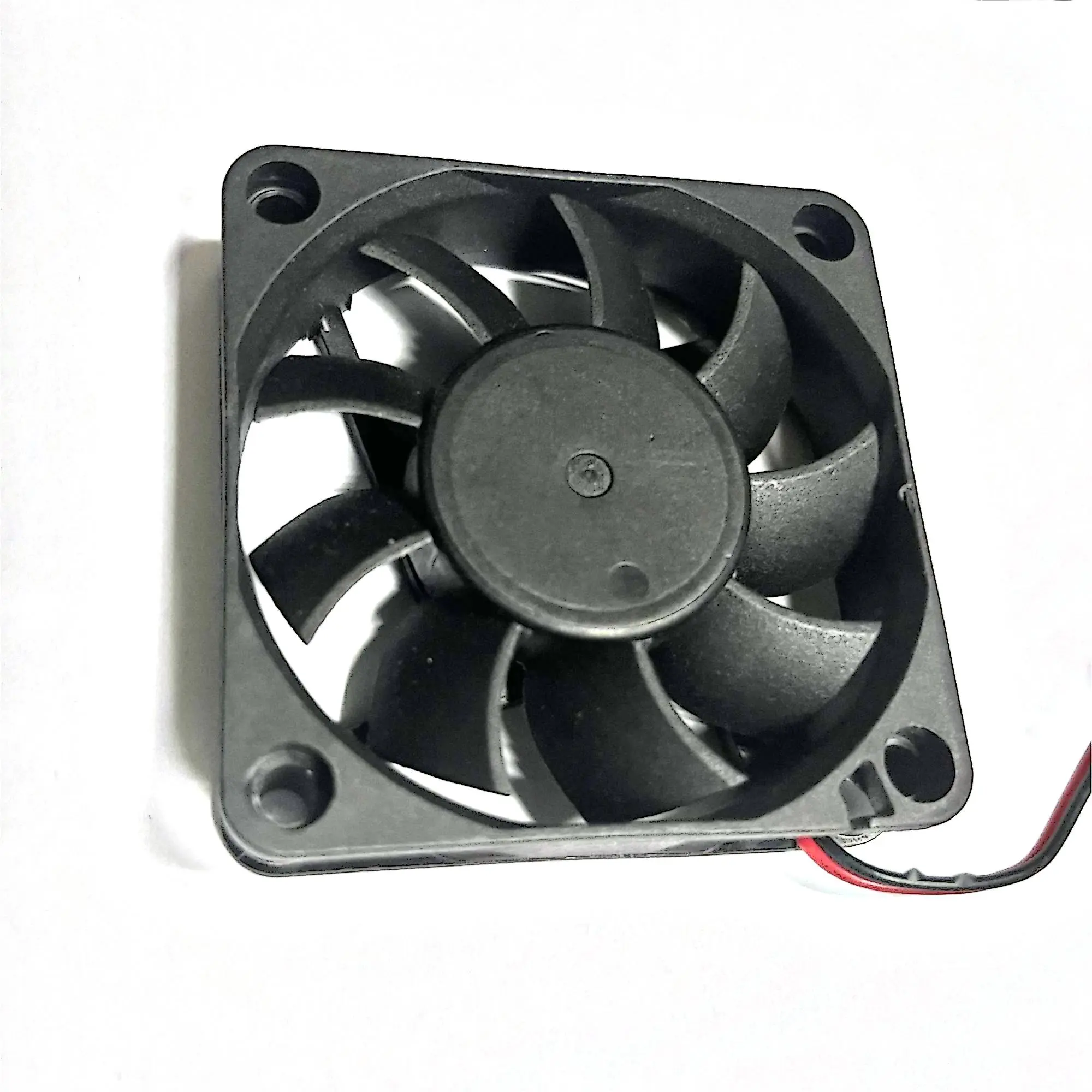
The relationship between the air volume and the air pressure of the cooling fan
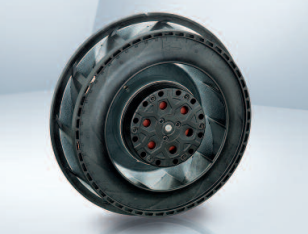
Cooling fans are typically classified into the following three types:
-
Axial flow type: The direction of the airflow outlet is the same as the axial direction.
-
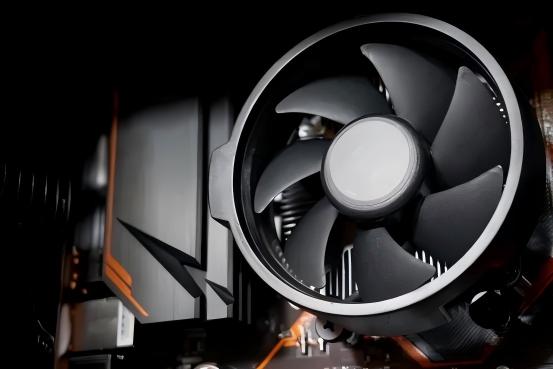
Centrifugal type: It utilizes the centrifugal force to fling the airflow outward along the blades.
-
Mixed flow type: It incorporates both of the aforementioned airflow patterns.
The principle of cooling fans
Principle: The working principle of a fan is achieved through energy conversion, namely: electrical energy → electromagnetic energy → mechanical energy → kinetic energy. The circuit principle of a fan is generally divided into multiple forms. Different circuits employed will lead to variations in the fan's performance.
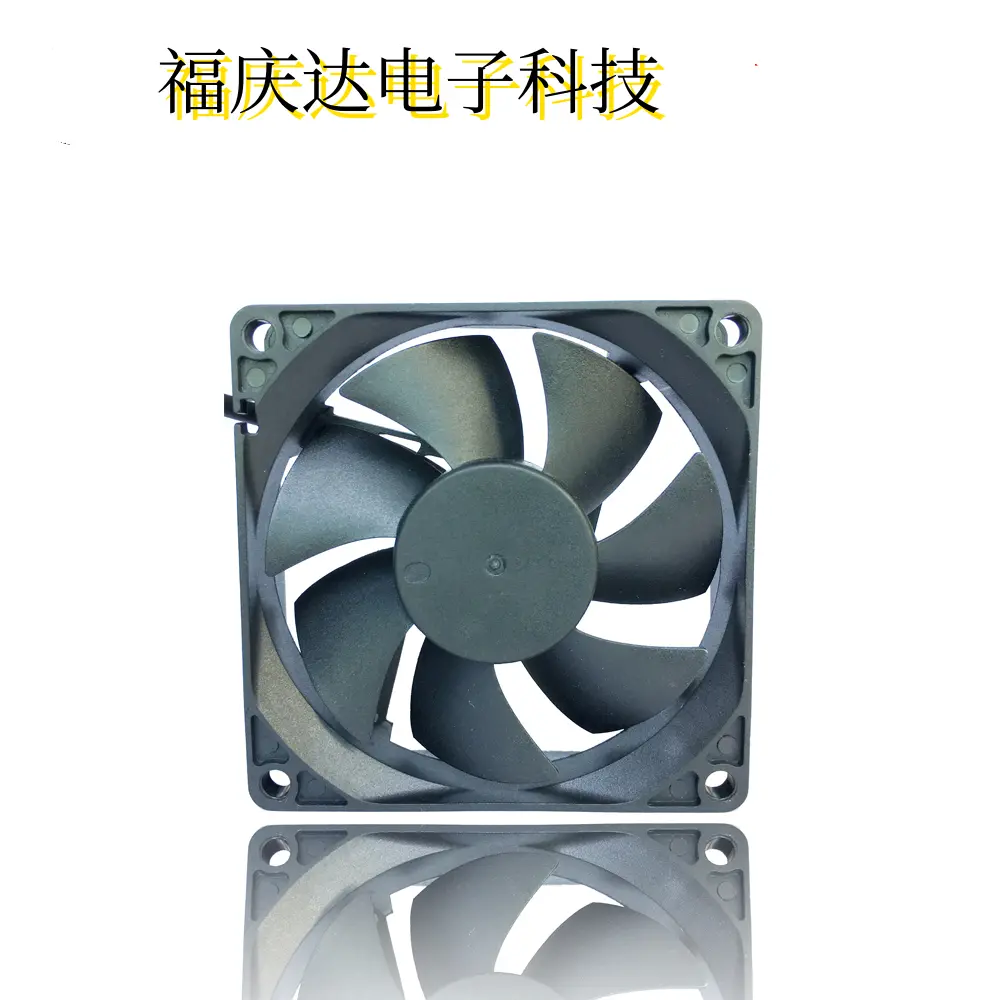
Fan air volume, wind pressure, power and speed of the relationship and related calculations, fan selection
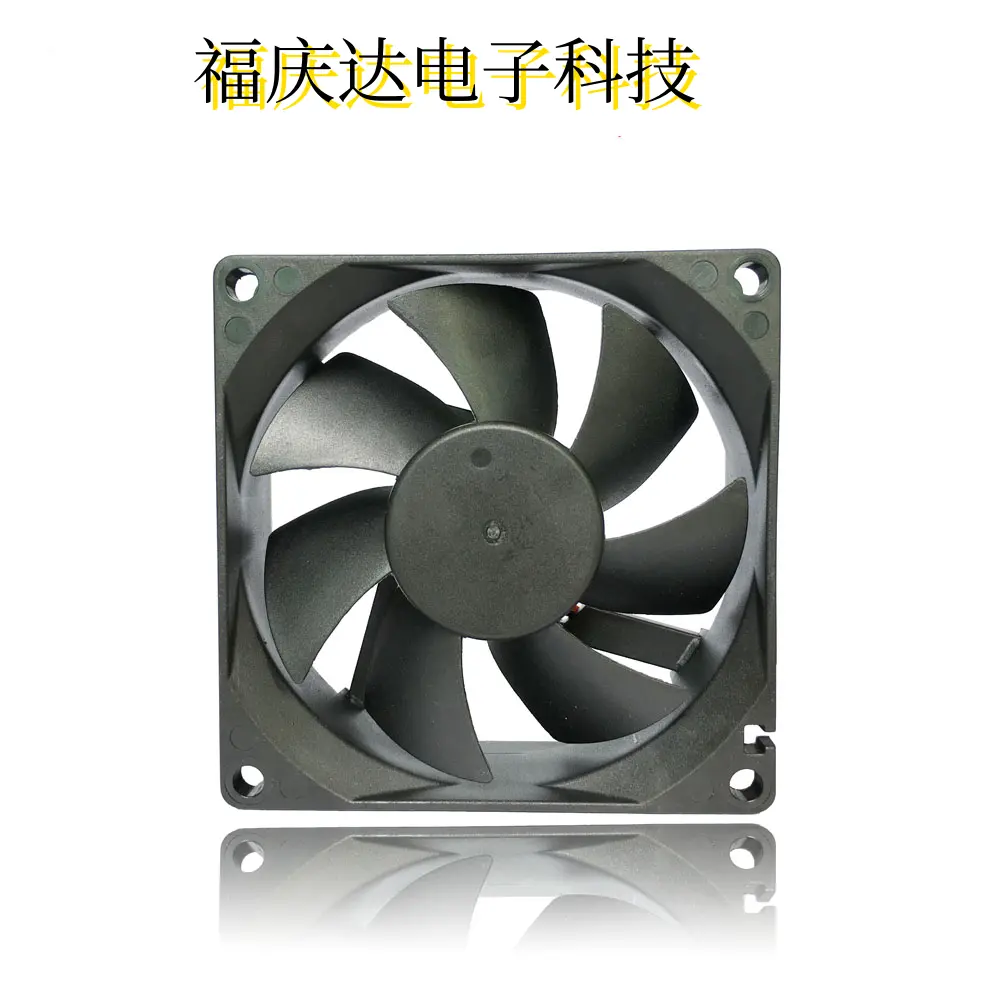
Differences between AC fans and DC fans
The cooling fan can be divided into two categories from the power supply mode: AC cooling fan and DC cooling fan. It is mainly used for ventilation and heat dissipation in computer equipment, household appliances, automotive equipment, mechanical equipment and other fields. The AC cooling fan is mainly used in industrial machinery and equipment, medical equipment and other large equipment; Dc cooling fans are generally used in computer electronics, household appliances and other small equipment. In addition to these, let's look at the main differences between AC cooling fans and DC cooling fans.
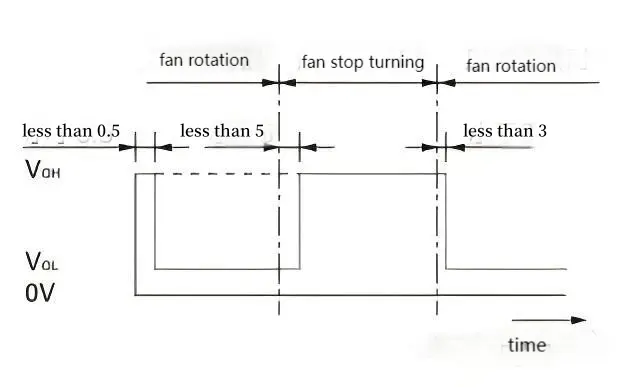
cooling fan PWM function Introduction(2)
The speed control of the fan is generally controlled by PWM, the frequency is generally 25K to 50K, and the duty cycle is adjustable from 10% to 100%.
The input matching circuit of the PWM pin is shown in the figure below.
As can be seen from the figure, the input level inside the fan is actually matched to 3.3V, so by default the fan is running at full speed.
Regarding the PWM control of the fan, the author guessed that the input voltage of the fan should be adjusted by PWM control of the internal MOS switch, similar to the method of switching power supply to control the voltage value of the input to the motor, the higher the voltage, the faster the corresponding speed.
Cooling fan PWM function Introduction(1)
1, PWM speed control principle "Simplify
the pwm speed control principle: a pwm chip generates a square wave pulse, and its pulse is connected to a triode level, if there is a high level on this level, the other poles of the triode are in the on-state, if it is low, the other poles are in the disconnected state.
If the duty cycle of the emitted square wave pulse signal is 50%, that is, the high level signal accounts for half the time of a cycle, then the triode is in the on-state for 1 1/2 time in a cycle.
With the on-time of the triode in one cycle, we can easily control the fan speed.