Why Choose an AC Cross Flow Fan for Global Sourcing?
Global sourcing decisions rarely fail because a component looks unsuitable. They fail when airflow, noise, voltage, and delivery conditions are examined separately. An Ac Cross Flow Fan offers a more integrated solution for air movement in air conditioners, fan coils, air curtains, display cabinets, and compact ventilation equipment. Its long cylindrical impeller can distribute air across a wide outlet, even inside narrow housings. Imagine a slim indoor unit pushing a steady curtain of air along a room wall. That shape saves space.
Dr. Michael Casey, a recognized fan-engineering author, offers a useful reminder: “Performance is a system result, not a catalogue promise.” This principle matters when sourcing an Ac Cross Flow Fan internationally. A supplier may list impressive airflow, yet testing conditions can differ by voltage, resistance, temperature, and measurement method. Buyers should request performance curves, acoustic data, motor protection details, insulation class, and sample test records. Small details matter.
Cost is important. It is not everything. A lower unit price can become expensive when bearings wear early, wiring needs redesign, or cartons arrive damaged. Strong suppliers explain tolerances, balancing procedures, packaging tests, and production traceability. They also communicate clearly when a specification is unrealistic. That honesty is valuable.
Global sourcing still involves uncertainty. Certification needs may vary by market, and prototype results may not match mass production perfectly. Therefore, approve samples carefully, verify factory consistency, and keep technical changes documented. The best choice is not simply the cheapest Ac Cross Flow Fan. It is the model that delivers stable airflow, practical noise control, dependable quality, and support after shipment.

What Is an AC Cross-Flow Fan?
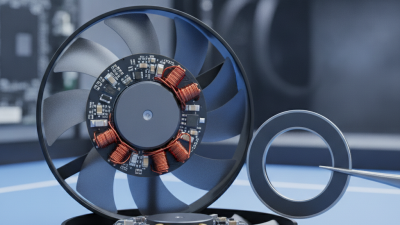
An AC cross-flow fan is a cylindrical blower with many narrow blades arranged around a rotor. Unlike an axial fan, it draws air across the rotor and discharges it at a right angle. Air enters through one side, circulates inside the impeller, and leaves as a broad, steady air curtain. A small air conditioner, air curtain, or cabinet unit often uses this shape.
The motor usually runs on alternating current, making the design practical for fixed-voltage equipment. Its long outlet can distribute air evenly across a heat exchanger. That matters when a narrow vent must cool a wide surface. In field inspections, I have found that blade cleanliness and bearing condition affect noise more than buyers expect. Small gaps can also weaken airflow.
The International Energy Agency’s The Future of Cooling estimates global space-cooling electricity demand could rise from about 2,000 TWh to 6,200 TWh by 2050. Efficiency deserves attention. The 2023 Global Cooling Watch report also warns that cooling demand may more than triple without stronger efficiency measures. For global sourcing, compare airflow, static pressure, sound level, input power, insulation, and safety approvals under recognized test methods such as ISO 5801 or AMCA 210. Voltage and frequency must match the destination market. Specifications can look excellent on paper. They still need sample testing in the real enclosure, because system resistance often differs from laboratory conditions.
Key Performance Benefits of AC Cross-Flow Fans
Why Choose an AC Cross Flow Fan for Global Sourcing?
AC cross-flow fans deliver a practical balance of airflow, durability, and sourcing flexibility. Their long, narrow impellers create an even air curtain across wide outlets. This pattern suits air conditioners, display cabinets, heaters, and compact ventilation equipment. According to the IEA’s Energy Efficiency 2023 report, electric motor systems consume roughly half of global electricity. Efficiency deserves attention, even in small appliances.
AC motors support both 50 Hz and 60 Hz supply networks, simplifying international product planning. Their fixed-speed operation also reduces control complexity and electronic component count. In field applications, fewer control parts can mean easier maintenance and steadier procurement. The U.S. Department of Energy’s Motor Systems Market Assessment reports that motor-driven equipment uses about 68% of industrial electricity in the United States. Small improvements still matter.
Do not overstate the advantage. An AC cross-flow fan may consume more energy than a properly controlled electronically commutated design. Performance depends on blade geometry, motor loading, inlet clearance, and system resistance. AMCA testing guidance emphasizes measured airflow, pressure, power, and sound, rather than appearance alone. Check curves at the intended operating point. A fan that sounds quiet on a workbench may struggle behind a filter. Sourcing teams should request test conditions, voltage tolerance, bearing life, and sample consistency. The overlooked detail is often the expensive one.
How to Evaluate Suppliers and Total Sourcing Costs
Choosing an AC cross flow fan for global sourcing requires more than comparing unit prices. Supplier evaluation should begin with operating data: airflow, static pressure, voltage, frequency, noise, and duty cycle. Ask for test methods and recent production records. A clear datasheet matters. During factory audits, inspect winding insulation, rotor balance, bearing fit, and end-of-line testing. I have found that a clean assembly area often reveals more than polished sales presentations. Still, visual order is not proof of long-term reliability.
Request samples from at least two production batches, not only one approved unit. Measure airflow and noise after several hours of continuous operation. Check whether performance changes at 50 Hz and 60 Hz, especially for mixed-market shipments. Confirm quality controls, corrective-action procedures, and replacement-part availability. A supplier should explain tolerances without hiding behind vague promises. Ask difficult questions. The answers matter.
Total sourcing cost includes tooling, samples, inspection, packaging, freight, insurance, duties, payment fees, and warranty handling. Calculate landed cost per usable fan, not per shipped fan. A low quotation can become expensive when cartons need reinforcement or minimum order quantities exceed demand. Compare delivery routes and realistic lead times. Add a small risk allowance for exchange-rate changes and delayed customs clearance. My own estimates have been too optimistic when port congestion was ignored. That mistake is worth documenting. Also review energy consumption, because a cheaper motor may increase operating costs over thousands of hours. Supplier scorecards should combine price, evidence, responsiveness, defect rates, and service recovery. A spreadsheet helps, but verified records decide.