Leave Your Message
Axial Fan Mini Fan technology is moving from a minor cooling component to a critical design choice in electronics, data centers, medical devices, and compact industrial equipment. MarketsandMarkets and Grand View Research both identify rising thermal-management demand as a major driver of axial fan market growth. Their reports highlight electronics miniaturization, higher computing loads, and energy-efficiency requirements. These pressures make supplier selection more difficult.
Size alone does not prove performance. A two-inch fan may need to move air through a restrictive grille while producing limited noise. Small details matter. Bearing design, airflow curves, acoustic testing, ingress protection, and supply consistency can affect the final result. The U.S. Department of Energy also emphasizes that fan efficiency depends on the complete system, not only the motor rating.
Dr. John D. Cimbala, a recognized fluid-mechanics educator, often stresses a practical principle: “Good flow performance begins with understanding the system.” That warning fits compact fan purchasing. A catalog number may look impressive. It may still fail under real pressure.
This guide reviews ten Axial Fan Mini Fan suppliers for global buyers. It considers engineering capability, customization, quality controls, certifications, lead times, and after-sales support. The ranking is not absolute. Applications differ. Some supplier claims also require closer verification. Buyers should request test curves, sample units, inspection records, and warranty terms before approving a long-term program. Small fans deserve serious evaluation.
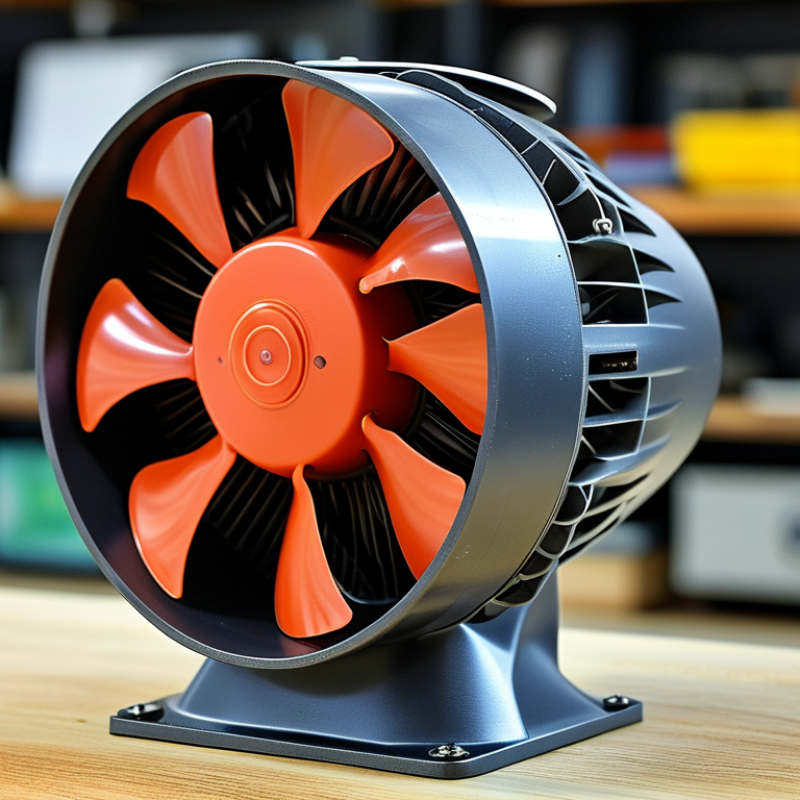
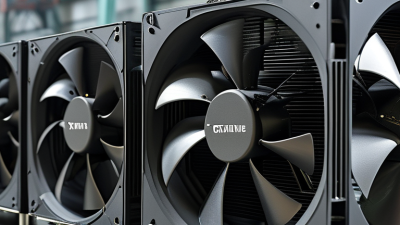
Axial mini fans move air parallel to the motor shaft. Their blades rotate inside a short cylindrical frame. Each blade creates a pressure difference, pulling air from the rear and pushing it forward. The airflow resembles a small tunnel, not a concentrated jet. These fans suit control cabinets, routers, battery enclosures, and compact appliances.
A brushless DC motor usually drives the impeller. Electronic commutation replaces mechanical brushes, reducing wear and improving control. Pulse-width modulation can adjust speed, while sensors may report rotation failure. Engineers normally compare airflow, static pressure, noise, voltage, and operating temperature. A fan rated at 20 cubic feet per minute may deliver far less inside a restricted enclosure. That detail is often missed.
The U.S. Department of Energy reports that fans and fan systems can represent 15% to 20% of industrial electricity consumption. This figure concerns larger systems, but it explains why efficiency matters even in small equipment. The International Energy Agency also reports that cooling can consume roughly 7% to 30% of data-center electricity, depending on site conditions and efficiency. Mini fans cannot solve every thermal problem. They may spread hot air instead. In practical testing, I check inlet clearance, filter resistance, vibration, and temperature rise. A quiet fan is not automatically a good fan. This remains an imperfect selection process, because published laboratory airflow rarely matches a dusty, crowded enclosure.
Buyer reference table based on common axial mini fan sizes, electrical options, performance ranges, and application requirements
| No. | Common Fan Size | Typical Rated Voltage | Typical Speed Range | Typical Airflow Range | Typical Static Pressure | Typical Noise Range | Common Bearing Options | Typical Applications | Key Buyer Check |
|---|---|---|---|---|---|---|---|---|---|
| 1 | 25 × 25 × 10 mm | 5 V DC | 4,000–8,000 RPM | 1.5–5 CFM | 1.0–4.0 mmH₂O | 18–32 dBA | Sleeve or dual ball bearing | Compact electronics, sensors, small enclosures | Confirm connector type and available installation depth |
| 2 | 30 × 30 × 10 mm | 5 V or 12 V DC | 4,000–8,000 RPM | 2–7 CFM | 1.5–5.0 mmH₂O | 20–34 dBA | Sleeve, hydraulic, or ball bearing | Routers, control boards, portable instruments | Compare airflow against the enclosure’s ventilation resistance |
| 3 | 35 × 35 × 10 mm | 5 V or 12 V DC | 3,500–7,000 RPM | 3–10 CFM | 1.5–5.5 mmH₂O | 20–35 dBA | Sleeve or hydraulic bearing | Network devices, measuring equipment, compact power supplies | Check operating temperature and expected service hours |
| 4 | 40 × 40 × 10 mm | 5 V, 12 V, or 24 V DC | 3,000–7,000 RPM | 4–15 CFM | 1.5–6.0 mmH₂O | 22–38 dBA | Sleeve, hydraulic, or dual ball bearing | Embedded systems, industrial controllers, small servers | Request the fan curve rather than relying on free-air airflow alone |
| 5 | 50 × 50 × 10 mm | 5 V, 12 V, or 24 V DC | 2,500–6,000 RPM | 6–22 CFM | 1.5–6.5 mmH₂O | 23–40 dBA | Sleeve, hydraulic, or ball bearing | Audio equipment, automation cabinets, compact cooling modules | Evaluate noise at the intended operating voltage and speed |
| 6 | 60 × 60 × 10 mm | 5 V, 12 V, or 24 V DC | 2,500–5,500 RPM | 10–30 CFM | 2.0–7.0 mmH₂O | 24–42 dBA | Hydraulic or dual ball bearing | Telecom equipment, medical devices, industrial electronics | Check tachometer, alarm, and PWM control availability |
| 7 | 70 × 70 × 15 mm | 12 V or 24 V DC | 2,000–5,000 RPM | 18–45 CFM | 2.0–8.0 mmH₂O | 25–45 dBA | Hydraulic or dual ball bearing | Power electronics, test equipment, compact HVAC controls | Verify mounting-hole pitch and airflow direction |
| 8 | 80 × 80 × 15 mm | 12 V or 24 V DC | 1,800–4,500 RPM | 25–60 CFM | 2.0–9.0 mmH₂O | 26–46 dBA | Hydraulic or dual ball bearing | Industrial PCs, networking cabinets, laboratory equipment | Compare bearing life, vibration level, and continuous-duty rating |
| 9 | 92 × 92 × 25 mm | 12 V or 24 V DC | 1,500–4,000 RPM | 35–95 CFM | 2.5–12.0 mmH₂O | 28–50 dBA | Dual ball or high-grade hydraulic bearing | Rack equipment, storage systems, industrial control panels | Request acoustic test conditions and full fan-performance curves |
| 10 | 120 × 120 × 25 mm | 12 V or 24 V DC | 1,200–3,500 RPM | 60–180 CFM | 2.0–14.0 mmH₂O | 30–55 dBA | Dual ball or high-grade hydraulic bearing | Servers, power supplies, industrial machinery, telecom cabinets | Confirm thermal load, duty cycle, IP protection, and control method |
Note: The specifications shown are typical market reference ranges for commonly used DC axial mini fan formats. Final values vary by design and operating conditions; buyers should request certified datasheets, fan curves, noise-test conditions, bearing-life data, and compliance documentation before qualification.